
America’s Premier Historical Landmarks: 17 Must-See Sites
Discover the must-visit sites that chronicle the triumphs, struggles, and pivotal moments defining the United States' rich heritage.
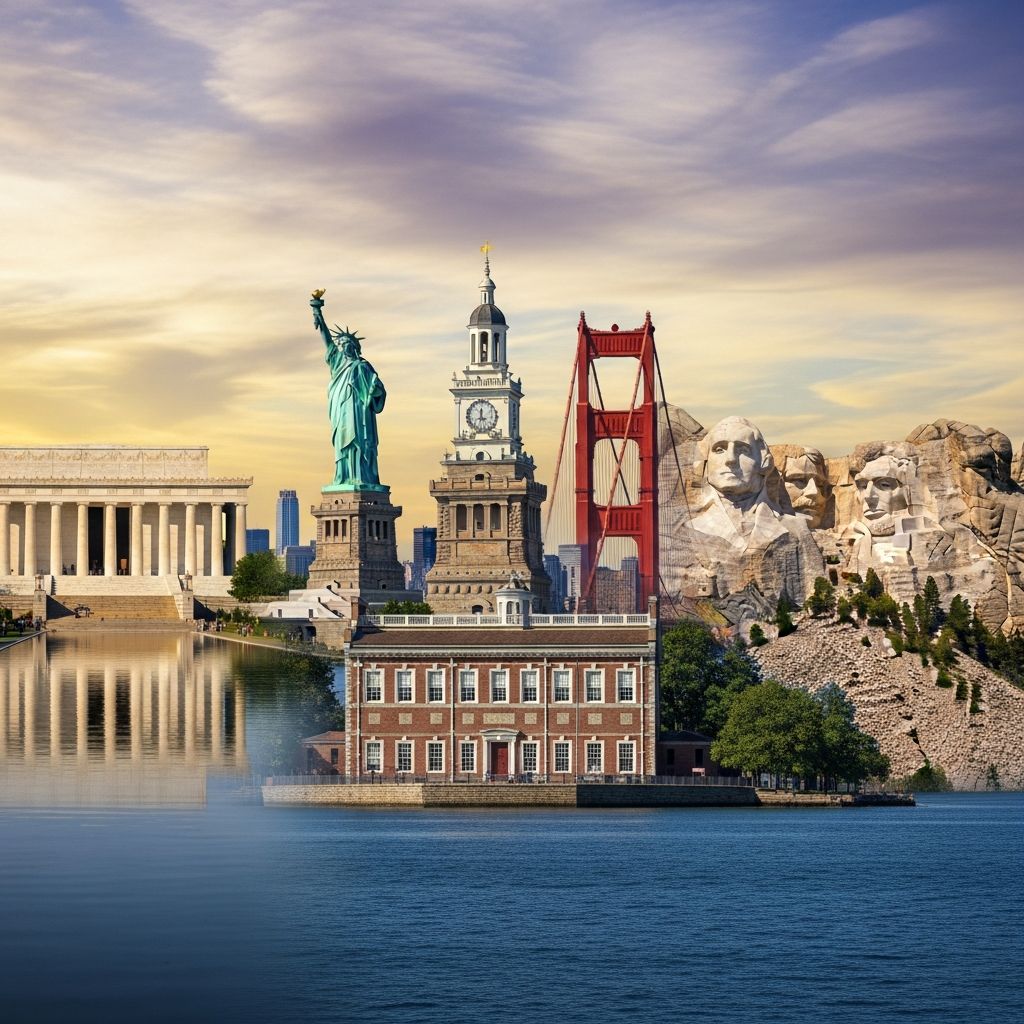
The United States boasts a tapestry of historical sites that capture the essence of its evolution from colonial outposts to a global power. These landmarks, spanning ancient mounds to modern memorials, invite visitors to walk through time, witnessing events that forged the nation’s identity. This guide highlights key destinations, blending natural beauty with profound narratives of struggle, innovation, and resilience.
Foundational Sites of Colonial America
The roots of the U.S. trace back to early settlements where European colonists established footholds amid challenging landscapes. These locations not only mark the beginning of permanent European presence but also reflect interactions with indigenous peoples and the birth of democratic ideals.
- Jamestown Settlement: As the first permanent English colony in 1607, Jamestown offers insights into survival struggles and early governance. Part of Colonial National Historical Park, it includes archaeological digs and recreated structures, allowing visitors to explore the site’s role in American origins.
- Independence Hall: In Philadelphia, this building hosted the signing of the Declaration of Independence in 1776 and the Constitution’s drafting. Surrounded by Independence National Historical Park, it features over 55 acres of related sites like the Liberty Bell Center.
- Colonial Williamsburg: A living museum in Virginia, it recreates 18th-century life with costumed interpreters demonstrating crafts and politics. Linked to the Presidential Trail, it connects to Jamestown and Yorktown for a comprehensive colonial experience.
Revolutionary War Battlegrounds and Symbols
The fight for independence left indelible marks on the landscape, with sites preserving battlefields, forts, and halls where liberty was debated and defended.
| Site | Location | Key Event | Visitor Highlights |
|---|---|---|---|
| Castillo de San Marcos | St. Augustine, FL | Built 1672, endured sieges under multiple flags | Fort tours, cannon demos; oldest U.S. city backdrop |
| Yorktown Battlefield | Virginia | 1781 decisive victory ending Revolution | Reenactments, Colonial Parkway drives |
| Betsy Ross House | Philadelphia, PA | Alleged first American flag sewing site | Guided tours, flag-making exhibits |
These spots emphasize strategic defenses and personal sacrifices, with St. Augustine’s fort symbolizing enduring colonial rivalries.
Civil War Turning Points and Memorials
The Civil War’s scars remain vivid at preserved battlefields, where over 600,000 lives were lost in the fight over union and slavery.
- Gettysburg National Military Park: Site of the 1863 battle with 51,000 casualties, featuring 1,328 monuments. Union victory shifted momentum; visitors can follow self-guided tours of key positions.
- The Alamo: In San Antonio, this 1836 mission fort symbolizes Texan defiance during the Texas Revolution. Exhibits detail the battle and guided tours explore barracks and history.
- Savannah Historic District: Untouched by Sherman’s March, it preserves Civil War landmarks amid antebellum architecture. Ghost tours add haunting narratives to the southern charm.
Presidential Legacies and Monuments
Leaders who shaped policy and policy reside in grand estates and towering obelisks, offering glimpses into personal and political lives.
- Mount Rushmore: South Dakota’s granite faces of Washington, Jefferson, Roosevelt, and Lincoln celebrate foundational presidents amid Black Hills scenery.
- Lincoln Memorial: Washington, D.C.’s Greek Revival tribute to the 16th president, overlooking the Reflecting Pool. Iconic for civil rights speeches.
- Washington Monument: A 555-foot obelisk honoring the first president, with elevator access to panoramic views from the National Mall.
- Martin Luther King Jr. National Historical Park: Atlanta site including King’s birth home, crypt, and exhibits on the civil rights movement.
Indigenous and Pre-Columbian Heritage
Before European arrival, sophisticated societies thrived, leaving monumental earthworks and cliff dwellings that predate modern cities.
- Cahokia Mounds: Near St. Louis, this 2,200-acre UNESCO site was home to North America’s largest pre-Columbian city, with massive burial mounds revealing advanced culture.
- Mesa Verde National Park: Colorado’s 600 cliff dwellings from 700+ years ago showcase Ancestral Puebloan ingenuity. Ranger-led tours access dramatic canyons.
These parks highlight engineering feats and mysteries of ancient Americas.
Western Expansion and Iconic Gateways
Manifest Destiny drove settlement westward, commemorated in arches, trails, and rugged outposts.
- Gateway Arch: St. Louis’ 630-foot stainless steel monument to westward pioneers, with tram rides and museums on Lewis and Clark.
- Deadwood: South Dakota’s gold rush town with Wild West history, saloons, and Mount Moriah Cemetery housing figures like Wild Bill Hickok.
Practical Tips for History Travelers
Planning a visit maximizes immersion while respecting preservation efforts.
- Book tickets in advance for popular sites like the Arch or Mesa Verde tours.
- Visit in shoulder seasons (spring/fall) to avoid crowds and extreme weather.
- Use National Park Service apps for audio guides and virtual tours.
- Combine sites via road trips, like Virginia’s Presidential Trail or Philly’s historic core.
FAQs
What is the oldest historical site in the continental U.S.?
St. Augustine, Florida, founded in 1565, with Castillo de San Marcos built in 1672, holds that distinction.
Which site has the most Civil War monuments?
Gettysburg National Military Park features around 1,328 markers commemorating the 1863 battle.
Are there free entry options at these landmarks?
Many National Park sites like Independence Hall offer free access, though some require reservations or fees for special exhibits.
How can families engage with these sites?
Look for junior ranger programs, living history demos, and kid-friendly trails at places like Colonial Williamsburg.
What UNESCO sites among these are must-sees?
Cahokia Mounds stands out as one of 23 U.S. UNESCO World Heritage Sites for its pre-Columbian significance.
References
- 30 of the Best Historic Sites in the United States — History Hit. 2023. https://www.historyhit.com/guides/historic-sites-in-the-united-states/
- 8 U.S. History Sites Worth Adding to Your Itinerary — Entegra Coach. 2023. https://www.entegracoach.com/connection/US-History-Sites-Worth-Visiting/
- Our Favorite Historical Sites Across the US — Road Trip Queen. 2022-02-23. https://roadtripqueens.blog/2022/02/23/our-favorite-historical-sites-across-the-us/
- 20 Iconic U.S. Landmarks That Shaped American History — YouTube. 2023. https://www.youtube.com/watch?v=_eO6OAd-WnI
Similar Articles








Read full bio of Sneha Tete