
Austrian Village Ditches Provocative Name for Fugging
Discover how a tiny Austrian hamlet ended decades of English-speaking mockery by rebranding from its infamous name to Fugging in 2021.
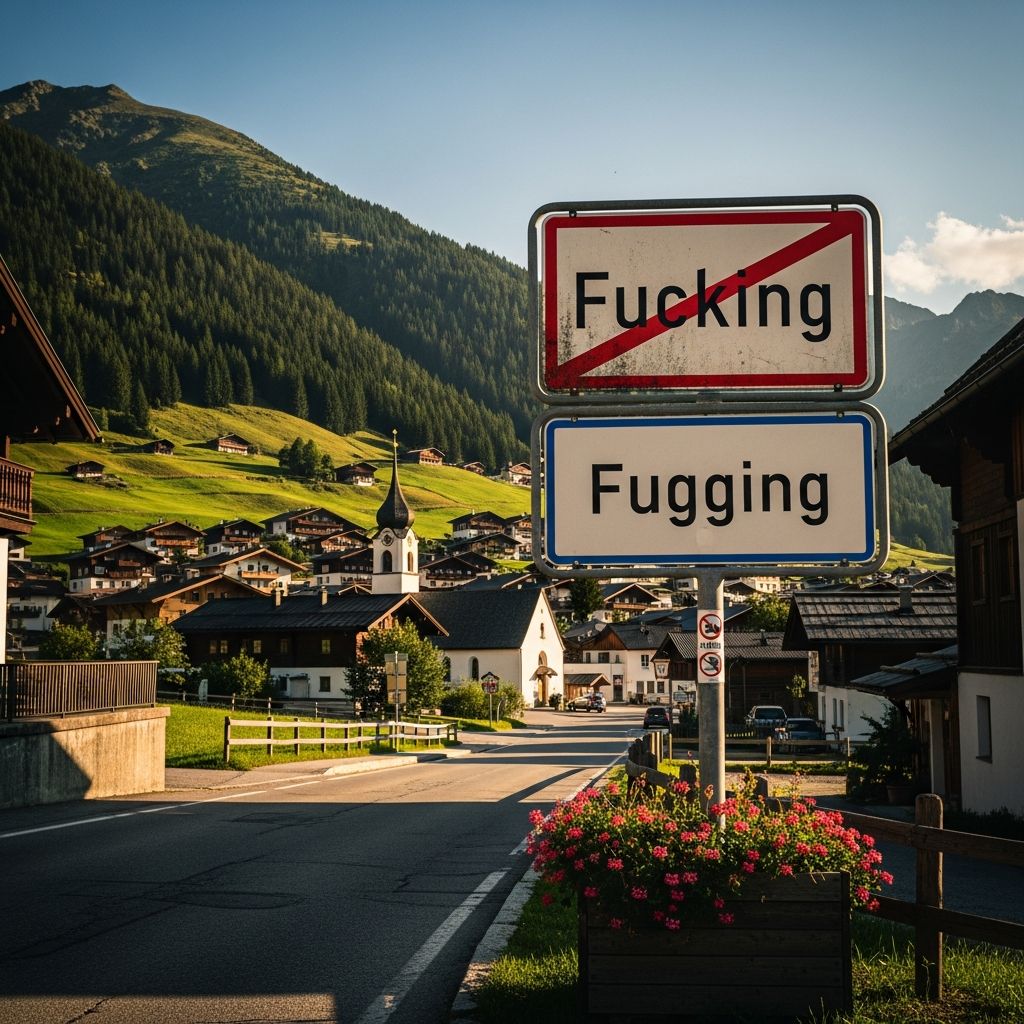
A quaint settlement in Upper Austria’s Innviertel region made headlines worldwide in late 2020 when its residents voted to rename their home from a moniker that mirrored an English profanity to something far less risqué: Fugging. This tiny village, home to just over 100 people and nestled near the German border, had endured decades of international amusement, vandalism, and logistical headaches due to its unfortunate name resemblance. The change, effective January 1, 2021, marked the end of an era defined by stolen road signs and cheeky tourist snapshots.
Historical Roots of a Misunderstood Name
The village’s original name traces back over a millennium, with no connection to modern vulgarity. First documented in 1070 as Vucchingen, it evolved through spellings like Fukching in 1303 and Fugkhing in 1532 before settling into its 18th-century form. Linguists link it to a Germanic suffix -ing, denoting ‘people of’ a root figure—likely Focko, a 6th-century Bavarian noble who may have founded the area, or Adalpert von Vuckingen from the 11th century. By 1825, maps listed it as Fuking, with the ‘c’ addition creating the problematic modern spelling.
Despite its ancient origins, the name’s pronunciation—similar to the ‘oo’ in ‘book’—never carried scandalous connotations in German. It simply meant ‘(settlement of) Focko’s kin,’ a common naming convention in medieval Europe. This disconnect fueled the humor for English speakers, turning a peaceful hamlet into a punchline.
Life Under the Spotlight: Tourism Boom and Troubles
Located 33 kilometers north of Salzburg and 4 kilometers east of the Inn River, the village became an unlikely tourist magnet starting in the 1990s. English-speaking visitors flocked to pose beside the four entrance signs, snapping photos that went viral online. What began as lighthearted fun quickly escalated: signs were routinely stolen by vandals seeking souvenirs, costing the local government thousands in replacements.
By 2005, authorities installed theft-resistant versions—bolted-down metal plates with anti-graffiti coatings—but the issues persisted. Delivery drivers refused packages addressed to the village, citing embarrassment, and media coverage amplified the mockery. A 2004 referendum to change the name failed resoundingly; locals, proud of their 800-year heritage, declared, ‘Fucking is Fucking—and it’s going to stay Fucking’.
- Key Challenges Faced:
- Frequent theft of road signs, leading to navigation confusion for residents.
- Embarrassment in international dealings, including mail and banking.
- Overwhelming, prank-driven tourism disrupting daily life.
- Persistent online ridicule, deterring serious visitors and investors.
The Turning Point: A Decision Years in the Making
Resistance waned over time as newer generations tired of the jokes. In November 2020, Tarsdorf’s municipal council—overseeing the village—unanimously approved the switch to Fugging, an alternative spelling used historically. The vote came shortly after a viral Danish YouTube video spotlighted the issue, reportedly tipping the scales. Mayor Mag. Andrea Zahrer confirmed the change on the official website, effective New Year’s Day 2021.
“Fugging was always the backup option,” local reports noted, emphasizing practicality over sentiment. With a population of 106 in 2020, the community prioritized peace. The rebranding cost minimal administrative fees, but promised long-term relief from vandalism and stigma.
| Year | Spelling | Key Event |
|---|---|---|
| 1070 | Vucchingen | First historical record. |
| 1303 | Fukching | Medieval document mention. |
| 1532 | Fugkhing | Regional map update. |
| 18th Century | Fucking | Modern spelling adopted. |
| 1825 | Fuking | Land registry notation. |
| 2004 | Fucking | Name change vote rejected. |
| 2021 | Fugging | Official rename approved. |
Immediate Aftermath and Local Perspectives
Post-change, residents reported a sigh of relief. No more midnight sign hunts or awkward explanations to outsiders. Tourism shifted subtly: prank-seekers dwindled, but genuine explorers drawn to Austrian Alps culture increased. The village, part of Tarsdorf municipality, now promotes its serene landscapes, proximity to Salzburg, and Bavarian-border charm without the sideshow.
Locals expressed mixed feelings. Elders mourned a slice of history, but youth celebrated modernity. “We’ve futzed around long enough,” quipped one report, playing on the old name’s infamy. The mayor highlighted enduring community spirit, unchanged by letters.
Broader Cultural and Linguistic Lessons
This episode underscores language’s quirks across borders. What’s innocuous in Austrian German baffled English speakers, echoing cases like Iceland’s Fjuck or Sweden’s Fittja. It highlights globalization’s impact on hyper-local identities, where viral media accelerates change.
In heritage preservation, the saga debates balancing tradition against practicality. Austria’s strict naming laws require municipal approval and historical review, ensuring Fugging honored roots while dodging pitfalls.
Visiting Fugging Today: What to Expect
Today, Fugging invites travelers seeking authentic Upper Austria. Hike nearby trails, cross to Bavaria, or savor Salzburg’s day trips. Population steady at around 100, it embodies rural tranquility.
- Top Attractions Nearby:
- Innviertel trails for hiking and cycling.
- Salzburg old town, 33km south.
- German border markets and breweries.
- Tarsdorf’s community events and farms.
Respect locals: photography fine, but souvenir-hunting obsolete. Embrace as cultural gem, not gag.
FAQ: Common Questions About the Name Change
Why did the village change its name?
Decades of sign thefts, tourism disruptions, and English-language mockery prompted the 2020 council vote for practicality.
Is Fugging the official name now?
Yes, since January 1, 2021, per Tarsdorf municipality records.
What does the name originally mean?
Derived from 11th-century ‘Vuckingen,’ meaning ‘Focko’s people,’ with no profane intent.
Did everyone agree to the change?
A 2004 vote failed, but 2020 consensus succeeded amid growing fatigue.
Has tourism improved?
Prank visitors decreased; serious cultural tourism rose, per local feedback.
Global Echoes: Similar Naming Conundrums
Fugging’s story parallels others: England’s Grotting considered tweaks; New Zealand’s Fuckington stream renamed. These highlight Anglo-centric biases in global naming perceptions, urging sensitivity.
In Austria, the event sparked discussions on digital fame’s burdens for small places. Officials now monitor social media for similar villages, proactive in heritage-tech clashes.
References
- After decades of mockery, Austrian village changes name from ‘F***ing’ to Fugging — The Independent. 2020-12-01. https://www.independent.co.uk/news/world/europe/austria-village-rename-fugging-b1762604.html
- About Fugging time: Austrian town changes its name from English swear word — Global News. 2020-12-01. https://globalnews.ca/news/7486128/fugging-austria-town-name-change/
- Fugging, Upper Austria — Wikipedia (sourced from official records). 2021-01-01. https://en.wikipedia.org/wiki/Fugging,_Upper_Austria
Similar Articles








Read full bio of Sneha Tete