Exploring Bolivia Without Breaking the Bank
Master affordable travel in Bolivia with practical tips and real costs.
Exploring Bolivia Without Breaking the Bank: Your Complete Budget Travel Companion
Bolivia stands as one of the most economical travel destinations across South America and globally, making it an ideal choice for budget-conscious travelers seeking authentic experiences without financial strain. The nation’s remarkably low cost of living means that adventurers can stretch their funds significantly while still enjoying premium activities and comfortable accommodations. Understanding how to navigate Bolivia’s travel landscape efficiently allows visitors to maximize their experience while maintaining a sustainable budget.
Understanding Daily Spending Patterns
When planning a Bolivia trip, establishing realistic daily expenses helps travelers allocate funds wisely. Recent travel data demonstrates that budget-conscious visitors can comfortably explore the country spending between 20-30 euros per day per person, covering accommodation, meals, transportation, and activities without sacrificing quality experiences. Some adventurers have reported maintaining even lower daily expenditures around 10 USD nightly for accommodation alone, particularly when combining budget hostels with occasional splurges.
The flexibility of Bolivia’s pricing structure means your daily costs directly correlate with your travel choices. Selecting basic but clean hostels, eating at local restaurants, and utilizing public transportation allows for extended stays without depleting travel funds. Those willing to engage with local vendors and explore beyond tourist-heavy areas often discover unexpected savings opportunities throughout their journey.
Strategic Accommodation Selection
Finding suitable lodging requires understanding Bolivia’s diverse accommodation landscape. Budget travelers consistently find quality rooms for 40-50 bolivianos per person in shared accommodations, with basic but functional amenities. Smaller towns and less-touristed regions frequently offer even more attractive rates than major tourist hubs.
Budget-Friendly Lodging Options:
- Small independent hostels in town centers: typically 40-100 bolivianos per night for shared rooms
- Family-run guesthouses with local connections: often provide authentic experiences at minimal cost
- Homestays on islands and rural areas: frequently negotiated with local families directly upon arrival
- Basic hotels away from tourist zones: 50-150 bolivianos for private rooms with shared facilities
- Specialty accommodations like salt hotels: included in tour packages for unique experiences
Accommodation research before arrival prevents costly mistakes. Many reputable platforms offer transparent reviews, helping travelers identify genuinely budget-friendly options versus overpriced tourist traps. The key lies in avoiding establishments that primarily cater to international tourist markets, where markup substantially increases nightly rates.
Transportation Without Draining Your Wallet
Moving throughout Bolivia efficiently requires understanding various transport options and their respective costs. Bus travel represents the most economical method for intercity movement, with extensive networks connecting all major destinations at reasonable rates. Night buses, particularly those using the semi-cama or cama configurations, provide both transportation and overnight accommodation, effectively combining two expenses into one.
Common Route Costs:
- La Paz to Isla del Sol: approximately 40 bolivianos for 4 hours of travel
- La Paz to Salar de Uyuni: around 100 bolivianos for 12-hour overnight buses
- Uyuni to Sucre: 110 bolivianos for comfortable night buses
- Minibus connections: 25-50 bolivianos for shorter regional trips
Bus quality varies considerably. Regular daytime buses offer the cheapest fares but involve basic seating on congested routes. Semi-cama buses provide sleeping berths with slightly reclined seats, while cama options offer nearly horizontal beds with premium comfort. The price difference between these categories remains minimal—often just 5-10 bolivianos additional—making upgraded comfort surprisingly accessible.
Domestic flights through Boliviana de Aviación and Amaszonas occasionally compete favorably with bus travel, particularly for routes exceeding 12 hours, though advance booking proves essential for discovering competitive fares. Hitchhiking, while culturally enriching, typically costs similarly to bus fares as drivers expect compensation, negating cost-saving benefits.
Dining on Minimal Budgets
Food represents one of Bolivia’s most affordable expense categories. Street vendors and local restaurants serve satisfying meals for fractions of what international chains charge. Mid-range restaurant meals for two people average around 100 bolivianos, including beverages and dishes. Solo travelers can find individual plates for 30-50 bolivianos at authentic local establishments away from tourist concentrations.
Smart Eating Strategies:
- Breakfast from street vendors: empanadas and pastries for 3-8 bolivianos
- Lunch at local markets: complete meals with soup, main course, and beverage for 25-40 bolivianos
- Prepared food from markets: significantly cheaper than restaurant service with similar quality
- Supermarket basics: enable self-catering for budget-stretching periods
- Tourist restaurant menus: typically cost 2-3 times more than local establishments
Avoiding tourist-oriented restaurants and shopping districts prevents unnecessary spending. Local markets teem with vendors offering identical products at substantially lower prices than souvenir shops targeting international travelers. Bargaining occurs naturally in market environments and remains customary when purchasing from street vendors.
Maximizing Activity Budgets
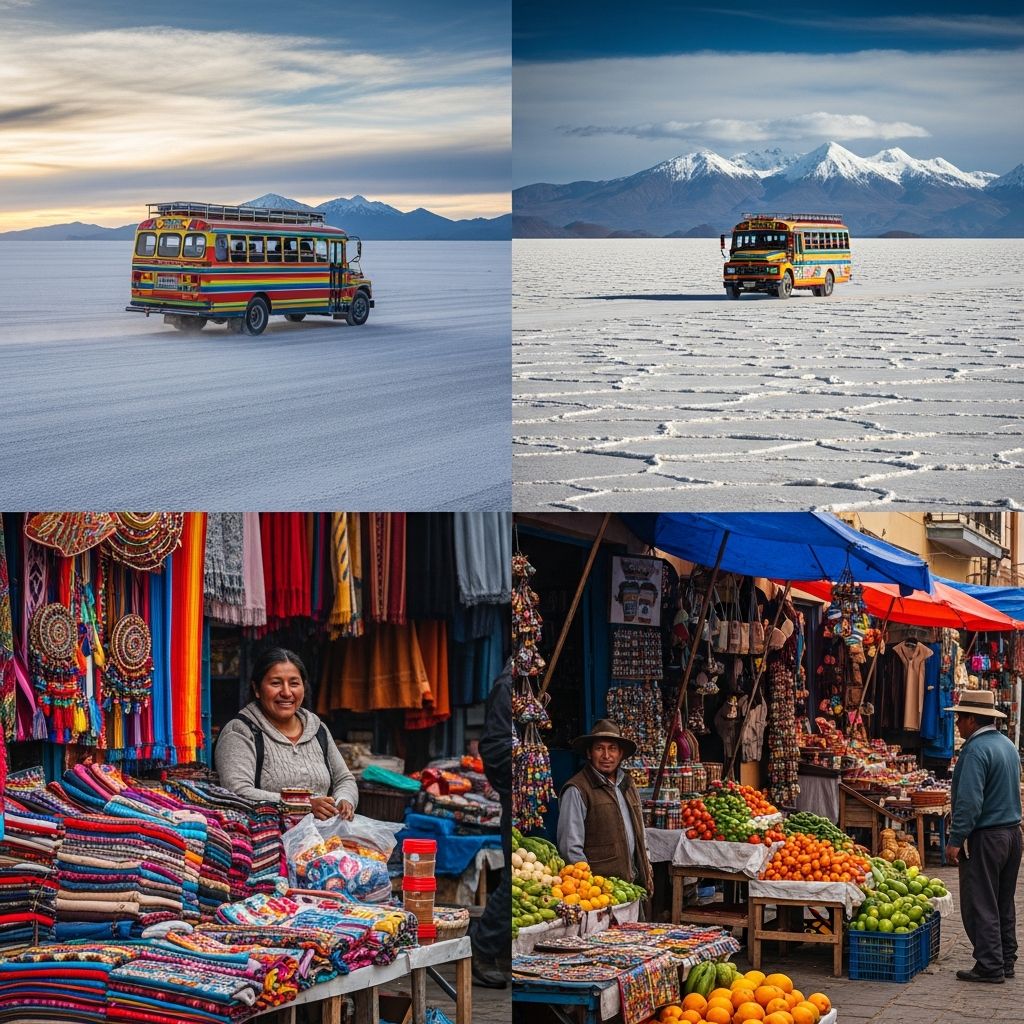
Bolivia’s incredible natural and cultural attractions often cost significantly less than equivalent experiences elsewhere. The world-famous Salar de Uyuni salt flats can be explored through day tours costing 500 bolivianos per person, including transportation, guide services, and lunch. Major museums and art galleries frequently charge minimal entrance fees, with some offering free admission entirely.
Activity Cost Breakdown:
- Salar de Uyuni day tour: 500 bolivianos (all-inclusive)
- La Paz walking tours: less than 3 euros with optional tipping
- Coca Museum entrance: 15 bolivianos
- Valley of the Moon guided access: 15 bolivianos
- Isla del Sol pedestrian tolls: 45 bolivianos
- Indigenous textile museums: 20-25 bolivianos
Free attractions frequently go overlooked despite exceptional value. Public plazas, parks, and natural viewpoints provide photography opportunities and cultural immersion without expense. Many major museums eliminate entrance fees during specific hours, rewarding flexible travelers with complimentary access to significant cultural collections.
Souvenir Shopping Without Overspending
Authentic Bolivian crafts and textiles represent excellent value for international travelers. Traditional llama wool sweaters cost 80-100 bolivianos, while iconic pompom hats rarely exceed 20 bolivianos when purchased directly from market vendors. Tourist shops mark up identical products 200-300% compared to open markets and street vendors.
Smart Shopping Principles:
- Identify genuine open markets versus tourist-only souvenir areas
- Purchase from individual street vendors for lowest prices
- Negotiate prices confidently—vendors expect this interaction
- Support local artisans directly rather than middleman retailers
- Avoid establishments selling exclusively souvenirs and tourist items
Direct vendor purchases simultaneously reduce personal expenses and ensure greater income reaches actual craftspeople. This ethical shopping approach aligns financial conservation with meaningful economic contribution to communities most dependent on tourism revenue.
Seasonal Considerations and Timing
Bolivia’s travel seasons dramatically influence accommodation availability and pricing. Peak tourist seasons coincide with dry weather periods (May through October), when prices increase modestly but availability becomes limited in popular destinations. Visiting during shoulder seasons or rainy months yields better accommodation rates and reduced crowds, though some remote activities become logistically challenging.
Booking accommodations directly upon arrival rather than advance reservations frequently secures better rates, particularly in smaller towns where supply exceeds demand. Negotiating multi-night stays regularly results in 10-20% discounts compared to nightly rates.
Common Budget Mistakes to Avoid
Understanding frequent traveler pitfalls prevents costly errors. International flight selection dramatically impacts overall trip expenses; researching alternative airlines, accepting stopovers, and considering entry through neighboring countries can save hundreds of dollars. These savings often exceed accommodation or activity expenses combined.
Additional avoidance strategies include skipping premium tours for discoverable activities, maintaining emergency cash reserves separate from primary funds, and avoiding currency exchanges at unfavorable rates. Many travelers overprepare with unnecessary equipment or excessive luggage, incurring unexpected fees while burdening their journey.
Frequently Asked Questions
How much should I budget daily for a comfortable Bolivia trip?
Budget travelers comfortably experience Bolivia spending 20-30 euros daily, covering all essential expenses. This assumes mid-range accommodation, local food, public transportation, and occasional paid activities. Minimal budgets near 10 USD focus exclusively on basic hostels and local meals, while higher daily spending enables more frequent paid experiences and comfort upgrades.
Is Bolivia safe for solo budget travelers?
Bolivia welcomes solo travelers with generally positive safety records in major tourist areas. Standard precautions—avoiding ostentatious displays of wealth, traveling with others when possible, and respecting local customs—apply as with any international destination. Engaging with other travelers and maintaining awareness of current conditions ensures safer experiences.
What month offers the best budget-travel conditions?
May through October provides dry weather ideal for outdoor activities, though prices increase slightly during these months. December through March offers rainy season rates with lower prices but limited activities. April, May, September, and October balance reasonable prices with good weather conditions, making these shoulder months ideal for budget optimization.
Can I travel Bolivia without speaking Spanish?
While Spanish facilitates interactions and demonstrates respect for local culture, English speakers navigate major tourist cities adequately. Learning basic phrases significantly enhances experiences and enables negotiation for better prices. Budget travelers benefit substantially from attempting Spanish communication, as this effort frequently results in lower vendor prices and warmer community interactions.
Which areas of Bolivia offer the best value?
Smaller cities and towns consistently offer lower prices than major tourist hubs like La Paz and Uyuni. Secondary destinations provide authentic cultural experiences while maintaining significantly reduced accommodation and food costs. However, these areas require greater flexibility and independent navigation compared to well-trodden tourist routes.
Final Thoughts on Budget Bolivia Travel
Bolivia represents an exceptional destination for financially conscious adventurers seeking authentic South American experiences. The nation’s remarkable affordability, combined with diverse landscapes and rich cultural heritage, enables travelers to extend journeys substantially while maintaining comfort standards. Strategic planning, local engagement, and flexibility regarding accommodation and activity selections empower visitors to experience Bolivia’s magnificence without financial anxiety. By embracing local customs, shopping thoughtfully, and utilizing public transportation efficiently, travelers create memorable experiences that respect both their budgets and the communities they visit.
References
- Cost of a 1-month backpacking trip to Bolivia: our travel budget — Novo Monde. https://www.novo-monde.com/en/bolivia-cost-travel-budget/
- Bolivia Travel Guide [2026] – Everything to Know — On My Canvas. https://www.onmycanvas.com/bolivia-travel-guide-backpacking-bolivia/
- 28 Ways to Blow Your Budget in Bolivia — BoliviaBella. https://www.boliviabella.com/budget.html
- Bolivia Travel Guide 2025: No-BS Tips, Destinations & Costs — Ataw Travels. https://www.atawtravels.com/guides/discovering-bolivia-a-no-bs-guide-for-real-travellers
Similar Articles





Read full bio of Sneha Tete