Bond’s Arctic Edge: No Time to Die in Faroe Islands
Explore the rugged cliffs and hidden villages of the Faroe Islands, immortalized as James Bond's dramatic lair in No Time to Die.
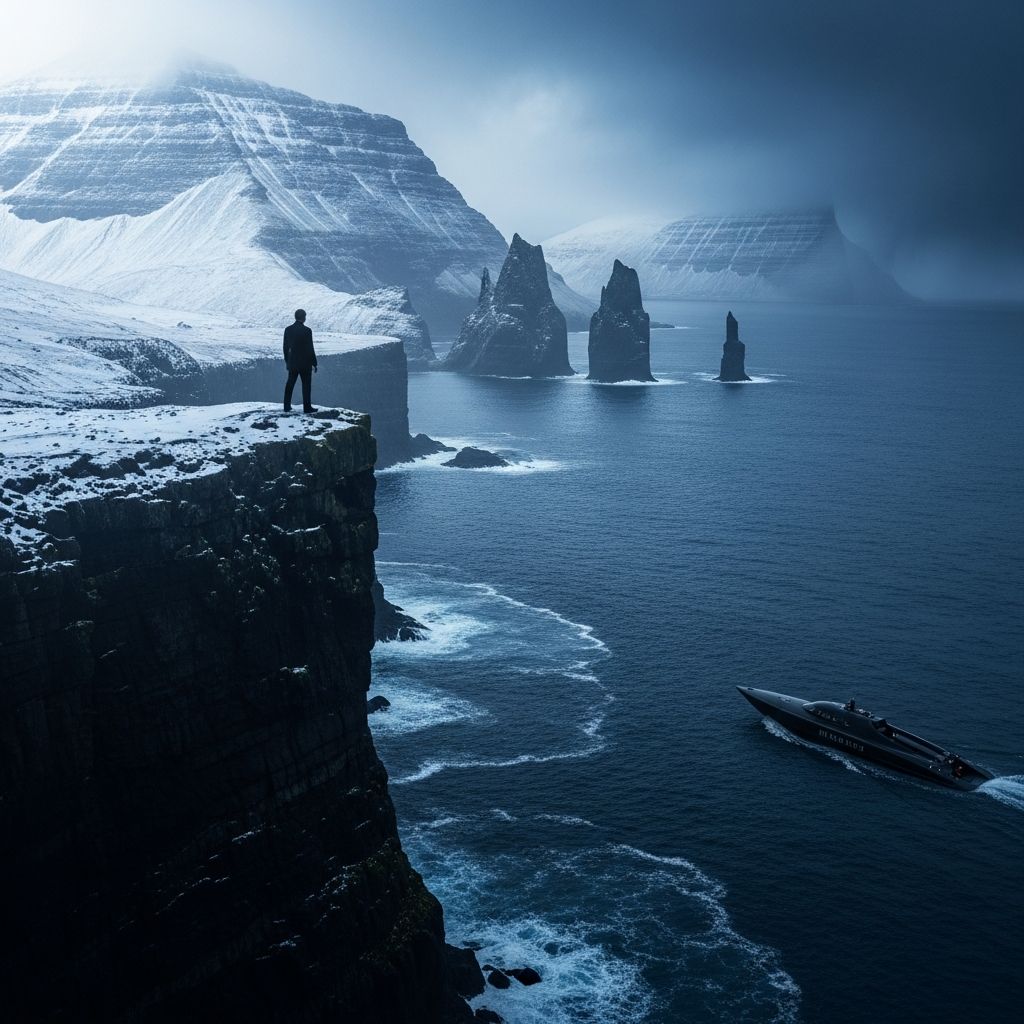
The Faroe Islands, a remote archipelago in the North Atlantic, gained global spotlight when selected as a key filming location for the 25th James Bond film, No Time to Die. This Daniel Craig swan song transformed the dramatic landscapes of Kalsoy Island into the sinister lair of villain Safin, blending espionage thriller action with the region’s raw, untamed beauty.
The Allure of Kalsoy: Bond’s Poison Island Hideout
Kalsoy, one of the Faroe Islands’ northernmost isles, served as the primary backdrop for intense sequences in No Time to Die. Known for its sheer cliffs plunging into the ocean, narrow winding roads, and mist-shrouded mountains, the island perfectly embodied the isolated, foreboding atmosphere of Safin’s complex. Production crews arrived in autumn 2019, capturing footage over several days amid challenging weather conditions typical of the North Atlantic.
Filming centered around two iconic spots: the village of Trøllanes and the Kallur Lighthouse. Trøllanes, nestled in a deep valley flanked by majestic peaks, provided intimate village scenes that contrasted with the island’s wild exterior. Crews spent two full days here, utilizing the area’s authentic Faroese architecture and serene yet dramatic setting. Meanwhile, the Kallur Lighthouse, perched on a razor-edge cliff, became the visual centerpiece for aerial shots and high-tension moments. Three days of shooting at this site leveraged its 360-degree ocean views and precarious positioning, enhanced by an orange helicopter for dynamic overhead perspectives.
Faroe Islands Geography and Why It Fits Bond
Comprising 18 main islands, the Faroe Islands lie between Iceland and Norway, under Danish sovereignty but with a distinct Nordic identity. The archipelago’s volcanic origins create a topography of steep fjords, basalt stacks, and puffin colonies, making it an ideal stand-in for fictional exotic locales. Kalsoy’s elongated shape— just 31 kilometers long but under 5 kilometers wide—amplifies its sense of isolation, reachable only by ferry from Klaksvík on Borðoy Island.
- Key Geographical Features: Dramatic sea cliffs up to 500 meters high, subpolar oceanic climate with frequent rain and wind, over 100 tunnels linking communities.
- Biodiversity Hotspot: Home to seabirds like Atlantic puffins and fulmars; whales frequently spotted offshore.
- Human Scale: Population under 54,000 across all islands, preserving untouched wilderness.
This combination of accessibility challenges and visual spectacle made Kalsoy a natural choice for Bond producers seeking authenticity beyond CGI.
Behind-the-Scenes: Filming Logistics on Kalsoy
Production for No Time to Die kicked off globally in spring 2019, with Faroe Islands shoots in late September. The crew, including director Cary Joji Fukunaga, navigated limited infrastructure: no airport on Kalsoy means ferry travel, and roads are single-lane with blind curves. An orange helicopter, spotted in Tórshavn before heading north, facilitated aerial cinematography, capturing Kalsoy’s contours from impossible angles.
Local support was crucial. Faroese authorities and residents accommodated the high-profile team, closing roads minimally to preserve daily life. The shoot wrapped without major disruptions, but whispers of Daniel Craig sightings fueled local excitement. Post-production integrated these raw footages into Safin’s nanobot-laden fortress, where the island’s natural menace amplified the plot’s stakes.
| Filming Site | Duration | Key Scenes | Access Tips |
|---|---|---|---|
| Trøllanes Village | 2 days | Village exteriors, character interactions | Ferry to Syðradalur, then drive 10km |
| Kallur Lighthouse | 3 days | Aerial chases, cliff confrontations | Hike 45min from road end; windy conditions |
| General Kalsoy | Ongoing | Helicopter flyovers, establishing shots | Tours from Klaksvík ferry port |
Touring Bond Locations: A 007 Itinerary
Fans can now follow Bond’s footsteps via guided tours departing from Klaksvík. Start with the 10:30am ferry to Syðradalur on Kalsoy, where local guides board buses for a full-day exploration. Highlights include Trøllanes’ filming valley and the hike to Kallur—wear sturdy boots for the uneven terrain and sudden gusts.
- Morning Ferry Ride: 20-minute crossing with sea views; spot dolphins.
- Trøllanes Stop: Wander the valley, imagine Bond’s stealthy approaches.
- Lighthouse Trek: 1km uphill path; panoramic rewards at the top.
- Afternoon Options: Visit Rakin or Mikladalur for folklore sites.
- Return: Ferry back by evening; dine on fresh seafood in Klaksvík.
Book in advance, especially summer; tours cost around 1000 DKK per person, including transport.
Beyond Bond: Adventures in the Faroe Islands
While Bond put Kalsoy on the map, the archipelago offers year-round thrills. Hike the Slættaratindur peak on Streymoy for 360-degree vistas, or kayak Nólsoy Island’s waters. Birdwatchers flock to Vestmanna for cliff nesting sites. Culinary highlights: wind-dried lamb (skerpikjøt) and rhubarb everything—from cakes to beer.
- Best Seasons: Summer (June-Aug) for midnight sun; winter for Northern Lights.
- Getting There: Fly to Vágar Airport (VGS) via Iceland or Denmark; Atlantic Airways operates direct routes.
- Stay Sustainable: Stick to paths, support local guides to minimize impact.
Cultural Immersion: Faroese Life Amid the Drama
Faroe Islanders blend Viking heritage with modern self-rule. Chain dance (faroese: færingadans) gatherings in historic turf-roofed churches showcase oral storytelling traditions. Tórshavn, the colorful capital, hosts the Nordic House cultural center. Bond’s visit sparked tourism boom, but locals emphasize responsible travel to protect fragile ecosystems.
Impact of Bond on Faroe Tourism
Post-release in 2021, Kalsoy visitor numbers surged 30%, with lighthouse hikes requiring permits during peak times. Official tours ensure safe access, channeling economic benefits to communities. This mirrors Bond’s global halo effect, seen in Skyfall’s Scottish Highlands surge.
Frequently Asked Questions
Is Kalsoy safe for Bond site hikes?
Yes, but weather changes rapidly; guided tours recommended. Kallur’s cliff edge has no barriers—exercise extreme caution.
When was No Time to Die filmed in Faroe Islands?
Autumn 2019, primarily late September on Kalsoy.
Can I see the orange helicopter used in filming?
It was a production rental; replicas or tours reference it, but it’s not stationed there.
Are there Bond tours year-round?
Primarily summer; check Visit Faroe Islands for schedules.
What other films shot in Faroe Islands?
Mainly No Time to Die; its debut elevated the location’s profile.
Planning Your Faroe Bond Adventure
Pack layers, waterproof gear, and a sense of adventure. From Tórshavn, buses or rental cars reach Borðoy easily. Combine with puffin safaris or hot springs for a full itinerary. The Faroe Islands prove Bond’s taste in lairs matches real-world wonders.
References
- James Bond 25 filming in the Faroe Islands — Lonely Planet. 2019-09-25. https://www.lonelyplanet.com/articles/james-bond-25-filming-faroe-islands
- James Bond 25 filming in the Faroe Islands — PR Newswire. 2019-09-25. https://www.prnewswire.com/news-releases/james-bond-25-filming-in-the-faroe-islands-300925340.html
- James Bond – No Time to Die (Filming Location) in 4K — AirVuz. 2020-05-XX. https://www.airvuz.com/video/James-Bond—No-Time-to-Die-Filming-Location-in-4K?id=5ed00f0d36c2656a172b1fe3
- Discover The Faroe Islands: Filming location of “No Time to Die” — 007 Travelers. N/A. https://www.007travelers.com/bond-25-news/discover-the-faroe-islands-filming-location-of-no-time-to-die/
- Faroe Islands | Bond Lifestyle — James Bond Lifestyle. N/A. https://www.jamesbondlifestyle.com/product/faroe-islands
- No Time To Die | Film Locations — Movie Locations. N/A. https://movie-locations.com/movies/n/No-Time-To-Die.php
Similar Articles






Read full bio of medha deb