Brutalist Icons of Eastern Europe
Discover the raw power and historical depth of Brutalist architecture across Eastern Europe, from monumental monuments to innovative public structures.
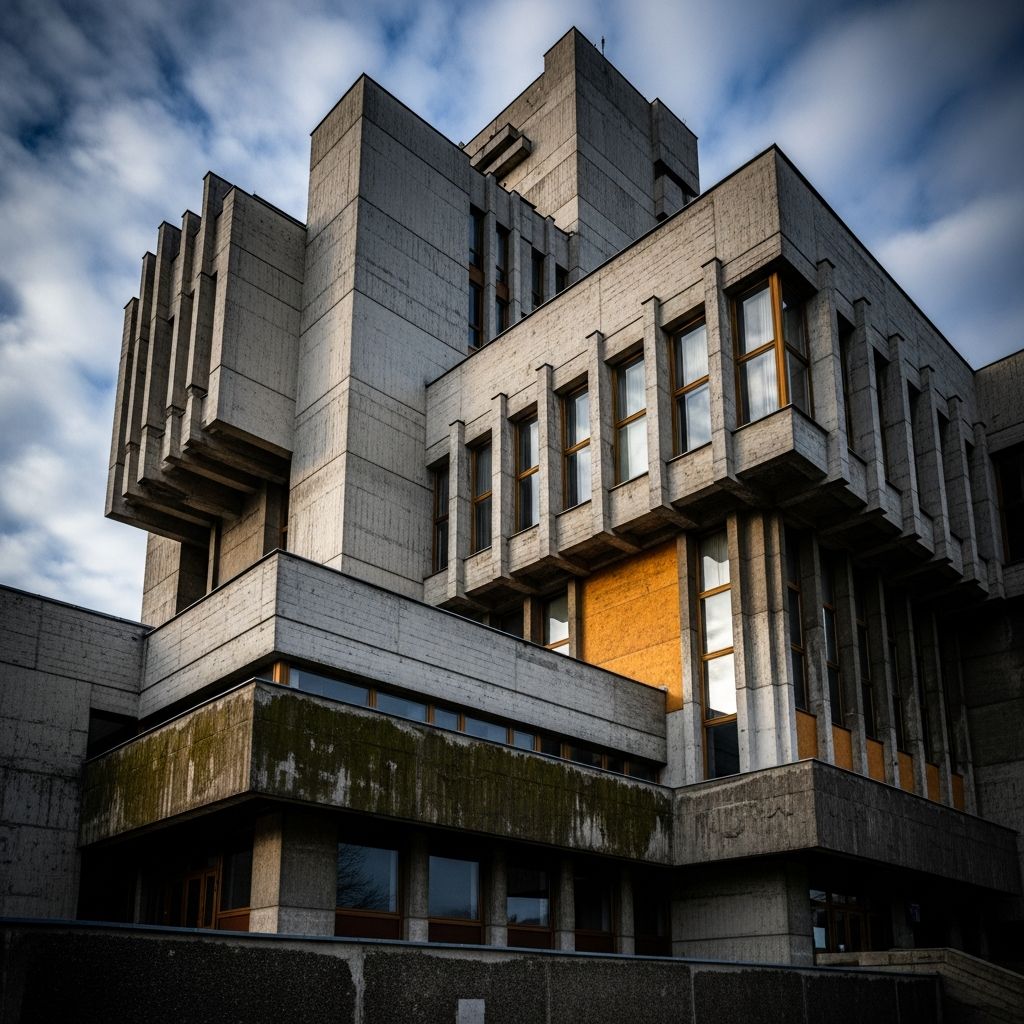
Eastern Europe’s Brutalist architecture stands as a testament to an era of rapid reconstruction and ideological expression, where raw concrete shaped massive, unadorned structures symbolizing strength and modernity. Emerging prominently after World War II, this style flourished under socialist regimes, creating landmarks that blended functionality with monumental scale.
The Roots and Rise of Brutalism in the Region
Brutalism, derived from the French b e9ton brut meaning raw concrete, gained traction in the 1950s as architects sought honest, cost-effective designs amid post-war devastation. In Eastern Europe, it resonated deeply with communist governments aiming to project power and collectivism through imposing forms. Unlike Western examples focused on social housing, regional Brutalism often manifested in public monuments, administrative hubs, and cultural sites, reflecting political narratives of resilience and progress.
Key characteristics include exposed concrete surfaces, geometric angularity, and monolithic volumes that prioritize structural honesty over ornamentation. This approach allowed for quick construction using prefabricated panels, essential for housing booming urban populations in the Soviet bloc. By the 1960s-1970s, the style dominated from Yugoslavia to East Germany, producing over a century’s worth of enduring edifices.
Iconic Examples Redefining Urban Landscapes
Eastern Europe’s Brutalist gems vary from utilitarian infrastructure to symbolic behemoths, each embodying the era’s ambitions.
- Bencinski Servis Petrol, Ljubljana, Slovenia: Architect Milan Miheli0d crafted this 1960s service station as a sculptural canopy, its mushroom-shaped reinforced concrete pillar fanning out into a membranous roof pierced by light holes. Integrated into the city’s northern gateway, it exemplifies Brutalism’s fusion of everyday utility with daring engineering.
- Pametnik 1300 Godini B6dlgariya, Shumen, Bulgaria: Dubbed the heaviest communist monument globally, this colossal structure on Luchov Bair Hill honors 1,300 years of Bulgarian history. Visible from 30 miles away, its immense concrete mass draws from myths of giant ancestry, conveying unyielding national might.
- Buzludzha Monument, Bulgaria: A flying saucer-like peak atop the Balkan Mountains, this decaying UFO-shaped edifice commemorates socialist victories. Its spiraling concrete interior once hosted murals and mosaics, now a haunting relic of ideological fervor.
These structures transcend mere buildings, serving as communal anchors that rallied populations during turbulent times.
Religious and Cultural Expressions in Concrete
Brutalism extended into spiritual and scientific realms, challenging traditional aesthetics with abstract power.
In Vienna, Austria e2 80 94on the edge of Eastern influence e2 80 94the Church of the Most Holy Trinity (1974-1976) by Fritz Wotruba and Fritz G. Mayr comprises 152 asymmetrical concrete blocks stacked like a Cubist sculpture. This non-referential form invites endless perspectives, blurring art, faith, and architecture.
Hungary’s Szombathely Observatory by Elem e9r Zalotay prioritizes function: thick cast concrete walls shield instruments from vibrations and thermal shifts, creating a fortress-like precision tool amid Brutalist boldness.
Housing Estates and the Socialist Dream
Massive residential panels defined everyday life, housing millions in monolithic towers that screamed modernity. In post-Soviet suburbs, these estates e2 80 94often relieved by murals e2 80 94embodied collectivist ideals, separating pedestrians from vehicles in elevated ‘streets in the sky.’ From Warsaw’s blocks to Prague’s panels, they symbolized rapid urbanization but later faced decay stigma.
| City/Region | Key Housing Features | Architectural Impact |
|---|---|---|
| Berlin, East Germany | Prefabricated panels, space-age motifs | Cold War fortresses evoking nuclear-era tension |
| Prague, Czechoslovakia | Monolithic towers with murals | Blended ideology with urban density |
| Warsaw, Poland | Angular high-rises | Post-war rebirth symbols |
Berlin’s Cold War Concrete Fortresses
Berlin epitomizes Brutalism’s dramatic flair. Structures like the M e4usebunker e2 80 94a labyrinthine lab e2 80 94and the Czechoslovak Embassy project otherworldly menace, inspired by space race and atomic fears. Architect Felix Torkar highlights their ‘sinister’ allure, massive scales transforming the city into a Brutalist showcase.
Challenges of Preservation and Revival
By the late 1970s, Brutalism waned, tainted by totalitarianism associations and urban blight. Many face demolition as relics of oppression, sparking heated debates on heritage versus renewal. Yet, a renaissance brews: enthusiasts celebrate their sculptural dystopia, pushing for protection amid cultural shifts.
Preservation efforts underscore Brutalism’s dual legacy e2 80 94oppressive yet innovative e2 80 94inviting reflection on history’s scars.
Why Visit These Concrete Giants Today?
These sites offer immersive history lessons. Trek Bulgaria’s hills for panoramic monument views, explore Slovenia’s functional artistry, or wander Vienna’s blocky chapel. Guided tours in Berlin reveal Cold War secrets, blending architecture with geopolitics.
Frequently Asked Questions
What defines Brutalist architecture?
Raw, exposed concrete; monolithic, geometric forms; emphasis on materials and structure over decoration.
Why was Brutalism popular in Eastern Europe?
It suited socialist goals of mass housing, monumental propaganda, and quick post-war builds using cheap concrete.
Are Brutalist buildings still standing?
Many endure, though some decay; preservation movements grow amid demolition threats.
Best places to see Brutalism in Eastern Europe?
Bulgaria (monuments), Slovenia (service stations), Hungary (observatories), Berlin (fortresses).
Is Brutalism making a comeback?
Yes, as dystopian art inspiring modern designs and photography.
References
- Top 5 20th Century Brutalists Buildings of Eastern Europe e2 80 94 InnovaConcrete. 2020. https://www.innovaconcrete.eu/top-5-20th-century-brutalists-buildings-of-eastern-europe/
- Brutalism in Eastern Europe e2 80 94 Wild East Blog. 2023. https://wildeast.blog/en/brutalism/
- The Impressive Brutalist Buildings in the Region: Top 5 e2 80 94 Hype and Hyper. 2022. https://hypeandhyper.com/the-impressive-brutalist-buildings-in-the-region-top-5/
- Eastern Blocks II e2 80 94 This is Colossal. 2025-04. https://www.thisiscolossal.com/2025/04/eastern-blocks-ii/
- Brutalist Architecture e2 80 94 Wikipedia (citing primary sources). 2026. https://en.wikipedia.org/wiki/Brutalist_architecture
- The Most Extraordinary Brutalist Buildings in Berlin e2 80 94 The SpeciaList (YouTube). 2023. https://www.youtube.com/watch?v=RkmH3q_Mvjs
Similar Articles






Read full bio of Sneha Tete