
Budapest Millennium House: Art Space, Cafe, And Visitor Guide
Discover the restored gem of Budapest's City Park, blending 19th-century elegance with modern culture and cuisine.
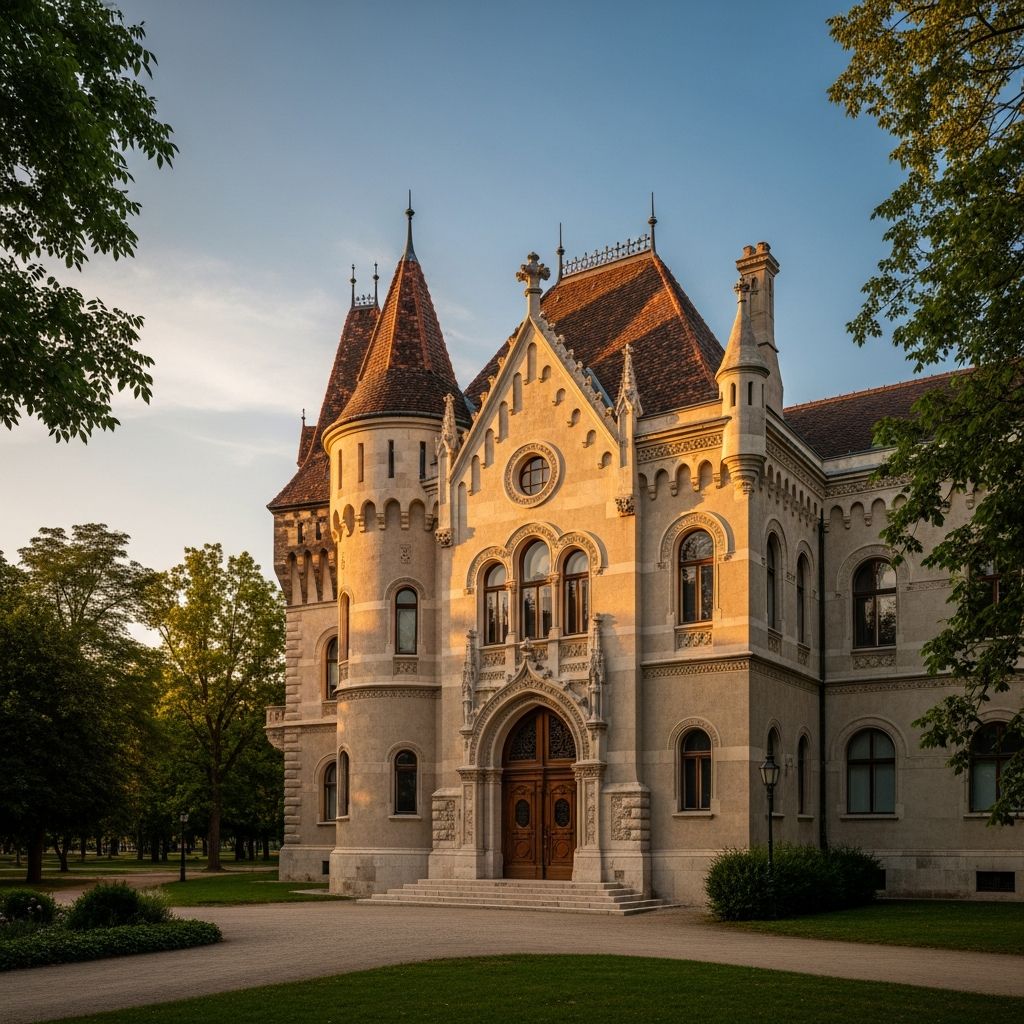
Nestled within the lush expanse of Budapest’s Városliget, or City Park, the House of the Hungarian Millennium stands as a beacon of cultural renaissance. Originally constructed in the late 19th century, this architectural marvel has undergone a meticulous restoration, transforming it into a vibrant hub for art, dining, and community gatherings. As part of the ambitious Liget Budapest Project, the building—once known as the Olof Palme House—now embodies the harmonious fusion of Hungary’s rich historical heritage and contemporary innovation.
The Architectural Legacy of a Bygone Era
The story of the Millennium House begins in 1885, when architect Ferenc Pfaff designed it as an exhibition hall for the National General Exhibition. Contemporary accounts praised it as one of the most striking structures of the event, largely due to its elaborate façade adorned with unique Zsolnay ceramics. These glossy, iridescent tiles, featuring the distinctive eosin glaze in deep greens and golds, captured the imagination of visitors and set a new standard for decorative arts.
Though intended for fine arts displays, the venue soon proved inadequate in size. By 1896, a grander space, the Műcsarnok (Hall of Arts), took over on Heroes’ Square. The original building then served various roles, including as the Budapest City Museum, before suffering severe damage during World War II, which obliterated much of its interior splendor. For decades, it languished in neglect until the Liget Project breathed new life into it starting in late 2017.
Restoration: Honoring the Past While Embracing the Future
The refurbishment, costing nearly 3 billion Hungarian forints (approximately €8 million), adhered strictly to the 1885 blueprints. Workers renewed every Zsolnay ceramic on the exterior, relocated the main entrance to Hermina Street—complete with a welcoming rose garden—and expanded the interior to 1,250 square meters. Today, the neo-Renaissance structure gleams with restored opulence, its deep green walls and gold-plated accents evoking Art Nouveau grandeur.
Inside, the space divides into distinct zones: an interactive exhibition area, a café with a podium stage, a basement auditorium for events, and conference facilities. The restoration preserved the building’s status as a protected cultural monument while integrating 21st-century amenities like advanced gastronomic technology. Opened to the public in October 2019, it now serves as a true community anchor in City Park.
NEO Contemporary Art Space: Where Tradition Meets Modernity
At the heart of the Millennium House lies the NEO Contemporary Art Space, a 350-square-meter gallery dedicated to showcasing global contemporary artists. This venue aims to position Budapest as a key player on the international art scene, fostering collaborations with art academies and offering educational programs for all ages.
- Guided Tours: Expert-led walks through rotating exhibitions, highlighting techniques and themes.
- Museum Pedagogy Workshops: Hands-on sessions for children and adults, encouraging creative expression.
- Interactive Installations: Digital displays chronicling the building’s history and Városliget’s evolution.
The space emphasizes accessibility, with programs designed to demystify modern art and connect visitors to Hungary’s millennial celebrations of 1896, when the nation marked 1,000 years of statehood through grand expositions.
Culinary Excellence in a Historic Setting
The Zsolnay Café and Restaurant, designed by Kissmiklos Architects, is a culinary highlight. Drawing inspiration from the 1896 Millennium Exhibition’s Zsolnay porcelain collection, the interior features reinterpretations of massive Art Nouveau vases, gold-plated peacock sculptures, and overlapping metallic patterns. Deep green hues dominate, paired with custom ceramics crafted by artisans linked to the building’s original decorators.
Diners enjoy turn-of-the-century ambiance fused with innovative cuisine. The menu blends traditional Hungarian flavors—think goulash and chimney cake—with contemporary twists using molecular gastronomy. During summer, the shaded terrace under City Park’s ancient trees offers al fresco dining amidst nature.
| Feature | Description |
|---|---|
| Main Dining Area | Opulent space with Art Nouveau details and live podium performances |
| Terrace | Seasonal outdoor seating with park views |
| Basement Auditorium | Intimate venue for concerts, lectures, and private events |
| Specialty Drinks | Cocktails inspired by 1896 exhibition motifs |
Connection to Hungary’s 1896 Millennium Celebrations
The House’s name pays homage to the 1896 Millennium Exhibition, a pivotal event celebrating the Hungarian state’s millennium. Held in Városliget, it showcased national achievements in art, industry, and culture, drawing millions and affirming Budapest’s status as the empire’s second capital. Structures like Andrássy Avenue, the Parliament, and the subway emerged alongside it, symbolizing modern Hungary.
Echoes of this era persist in the House’s design and programming. Exhibitions often revisit the event’s legacy, including Croatian contributions facilitated by artist Vlaho Bukovac, underscoring regional cultural ties. The restoration revives this spirit, making history tangible for today’s visitors.
Practical Visitor Information
Reaching the Millennium House is straightforward. Located on Hermina Street in City Park, it’s accessible via Metro M1 (Heroes’ Square station) or a pleasant walk from downtown Budapest. Open daily, with varying hours for exhibitions (10 AM–6 PM) and dining (until 11 PM). Admission to the art space is affordable, around 2,000 HUF (€5), with free entry for children under 6.
- Best Time to Visit: Spring or autumn for mild weather and fewer crowds.
- Accessibility: Wheelchair-friendly with ramps and elevators.
- Group Bookings: Discounts for schools and tours.
Events and Community Engagement
Beyond static displays, the House buzzes with dynamic programming. Expect live music on the café stage, literary readings, historical lectures, and seasonal festivals. The basement auditorium hosts up to 100 guests for conferences or film screenings, while the rose garden provides a serene backdrop for weddings and photo shoots.
As a Liget Project flagship, it promotes park-wide synergy, linking with nearby icons like Vajdahunyad Castle and the Széchenyi Baths. This integration enhances Városliget’s role as Budapest’s green cultural lung.
Why the Millennium House Captivates Travelers
For history buffs, it’s a portal to fin-de-siècle Budapest; art lovers appreciate the cutting-edge exhibitions; foodies savor the gastronomic innovations. Families find educational fun in workshops, and couples enjoy romantic terrace evenings. In a city brimming with attractions, this revived landmark offers a multifaceted experience that’s both authentic and forward-looking.
Frequently Asked Questions (FAQs)
What is the history behind the House of the Hungarian Millennium?
Built in 1885 by Ferenc Pfaff for an exhibition, it ties to the 1896 millennial celebrations and was fully restored in 2019.
Is there parking available near the Millennium House?
City Park offers limited paid parking; public transport is recommended for ease.
What types of art are shown in the NEO space?
Contemporary installations from international artists, with a focus on educational outreach.
Can I host private events here?
Yes, the auditorium and restaurant accommodate weddings, corporate functions, and more.
How does the restaurant incorporate historical elements?
Through Zsolnay-inspired ceramics, Art Nouveau motifs, and menus nodding to 19th-century Hungarian cuisine.
Exploring Városliget: Beyond the Millennium House
City Park spans 440 hectares, home to thermal baths, a zoo, and ice-skating rinks. Pair your visit with a stroll to the Millennium Monument or a boat ride on the lake. Seasonal events like the Ice Mill or Christmas market amplify the park’s allure year-round.
References
- The House – Millennium Háza — Millennium Háza. 2023. https://millenniumhaza.hu/en/about-us/the-house
- House of the Hungarian Millennium – Liget Budapest Project — Liget Budapest. 2023. https://ligetbudapest.hu/en/the-project/the-house-of-the-hungarian-millennium
- deep green walls adorns the house of millennium by kissmiklos in Budapest — Designboom. 2019-12-30. https://www.designboom.com/architecture/the-house-of-millennium-restaurant-kissmiklos-budapest-12-30-2019/
- Budapest House of Millennium Restaurant New Design — New East Archive. 2019. https://www.new-east-archive.org/articles/show/11541/budapest-house-of-millennium-restaurant-new-design
- Echoes of the Millennium Exhibition in Budapest in 1896 — MiGK. 2022. https://www.migk.hr/en/bukovac2022-article/item/802-echoes-of-the-millennium-exhibition-in-budapest-in-1896
- The Hungarian Millennial Exhibition as World’s Fair — Cambridge University Press. 2009. https://www.cambridge.org/core/journals/slavic-review/article/articulating-identity-through-the-technological-rearticulation-of-space-the-hungarian-millennial-exhibition-as-worlds-fair-and-the-disordering-of-findesiecle-budapest/2C25F4AE34996F31C36949BDF914FB3B
Similar Articles






Read full bio of Sneha Tete