Discovering Cíes Islands: Galicia’s Hidden Paradise
Escape to Spain's Cíes Islands for pristine beaches, thrilling hikes, and rich wildlife in a UNESCO-protected haven off Galicia's coast.
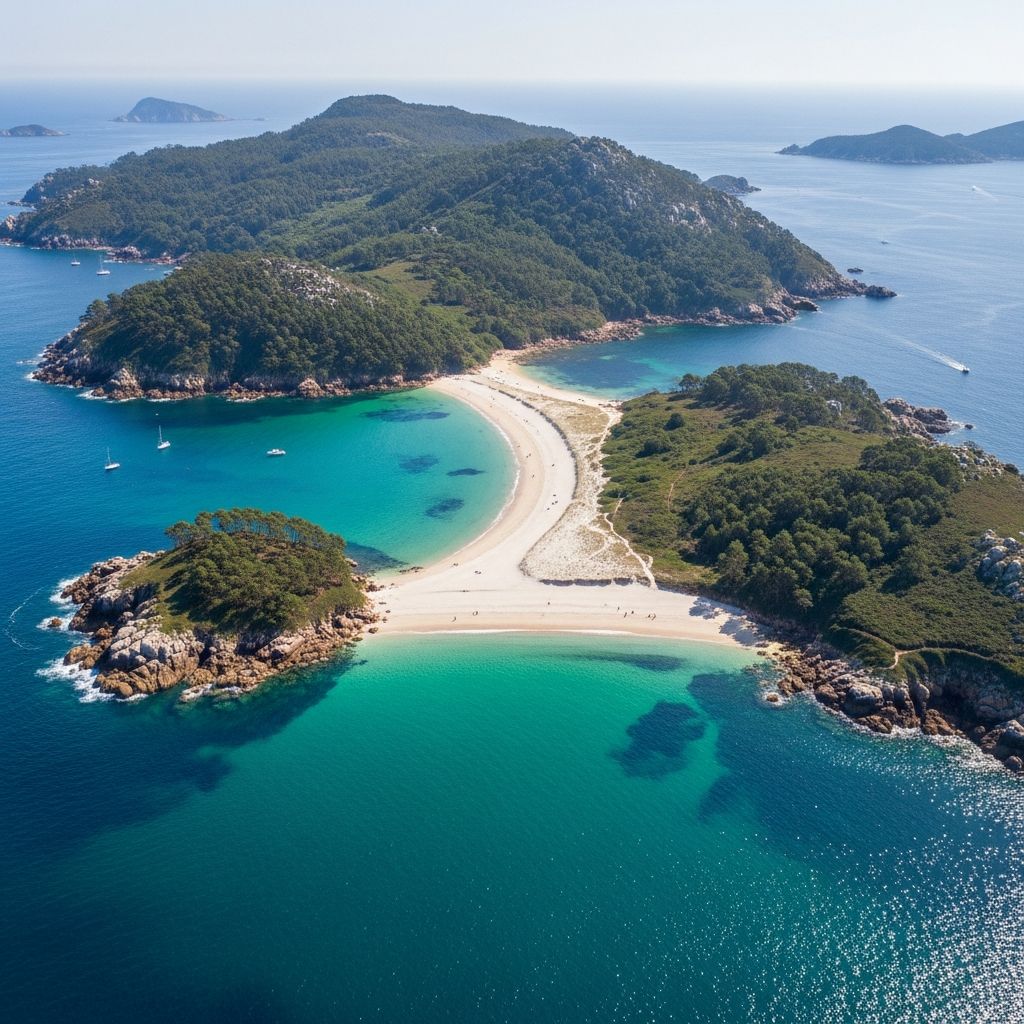
The Cíes Islands represent a stunning escape just off Spain’s northwestern coast, where visitors encounter powdery white sands, vibrant turquoise seas, and lush greenery reminiscent of Caribbean retreats. Forming part of the Atlantic Islands of Galicia National Park, a UNESCO World Heritage site, these islands blend pristine nature with sustainable tourism practices that preserve their untouched allure.
Geography and Unique Formation of the Archipelago
Situated at the entrance to the Vigo estuary, the Cíes Archipelago comprises three primary islands: Monte Agudo (also known as the northern island), O Faro (the central island), and the more remote San Martiño to the south. These are complemented by smaller islets such as Agoeiro, Penela dos Vinos, Carabelos, and Ruzo, creating a compact yet diverse marine-terrestrial ecosystem.
Monte Agudo and O Faro are linked by the iconic Rodas Beach, a sweeping crescent of fine sand that stretches over 1 kilometer, often hailed as one of the planet’s most beautiful shorelines. This natural bridge not only facilitates easy exploration between the two main islands but also shelters the lagoon-like waters ideal for swimming. San Martiño, separated by choppy seas, remains largely wild and accessible primarily by private vessel, offering solitude for those seeking it.
The islands’ strategic position acts as a natural barrier, shielding the Vigo estuary from Atlantic swells while fostering a microclimate that supports unique flora and fauna. Granite cliffs rise dramatically from the sea, dotted with pine forests and dunes stabilized by native vegetation, making the Cíes a textbook example of coastal ecology.
Why Rodas Beach Captivates Global Travelers
Rodas Beach earns its reputation through its perfect semicircular shape, shallow crystalline waters, and surrounding dunes that evoke tropical idylls far from Galicia’s often misty shores. Recognized by The Guardian as the world’s finest beach, it features ultra-fine silica sand that stays cool underfoot even in summer heat.
- Water Clarity: Visibility extends up to 10 meters, perfect for snorkeling amid seagrass meadows.
- Family-Friendly: Gentle slopes and lifeguard presence during peak season ensure safety.
- Protected Status: Strict visitor caps prevent overcrowding, maintaining serenity.
Beyond lounging, the beach serves as a gateway to island paths, with its eastern arm connecting directly to Monte Agudo’s trails. Sunsets here paint the sky in hues of orange and pink, reflecting off calm waters for unforgettable vistas.
Top Hiking Adventures Across the Islands
With over 10 kilometers of well-marked paths, the Cíes offer hikes suitable for all levels, showcasing panoramic views, wildlife, and hidden coves. Trails are maintained by park authorities, featuring wooden boardwalks to minimize erosion.
| Trail Name | Distance & Difficulty | Highlights |
|---|---|---|
| Monte Faro Lighthouse Path | 3.5 km round trip, Moderate | Summit views of fjord bays, San Martiño Island, and lighthouse panoramas |
| Monte Agudo Bird Observatory Route | 2.5 km, Easy-Moderate | Ocean overlooks, seabird spotting, forested paths |
| Porta Lighthouse Trail | 4 km, Moderate | Seaside cliffs, intimate island perspectives, fewer crowds |
| Alto do Príncipe Short Walk | 1.2 km, Easy | Quick access to hilltop scenery, ideal for families |
The Monte Faro route stands out as the most rewarding, ascending gently through scented eucalyptus groves to the 172-meter summit. Here, hikers gaze into a dramatic inlet contrasting the sandy expanses below, with shearwaters gliding overhead. For bird enthusiasts, the Monte Agudo path leads to an observatory where gulls, cormorants, terns, petrels, auks, and gannets nest year-round.
Abundant Wildlife and Birdwatching Opportunities
The Cíes serve as a vital sanctuary for Atlantic seabirds, hosting thriving colonies that thrive due to limited human impact. Over 20 species breed here, including the endangered Atlantic puffin in smaller numbers alongside prolific shags and herring gulls.
Diving beneath the waves reveals vibrant marine life: octopuses, cuttlefish, and schools of sardines navigate kelp forests. With luck, short-beaked common dolphins (locally called arroaces) may appear during boat approaches. The park’s no-take zones bolster fish populations, making snorkeling spots around Rodas exceptional.
- Prime birding hours: Dawn and dusk for feeding frenzies.
- Equipment tip: Bring binoculars; spotting scopes available at the visitor center.
- Ethical viewing: Stay on paths to avoid disturbing nests.
Practical Guide: Permits, Ferries, and Access Rules
Access to the Cíes is regulated to protect the environment, capping daily visitors at 2,200 from May to September and fewer off-season. A free permit, issued by the Xunta de Galicia, must precede ticket purchase.
Booking Process:
- Reserve permit online up to 90 days in advance via the official park site.
- Within two hours, buy ferry tickets from approved operators.
- Cancellations allowed up to 15 days prior; flexibility for weather changes.
Ferries depart from Vigo’s port (year-round) or Baiona (summer only), with 45-50 minute journeys costing €20-€25 round-trip. Private charters via eco-operators like Bluscus allow San Martiño access and offshore swims, ideal for groups.
No cars or drones permitted; pack light for the car-free paradise. Bicycles can be rented on-island for swift beach-to-trail transit.
Overnight Options: Camping Amid the Stars
For immersive stays, the islands’ sole accommodation is a 200-pitch campground on O Faro, open April to September. Tents nestle among pines with sea breezes, offering campfire evenings under Milky Way skies unmarred by light pollution.
Facilities include hot showers, a minimarket, and a beachside café serving Galician empanadas and fresh seafood. Book alongside permits; capacity limits ensure tranquility. Wake to bird choruses and first light on Rodas—no alarm needed.
Day Trip Itinerary: Maximizing Your Visit
Morning: Catch the 9 AM ferry from Vigo. Upon arrival at Rodas, stash bags at the free lockers and snorkel the shallows.
Midday: Hike to Monte Faro for lunch with views (picnics encouraged; no littering). Descend for beach relaxation.
Afternoon: Explore Monte Agudo’s observatory or Alto do Príncipe. Return via late ferry, arriving Vigo by 7 PM.
Total cost per person: €30-50 including transport and snacks. Hydrate and wear sturdy shoes—trails can be slippery.
Sustainable Practices and Conservation Efforts
The Cíes exemplify eco-tourism: Waste is vessel-removed, paths prevent dune erosion, and permits fund ranger patrols. Visitors must follow ‘leave no trace’ principles—no glass, smoking, or fires outside designated areas.
Supporting local: Choose ferries from Vigo-based firms and dine at the island café sourcing regional produce. These measures sustain the islands’ status as a biodiversity hotspot.
Frequently Asked Questions (FAQs)
Do I need a permit for the Cíes Islands?
Yes, a free online permit is required before buying ferry tickets to manage visitor numbers and protect the environment.
How long is the ferry ride to Cíes?
Approximately 45-50 minutes from Vigo, offering scenic estuary views en route.
Can I stay overnight on the islands?
Limited camping is available seasonally; book early with your permit.
Are the hikes difficult?
Trails range from easy 1 km strolls to moderate 4 km ascents—suitable for most fitness levels with proper footwear.
Is Rodas Beach safe for swimming?
Yes, with lifeguards in summer, calm waters, and excellent clarity, though check flags for conditions.
Planning Your Cíes Adventure: Best Times and Tips
Peak season (July-August) brings warmth (25°C) but full quotas—book 90 days ahead. Shoulder months (May, September) offer milder weather, fewer crowds, and active birdlife. Winter visits are rare, limited to authorized researchers.
Packing Essentials:
- Reef-safe sunscreen, hat, water bottle.
- Hiking sandals or trainers, swimsuit, towel.
- Binoculars, camera, light jacket for winds.
Combine with Vigo or Baiona stays for paradores and seafood feasts, extending your Galician odyssey.
References
- Cies Islands: A Short Trip To Galicia’s Picture Perfect — Camino Ways. Accessed 2026. https://caminoways.com/cies-islands-galicia-picture-perfect
- First-time guide to Spain’s Cíes Islands — Lonely Planet. Accessed 2026. https://www.lonelyplanet.com/articles/cies-islands-spain
- Your ultimate travel guide to the Cíes Islands — Travel Planner Holic. Accessed 2026. https://travelplannerholic.com/your-ultimate-travel-guide-to-the-cies-islands/
- How To Visit The Incredible Cíes Islands In The Vigo Estuary — Packing Up The Pieces. Accessed 2026. https://www.packing-up-the-pieces.com/how-to-visit-cies-islands-galicia/
- Cíes Islands — Turismo de Vigo (Official). Accessed 2026. https://www.turismodevigo.org/en/cies-islands
- Spain, Baiona and the Cíes Islands – Galicia’s Coastal Wonders — 4B Travel Guide. Accessed 2026. https://www.4btravelguide.com/post/spain-baiona-and-the-cies-islands
- Cies Archipelago — Illas Atlánticas National Park (Official). Accessed 2026. https://illasatlanticas.gal/en/visit-the-park/visit-cies
Similar Articles







Read full bio of Sneha Tete