
Danube Limes Bulgaria: 32 Roman Sites Nominated For UNESCO
Discover Bulgaria's Roman Danube frontier sites pushing for UNESCO status in a multinational effort to preserve ancient history.
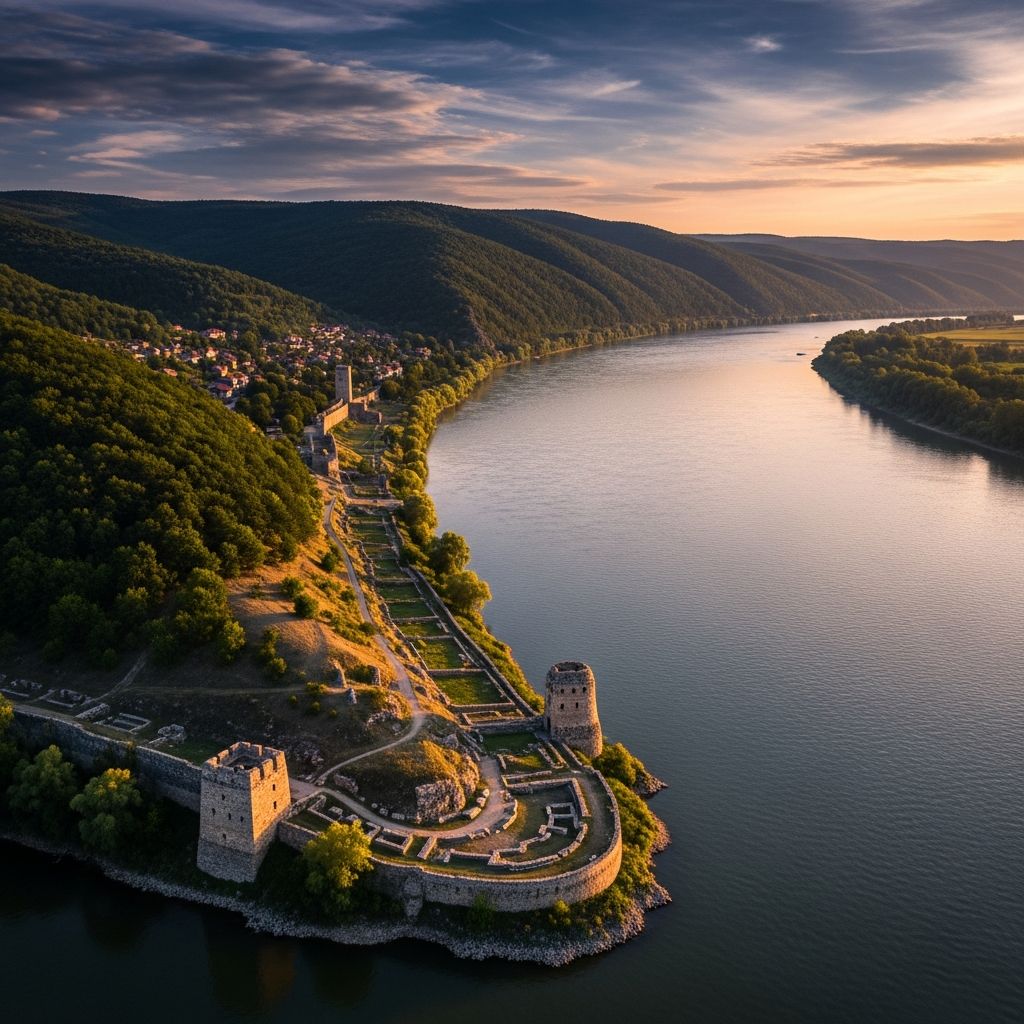
Danube Limes Bulgaria UNESCO Frontier
Bulgaria’s stretch of the Danube River holds a treasure trove of Roman-era archaeological wonders, forming a critical segment of the ancient empire’s eastern boundary known as the Danube Limes. Spanning 471 kilometers along the southern bank, this frontier features 32 meticulously selected sites poised for UNESCO World Heritage recognition through a collaborative nomination with Romania, Serbia, and Croatia.
The Historical Backbone of the Roman Danube Frontier
The Danube Limes represents the Roman Empire’s strategic defense line against northern tribes, evolving from a natural river barrier into a fortified network of camps, forts, roads, and settlements. In Bulgaria, this limes coincides precisely with the modern border shared with Romania, preserving remnants of military might, civilian life, and industrial activity from the 1st to 4th centuries AD.
Unlike the more westerly segments already inscribed on UNESCO’s list—such as the western Danube Limes covering Bavaria, Austria, and Slovakia—Bulgaria’s portion awaits its turn in the eastern extension bid. This joint endeavor underscores the transnational nature of the Frontiers of the Roman Empire, the largest archaeological monument globally, encircling the Mediterranean with over 7,000 km of fortifications.
Key Archaeological Gems in Bulgaria’s Portfolio
From the Bulgarian Limes Commission’s selection process, 32 sites emerged as exemplars of diversity and preservation, including legionary fortresses, open settlements, road stations, quarries, and production hubs. Approximately one-third of the roughly 100 potential locations were chosen to satisfy UNESCO’s rigorous criteria for outstanding universal value.
- Ratiaria: A major legionary base near Vidin, showcasing military architecture and urban development.
- Oescus (Ulpia Oescus): Near Gigen, famed for Constantine the Great’s Danube bridge and extensive ruins.
- Novae: A legionary fortress with well-preserved barracks and amphitheater traces.
- Dimum: Proximity to Belene, revealing watchtower and fort remnants.
- Iatrus: Riverside fort highlighting adaptive engineering to local terrain.
Northwest Bulgaria boasts 10 of these sites, emphasizing the region’s density of Roman heritage, as noted by experts from the Vidin Regional Museum of History. Further east, sites like Transmarisca and Durostorum add layers of administrative and economic history.
Northwest Bulgaria: A Hotbed of Roman Fortifications
The northwestern Danube corridor, particularly around Vidin, hosts a concentration of fortifications that guarded river crossings and trade routes. Archaeologists highlight the limestone production center here—the empire’s largest—supplying materials for vast constructions.
| Site | Location | Key Features |
|---|---|---|
| Ratiaria | Near Vidin | Legionary camp, civilian town, thermal baths |
| Augustae | Northwest region | Fortress and supply depot |
| Multiple stations | Along Danube | Road relays, watchposts |
These installations not only defended but facilitated the Via Istrum, a vital Roman road linking forts to the Danube Delta.
UNESCO Nomination: A Collaborative Path Forward
Coordinated by the Bulgarian Limes Commission under Assoc. Prof. Lyudmil Vagalinski, the nomination involves drafting comprehensive dossiers for UNESCO evaluation, including on-site inspections. This builds on the 2021 inscription of the western Danube Limes (600 km from Germany to Slovakia) as part of the Frontiers of the Roman Empire series.
Projects like Living Danube Limes bolster this effort, aiding nominations for Croatia, Serbia, Romania, and Bulgaria while envisioning a European Cultural Route along the entire limes. The tentative list already recognizes Bulgaria’s contribution as integral to this monumental system.
Engineering Marvels and Daily Life Along the Limes
Roman ingenuity shines in the limes’ adaptation to topography: riverine forts with stone walls, temporary camps for legions, and quarries fueling expansion. The network balanced defense with commerce, as the Danube served as a bustling trade artery.
Civilian vicus (settlements) adjacent to military bases reveal multicultural societies blending Roman, Thracian, and Dacian elements. Artifacts from pottery kilns to inscriptions paint pictures of soldiers, merchants, and families thriving under imperial rule.
Preservation Challenges and Modern Initiatives
Despite remarkable survival, erosion, flooding, and urban encroachment threaten these sites. Collaborative projects emphasize non-invasive tech like LiDAR for mapping, ensuring sustainable tourism.
- Documentation and monitoring via international standards.
- Public awareness campaigns by national museums.
- Integration into eco-tourism networks.
Planning Your Journey to the Bulgarian Danube Limes
Visitors can trace the limes via scenic drives or cruises from Vidin to Silistra. Key access points include:
- Vidin: Start with Ratiaria ruins and Baba Vida Fortress overlay.
- Gigen: Explore Oescus and the Constantine Bridge memorial.
- Svishtov/Nikopol
: Novae excavations and river viewpoints.
Best seasons: Spring or autumn for mild weather and fewer crowds. Combine with wine tours in the Danube plains.
Broader Context in Roman Frontier Heritage
Bulgaria’s limes complements UNESCO-listed peers: Hadrian’s Wall, German Limes, and the western Danube segment. Together, they illustrate evolving imperial strategies from walls to riverine defenses.
Future inscription could unlock funding for restorations, boosting cultural diplomacy across the Danube basin.
Frequently Asked Questions
What is the Danube Limes?
The Danube Limes is the Roman Empire’s frontier along the Danube River, featuring forts, roads, and settlements spanning multiple modern nations.
Has Bulgaria’s Danube Limes received UNESCO status?
Not yet; it’s on the tentative list with a joint bid ongoing for the eastern segment.
How many sites are nominated from Bulgaria?
32 sites, including fortresses like Novae and production facilities.
Can tourists visit these Roman sites?
Yes, many are accessible via museums and guided tours in Vidin, Gigen, and beyond.
Why is this frontier historically significant?
It defended the empire’s edge, facilitated trade, and showcases multicultural Roman life.
References
- 32 of Bulgaria’s Roman Frontier Danube Sites to Bid for UNESCO World Heritage Status — Archaeology in Bulgaria. 2021-03-31. https://archaeologyinbulgaria.com/2021/03/31/32-of-bulgarias-roman-frontier-danube-sites-to-bid-for-unesco-world-heritage-status-in-joint-endeavor-with-romania-serbia-croatia/
- Danubian Limes — Wikipedia. N/A. https://en.wikipedia.org/wiki/Danubian_Limes
- Danube Limes World Heritage — Road of Emperors and Kings. N/A. https://www.strassederkaiserundkoenige.com/en/newsbeitrag/als-die-donau-grenze-war-welterbe-donaulimes/
- Extension of the Danube Limes UNESCO World Heritage — Bulgarian Limes. N/A. https://bglimes.naim.bg
- Living Danube Limes — LBI ArchPro. N/A. https://archpro.lbg.ac.at/projekte/living-danube-limes/?lang=en
- Frontiers of the Roman Empire – The Danube Limes (Western Segment) — UNESCO World Heritage Centre. N/A. https://whc.unesco.org/en/list/1608/
- Living Danube Limes — Interreg Danube. N/A. https://www.interreg-danube.eu/uploads/media/approved_project_output/0001/54/9d5705e0408315f5cdc99f9bb5d12cce72a16ea6.pdf
- Frontiers of the Roman Empire – The Danube Limes (Bulgaria) — UNESCO World Heritage Centre. N/A. https://whc.unesco.org/en/tentativelists/6973/
Similar Articles







Read full bio of medha deb