Discovering Baku’s Historic Inner City
Uncover the timeless wonders of Baku's UNESCO-listed Old City, where ancient walls enclose a vibrant maze of history, culture, and hidden gems.
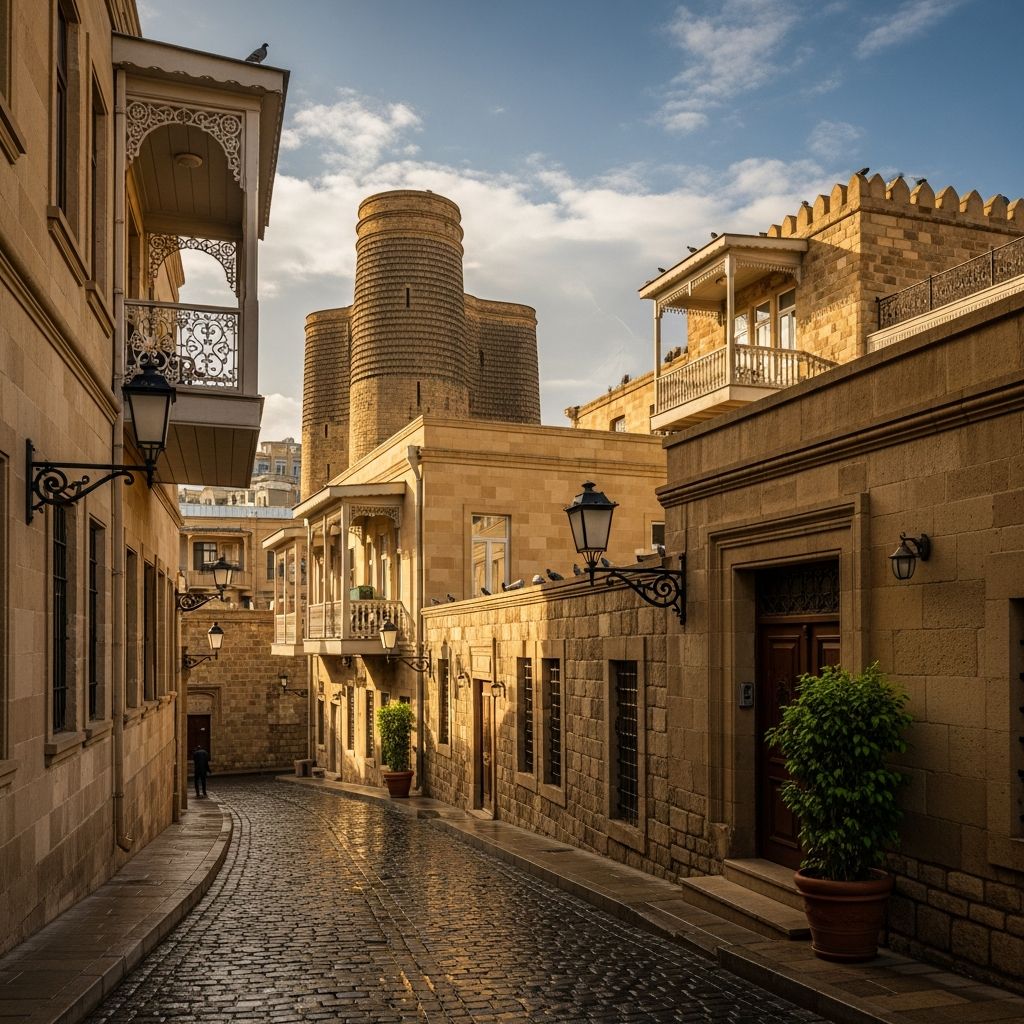
Baku’s Inner City, known locally as Icherisheher, stands as a captivating testament to Azerbaijan’s layered past. Encircled by robust 12th-century fortifications, this compact district pulses with medieval charm, housing grand palaces, enigmatic towers, and serene religious sites that draw visitors into a world far removed from the modern skyline beyond its gates.
The Allure of Icherisheher: A Living Heritage Zone
Designated a UNESCO World Heritage Site in 2000, Icherisheher encapsulates over 2,000 years of history, evolving from a Zoroastrian settlement to a Silk Road hub influenced by Persian, Ottoman, and Russian empires. Today, around 3,000 residents coexist with tourists amid narrow lanes lined with sandstone buildings, artisan workshops, and repurposed inns that once sheltered traders.
Stepping through the towering paired gates at the northeastern edge feels like crossing into a different era. These imposing entrances, part of the original Baku Fortress walls, frame views of winding paths free to explore, though key attractions require modest entry fees payable in cash. An on-site visitor center offers maps, audio guides, and details on led walks, making navigation effortless for first-timers.
Iconic Landmarks That Define the District
The Inner City’s skyline is dominated by unmistakable silhouettes, each whispering stories of defense, royalty, and faith.
The Enigmatic Maiden Tower
Rising 29 meters as a cylindrical sentinel by the Caspian Sea, the Maiden Tower—Qız Qalası in Azerbaijani—is Baku’s enduring emblem, adorning currency and seals. Built primarily in the 12th century atop earlier foundations possibly from the 5th-6th centuries, its purpose sparks debate: fortress, lighthouse, or even ancient fire temple with Zoroastrian roots.
Ascend its eight levels via a steep spiral staircase to a museum detailing Baku’s evolution and a panoramic terrace overlooking the bay and Flame Towers. Legends of a princess leaping from the top to evade capture add romantic lore, though archaeology points to strategic coastal defense. Entry costs a small fee; allow 45 minutes for the climb and exhibits.
Shirvanshahs’ Palace Complex: Medieval Majesty
Nestled westward, this 15th-century ensemble was the seat of the Shirvanshahs dynasty, rulers of northeastern Azerbaijan for centuries. Spanning courtyards, mosques, tombs, and bathhouses, it exemplifies Eastern Islamic architecture with intricate stone carvings, domes, and iwans (vaulted halls).
Key structures include the grand Divan Khanı (audience hall), the ruler’s mausoleum with ornate turbes, and the octagonal mausoleum of Yahya Bakuvi. The site’s layout reflects urban planning sophistication, blending functionality with artistry. UNESCO praises it as a pinnacle of Azerbaijani medieval design. Budget 1-2 hours; combined tickets cover multiple buildings.
Sacred Spaces Amid the Stone
- Juma Mosque (Cümə Məscidi): Dating to the 12th century with 15th-century enhancements, this compact house of worship hides a turquoise-tiled interior beneath its mosaic dome. Non-Muslims welcome outside prayers if modestly attired; admire the mihrab and woven carpets.
- Lezgi Mosque: One of the oldest, from the 14th century, it serves the Lezgin community with simple yet elegant minarets piercing the skyline.
- Muhammad Mosque: 16th-century origins feature a prominent minaret; its courtyard offers quiet reflection amid bustling alleys.
These mosques highlight Islam’s deep imprint, with architectural motifs echoing Shirvan’s golden age. Respect customs: cover shoulders/knees, remove shoes indoors.
Fortress Walls and Defensive Legacy
Encircling 1.5 kilometers, the Baku Fortress Walls—constructed from the 12th to 19th centuries—shielded inhabitants from invaders. Walk segments for views of the sea and city; remnants include ramparts and bastions. The northern Shemakha and southern Salyan Gates were primary accesses in medieval times. Free to stroll, they offer photo ops and historical context.
Everyday Wonders: Caravanserais and Artisan Lanes
Multani and Bukhara Caravanserais, 14th-15th century inns for Silk Road merchants, now host eateries and shops selling carpets, jewelry, and teas. Their arched portals and courtyards evoke trade eras when Baku bartered oil, salt, and silks.
Wander streets like Zeynallı küç for vibrant stalls; haggle for handwoven kelims or copperware. The Miniature Book Museum nearby displays tiny tomes, a quirky cultural nod.
Practical Tips for Your Visit
| Aspect | Details |
|---|---|
| Best Time | Spring (Apr-Jun) or fall (Sep-Oct) for mild weather; avoid summer heat. |
| Duration | Full day ideal; 2-hour highlights tour for short visits. |
| Getting There | Metro to Icherisheher station; walk from Boulevard. |
| Costs | Entry: 15-20 AZN combo; free streets. Cash only. |
| Tours | Guided walks ~30 AZN; audio/self-guided free at center. |
Comfortable shoes essential for uneven cobblestones; carry water, sun protection. Photography allowed, but no flashes in mosques.
Culinary Delights in Historic Settings
Dine in caravanserai restaurants for dolma (stuffed leaves), qutab (stuffed flatbreads), and plov (rice pilaf). Pair with ayran yogurt drink or pomegranate wine. Street vendors offer shekerbura sweets; cooking classes blend sightseeing with hands-on meals.
Planning Your Itinerary: Sample Routes
- Enter via paired gates; visit info center.
- Head to Maiden Tower (30 min).
- Stroll to Juma Mosque via artisan streets (45 min).
- Explore Shirvanshahs Palace (1.5 hrs).
- Lunch in caravanserai; shop.
- Walk walls; exit at sunset.
Extend with nearby Carpet Museum or promenade.
Frequently Asked Questions
Is Baku’s Old City walkable?
Yes, fully pedestrian; compact size suits all fitness levels.
What should I wear?
Modest clothing for mosques; closed shoes for stones.
Are there English guides?
Available at center; apps like GPSmyCity aid self-tours.
Can I visit at night?
Gates close ~8pm; illuminated walls magical after dark.
Family-friendly?
Yes; short paths, interactive museums engage kids.
Preserving the Past for Tomorrow
Restoration efforts balance tourism with authenticity, ensuring Icherisheher thrives as a cultural heartbeat. Events like music festivals animate alleys, fostering community pride.
This enclave not only showcases architectural brilliance but invites immersion in Azerbaijan’s soul—where history lives daily.
References
- The Lonely Planet guide to Baku’s Old City, Azerbaijan — Lonely Planet. 2023. https://www.lonelyplanet.com/articles/guide-to-baku-old-city-azerbaijan
- Baku Old City Walking Tour (Self Guided) — GPSmyCity. 2024. https://www.gpsmycity.com/tours/baku-old-city-walking-tour-4249.html
- Explore Baku’s Old City — Azerbaijan Travel (official tourism). 2025-04-01. https://azerbaijan.travel/explore-bakus-old-city
- Old City Tours: Baku Tours — OldCity.tours (official). 2025. https://www.oldcity.tours
Similar Articles







Read full bio of medha deb