Discovering Galicia: Spain’s Hidden Gem
Explore Galicia's stunning coastlines, ancient pilgrimage routes, world-class wines, and rugged interiors in this comprehensive travel guide.
Galicia, nestled in Spain’s northwest corner, captivates with its misty Atlantic shores, emerald hills, and deep-rooted Celtic heritage. This autonomous community blends pilgrimage trails, seafood feasts, and dramatic landscapes, offering an authentic escape from mass tourism.
Why Galicia Stands Out as a Travel Destination
Unlike Spain’s sun-drenched south, Galicia thrives on its wild beauty and resilient spirit. Shaped by the Atlantic’s fury, it features intricate rías—estuarine inlets carving the coast into fjord-like wonders. Inland, terraced vineyards cling to canyon walls, producing renowned Albariño wines. Pilgrims flock to Santiago de Compostela, endpoint of the iconic Camino de Santiago, while surfers chase waves on the Costa da Morte. Food lovers savor percebes (goose barnacles) and pulpo a la gallega (octopus). With mild summers and fewer crowds, it’s ideal for immersive travel.
Best Times to Visit Galicia’s Diverse Climates
Galicia’s weather mirrors its Celtic roots: rainy winters and temperate summers. Peak season (July-August) brings festivals like the Rías Baixas wine harvest but higher prices. Spring (April-June) offers blooming camellias and hiking trails without crowds. Autumn (September-October) is perfect for seafood and vintages. Avoid winter unless seeking thermal springs in Ourense. Shoulder seasons provide the best balance of weather and value.
- Spring: Mild temps (15-20°C), wildflowers, fewer tourists.
- Summer: Warm (20-25°C), beach time, but book ahead.
- Autumn: Harvest festivals, optimal wine tasting.
- Winter: Cozy feasts, hot springs, low costs.
Gateway Cities: Starting Your Galician Adventure
Three vibrant hubs anchor Galicia: A Coruña, Santiago de Compostela, and Vigo. Each pulses with unique energy.
A Coruña: Atlantic Sentinel
This port city boasts the
Tower of Hercules
, the world’s oldest functioning Roman lighthouse (2nd century AD), a UNESCO site offering panoramic views. Stroll the glass-enclosed promenade, dine on fresh seafood along Calle Francisco Javier Mariño, and explore the Domus Museum’s Roman mosaics.Santiago de Compostela: Pilgrim’s Heart
Centered on its Romanesque cathedral housing St. James’s tomb, this UNESCO World Heritage site draws 300,000 annual pilgrims. Wander the stone-paved old town, join the botafumeiro incense swing (if scheduled), and taste caldo gallego soup in Praza do Obradoiro.
Vigo: Bustling Fishing Capital
Europe’s largest fishing port, Vigo hums with markets and marinas. Ride the funicular for bay vistas, ferry to Cíes Islands, and feast on oysters from nearby rías.
Coastal Marvels: Beaches and Rías Baixas
Galicia’s 1,660km coastline dazzles with white sands and azure waters. The
Rías Baixas
—southern estuaries—shine brightest, rivaling the Caribbean.| Spot | Highlights | Best For |
|---|---|---|
| Cíes Islands | Pristine beaches, turquoise lagoons, puffins | Day trips, snorkeling |
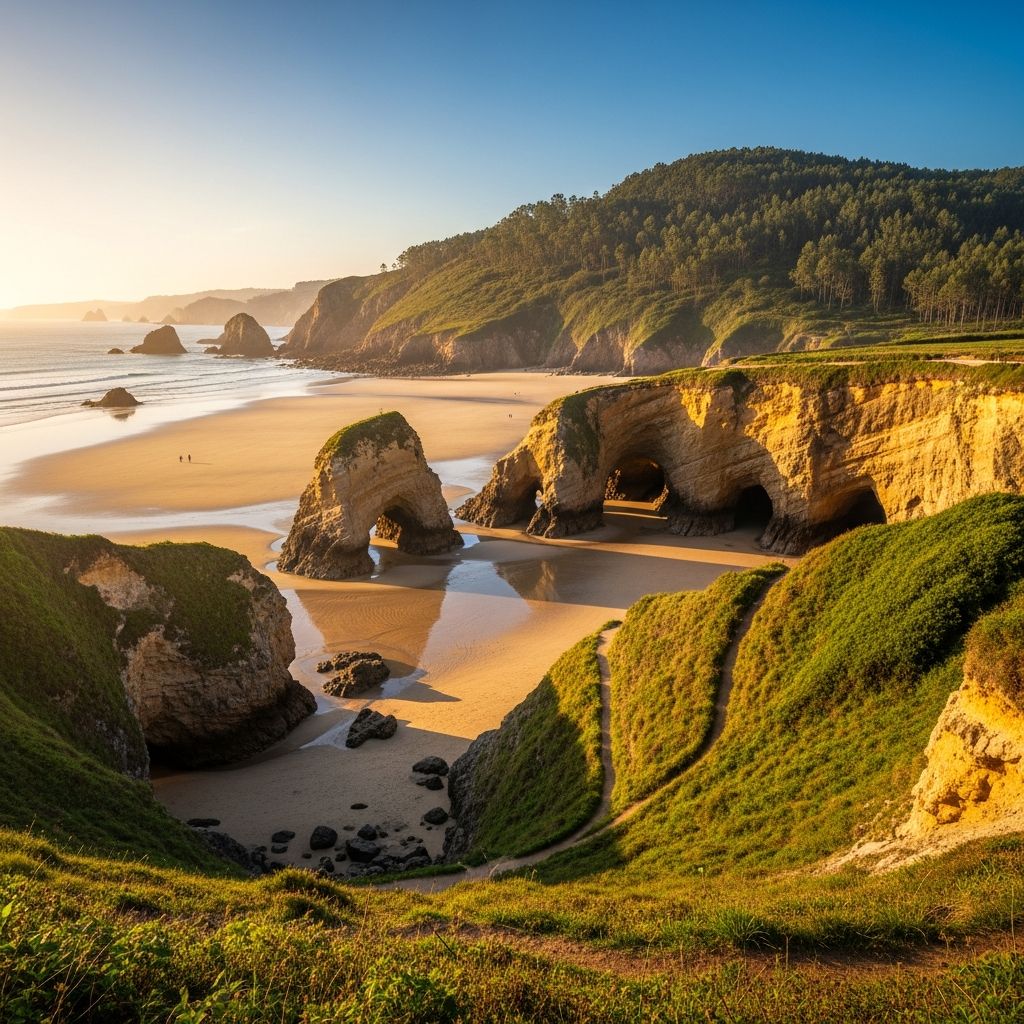
| Praia das Catedrales | Natural stone arches, tide-dependent access | Photography, hiking |
| Illa de Arousa | Bridges to beaches, seafood trails | Relaxation, families |
| Cambados | Albariño wineries, historic mansions | Wine tours, culture |
Book Cíes passes via national park site; Praia das Catedrales requires advance tickets, especially summer. Watch percebeiros harvest barnacles at Corme cliffs—a thrilling spectacle.
Inland Treasures: Canyons, Walls, and Wines
Beyond the sea, Galicia’s interior mesmerizes. Lugo’s intact
Roman walls
(UNESCO-listed, 2km circuit) encircle the old town; pair with botillo sausage feasts.The
Ribeira Sacra
astounds with Sil and Miño canyons, heroically terraced vineyards yielding Mencía reds. Cruise the Cañones del Sil (1.5-hour catamaran) past monasteries like Santo Estevo. Visit adegas in Chantada or Castro Caldelas for tastings.Ourense’s thermal baths (free outdoor chavascales) and Roman bridge offer respite.
Culinary Odyssey: Galicia’s Seafood and Beyond
Galicia claims Spain’s finest cuisine, fueled by Atlantic bounty. Signature dishes:
- Pulpo a la gallega: Tender octopus with paprika and potatoes.
- Percebes: Barnacles with oceanic intensity.
- Empanada: Flaky pies stuffed with cod or lamprey.
- Albariño: Crisp whites from Rías Baixas slopes.
- Queimada: Flaming herbal liquor ritual.
Dine at marisquerías in Vigo or Lugo; pair with Tetilla cheese.
Active Pursuits: Hiking, Surfing, and Pilgrimage
Galicia rewards adventurers. Hike the
Costa da Morte
trail past shipwrecks to Fisterra, Camino endpoint. Surf Nigrán breaks or Finisterre swells. Paddle rías kayaks or cycle greenways like Vía Verde da Estrada. For pilgrims, craft a mini-Camino from Finisterra. Monte Pindo’s Celtic legends and Peña Trevinca peaks (2,000m+) beckon hikers.Planning Your Trip: Itineraries and Logistics
A week unveils Galicia’s essence. Fly into Santiago or A Coruña airports; rent cars for flexibility (trains link cities).
7-Day Coastal-Nature Route
- Day 1: A Coruña – Tower of Hercules, waterfront dinner.
- Day 2: Santiago – Cathedral, old town.
- Day 3: Cambados wineries, Illa de Arousa beaches.
- Day 4: Rías Baixas drive to Vigo.
- Day 5: Cíes Islands ferry paradise.
- Day 6: Lugo walls and cuisine.
- Day 7: Ribeira Sacra canyon cruise, depart.
For weekends, stick to one province: A Coruña for coast, Pontevedra for rías. Budget €100-150/day (mid-range).
Frequently Asked Questions (FAQs)
Is Galicia worth visiting in winter?
Yes, for thermal baths, festivals, and low crowds—pack rain gear.
How do I get to Praia das Catedrales?
Reserve free timed tickets online; visit at low tide.
What’s the best wine region?
Rías Baixas for Albariño; Ribeira Sacra for reds.
Can I do the Camino without full preparation?
Opt for short sections from Santiago to Fisterra.
Is English widely spoken?
In tourist spots yes; learn basic Galician/Spanish phrases.
Practical Travel Tips for Galicia
Stay in pazos (manor houses) or rural casas rurales. Use Renfe trains, ALSA buses. Galicia’s Xunta tourism app aids planning. Respect tides, book islands/ beaches ahead.
References
- A Local’s Guide to Travel in Galicia, Spain — Go Ask A Local. 2023. https://goaskalocal.com/blog/travel-guide-to-galicia-spain
- A first-time guide to Galicia — Lonely Planet. 2023. https://www.lonelyplanet.com/articles/guide-to-galicia-spain
- Galicia Travel Guide — Rough Guides. 2023. https://www.roughguides.com/spain/galicia/
- Tourism of Galicia — Xunta de Galicia (official). 2026. https://www.turismo.gal/inicio?langId=en_US
- The Ultimate Galicia Road Trip — Postcards from the World. 2023. https://postcardsfromtheworld.com/road-trip-throug-galicia-spain/
Similar Articles






Read full bio of medha deb