Discovering Split: Croatia’s Adriatic Treasure
Your complete guide to exploring Croatia's vibrant coastal city
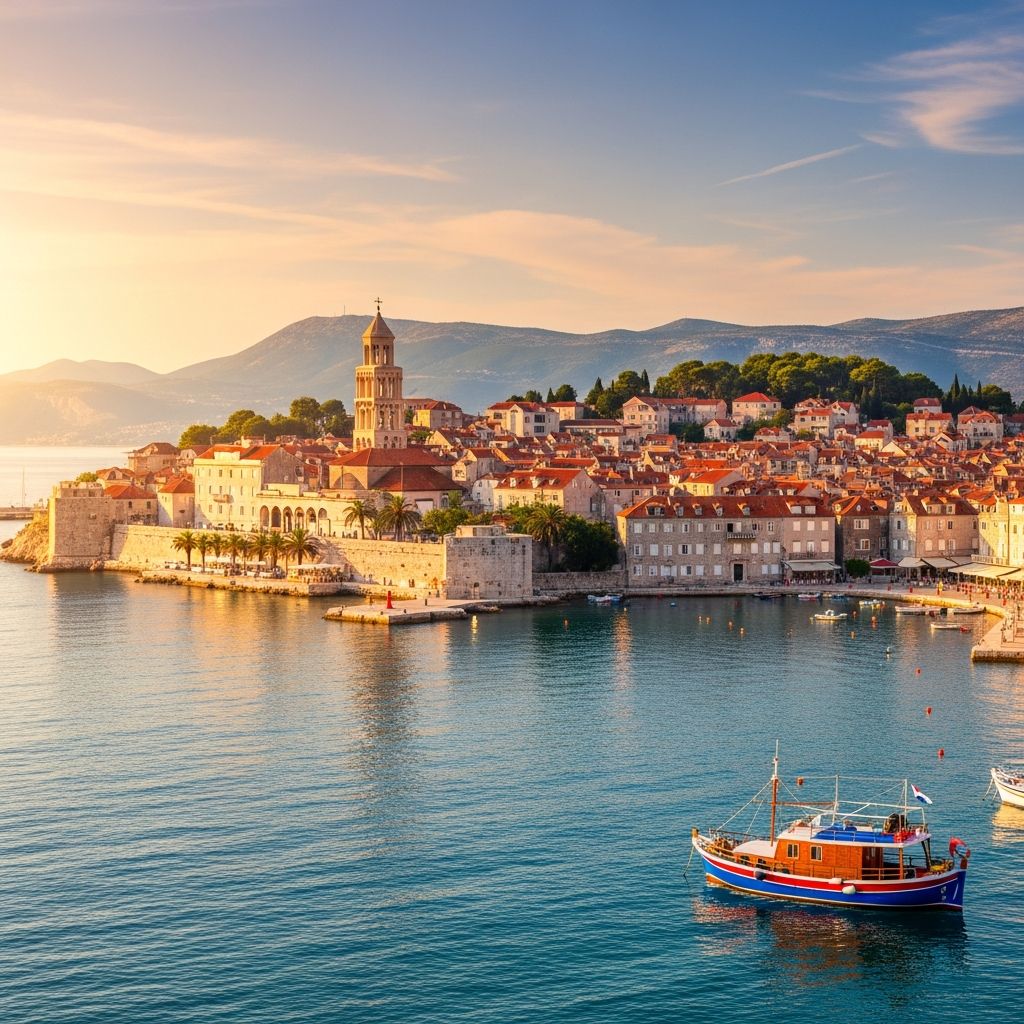
Split stands as one of Southern Europe’s most captivating destinations, blending ancient Roman heritage with vibrant contemporary life. This Mediterranean gem, perched on the Dalmatian coast, offers visitors an intoxicating mix of history, culture, and natural beauty that has enchanted travelers for centuries. With a population of approximately 160,000 residents, Split maintains an authentic charm despite its growing popularity as a tourist destination.
The Historical Significance of Split
The story of Split begins nearly 1,700 years ago when the Roman Emperor Diocletian selected this picturesque location as the site for his grand retirement palace. Rather than fading into obscurity after the emperor’s death, the palace became the foundation upon which an entire city developed. This extraordinary evolution transformed a royal retreat into one of Europe’s most significant archaeological sites, earning recognition as a UNESCO World Heritage Site.
The palace complex sprawls across seven acres and represents one of the earliest designated UNESCO World Heritage Sites globally. Unlike many ancient ruins that stand isolated in archaeological parks, Diocletian’s Palace remains intimately woven into Split’s urban fabric. Streets snake through the palace’s ancient chambers, shops occupy former Roman spaces, and residents live where emperors once ruled. This seamless integration of past and present creates an atmosphere that distinguishes Split from other Mediterranean destinations.
Navigating the Urban Landscape
Despite its status as Croatia’s second-largest city, Split retains a distinctly local character that sets it apart from heavily commercialized coastal towns. The city manages the delicate balance between welcoming international visitors and preserving authentic Dalmatian culture. Croatians go about their daily lives with genuine warmth, creating an environment where tourists feel integrated rather than isolated.
The urban geography divides naturally into distinct zones. The atmospheric Old Town contains the palace ruins and historical monuments, while surrounding neighborhoods offer residential authenticity and culinary treasures. The waterfront promenade serves as the city’s social hub, where locals and visitors converge throughout the day and evening.
Essential Attractions Worth Your Time
The Palace Complex and Its Secrets
Diocletian’s Palace functions as an open-air museum that welcomes visitors without admission barriers to the main courtyard areas. Walking through the palace grounds, you’ll encounter the famous peristyle—a narrow public square that serves as the historical heart of the entire complex. This atmospheric space features ancient Roman columns crafted from red granite, Egyptian monuments that Diocletian brought from Egypt, and the impressive Cathedral of Saint Domnius.
The basement levels of the palace reveal fascinating underground chambers. While basic access is complimentary, enhanced tours of the cellar system are available for those seeking deeper exploration. These subterranean spaces provide climate control and structural support that sustained the palace for centuries.
The Riva Promenade Experience
The Riva represents Split’s most beloved public space, functioning as the city’s social and cultural heart. This wide seafront boulevard, officially known as Obala hrvatskog narodnog preporoda, stretches along the waterfront lined with elegant palm trees. Locals adopt the Riva as their personal territory, occupying café tables for hours while nursing coffee or beer, observing passing crowds, and simply enjoying Mediterranean ambiance.
The Riva transforms throughout the day and seasons. Morning brings relaxed locals starting their day, midday tourists explore the waterfront, and evening hours feature animated bars and street performers. Sunsets from the Riva offer particularly magical moments, as the Adriatic waters reflect golden and orange hues while boats drift through the harbor.
Marjan Hill and Urban Nature
Rising prominently above Split, Marjan Hill earned the nickname “the lungs of the city” thanks to its dense forest covering. This elevated terrain juts into the Adriatic, creating a natural boundary between urban development and open water. The hill provides recreational escape for locals seeking respite from city activity.
Accessing Marjan requires following paths that begin at the Riva’s terminus. While primarily paved, the route incorporates numerous staircases with varying degrees of steepness. The uphill journey rewards visitors with panoramic views encompassing the Adriatic coastline, nearby islands, and the entire city spread below. This natural vantage point offers an essential perspective for understanding Split’s geographical relationship to surrounding territories.
The Cathedral and Religious Heritage
The Cathedral of Saint Domnius crowns the palace complex, occupying space where ancient Roman temples once stood. This vertical landmark dominates Split’s skyline and represents the religious evolution from pagan worship to Christian devotion. The attached bell tower offers climbing opportunities for those seeking additional elevated viewpoints and architectural appreciation.
Exploring Beyond Main Attractions
The Peristyle Square
The Peristyle functions as the focal point of organized tours and independent exploration alike. This intimate public square concentrates numerous historical elements within compressed space—Roman columns, Egyptian monuments, cathedral entrances, and temple ruins create an archaeological concentration that overwhelms the senses. While perpetually crowded, the Peristyle remains essential to understanding Split’s historical narrative.
Neighborhood Wandering
The Varoš neighborhood offers authentic glimpses into contemporary local life, contrasting sharply with the tourist-oriented Old Town. This residential area showcases traditional architecture, family-run establishments, and genuine Croatian hospitality. Similarly, exploring the narrow cobblestone streets and passages that comprise the Old Town’s maze-like structure reveals architectural details, hidden restaurants, and atmospheric corners that mass tourism overlooks.
Culinary and Market Experiences
Split Green Market (Stari Pazar) provides sensory immersion into local food culture, offering fresh produce, regional specialties, and cultural exchange opportunities. The market reflects seasonal abundance and connects visitors directly to agricultural rhythms governing the Dalmatian coast. Food shopping here transcends mere transaction, becoming cultural education.
Cultural Institutions and Museums
The Ethnographic Museum preserves and displays Dalmatian cultural heritage, presenting traditional clothing, crafts, and domestic arrangements that illuminate historical daily life. These institutions complement archaeological sites by providing context and interpretation for the ancient remains that dominate Split’s landscape.
Optimal Visiting Seasons and Duration
Split thrives as a destination during the warm months from June through October, when Mediterranean weather enables full appreciation of waterfront activities and outdoor exploration. This extended season provides flexibility for travel planning, though summer peaks bring corresponding crowd levels and accommodation costs.
Three days represents the ideal duration for thorough Split exploration without rushing. This timeframe allows complete immersion in historical sites, neighborhood exploration, waterfront relaxation, and potentially an island day trip. Shorter visits concentrate on major attractions, while extended stays enable deeper cultural engagement and surrounding territory exploration.
Practical Navigation and Transportation
Split functions as Croatia’s crucial transport hub and port city, facilitating onward travel throughout the Adriatic region. Public transportation and car rental options provide convenient movement within and beyond city boundaries. The manageable urban scale means most attractions remain accessible through walking, though occasional transportation between distant neighborhoods proves useful.
Island Exploration from Split
Split’s geographic position enables straightforward day trips to nearby islands, particularly Hvar, which combines historical significance with Mediterranean charm. Ferry connections from the harbor provide regular, affordable access to island territories. These excursions expand Split’s appeal by enabling diverse experiences within single itineraries.
Dining and Culinary Landscape
The city supports diverse dining establishments serving everything from casual pizza to refined Mediterranean cuisine. Multiple sources reference specific restaurants including Portas Pizzeria, Konoba Dujkin Dvor, and Chops Grill as representative options spanning price ranges and culinary philosophies. Local wine bars provide intimate settings for sampling regional Dalmatian wines while observing daily social rituals.
Frequently Asked Questions
Is there an entrance fee for Diocletian’s Palace?
The main palace courtyard and surrounding areas remain freely accessible as an open-air museum. Additional basement exploration requires paid tickets available at the entrance, though basic access provides substantial historical immersion.
How long should I spend in Split?
Three days allows complete exploration of major attractions, neighborhood wandering, and potentially an island day trip without feeling rushed. Shorter visits work but require prioritization.
When is the best time to visit Split?
June through October offers optimal weather for outdoor exploration and water activities, though summer months bring higher tourism levels and accommodation costs.
Can I take day trips from Split?
Yes, Split’s port location and transportation infrastructure support convenient day trips to nearby islands like Hvar and nearby towns such as Trogir.
Is Split appropriate for budget travelers?
Split accommodates various budget levels with hostels, budget hotels, and inexpensive local dining options available throughout the city.
Why Split Deserves Your Visit
Split represents an exceptional destination where authentic local culture flourishes alongside world-class archaeological significance. The city refuses easy categorization—it functions simultaneously as working shipbuilding center, archaeological treasure, vibrant contemporary metropolis, and relaxing Mediterranean retreat. This multifaceted character ensures different travelers discover different Splits, each equally rewarding.
The harmonious coexistence of centuries-old architecture with contemporary urban life creates visual and cultural dynamism rarely encountered in European destinations. Walking Split’s streets becomes a temporal journey, with each turn revealing different historical layers and different social realities. This palimpsest quality—where past and present occupy identical spaces—generates the atmospheric richness that distinguishes Split from more homogeneous tourist destinations.
Whether drawn by archaeological fascination, Mediterranean beauty, culinary curiosity, or simple wanderlust, Split delivers authentic experiences that transcend typical tourism. The city’s genuine character, accessible attractions, favorable climate, and diverse activities create conditions for meaningful travel experiences that resonate long after departure.
References
- A Complete Travel Guide To Split, Croatia — Frank About Croatia. 2025. https://www.frankaboutcroatia.com/split-croatia/
- Three Days in Split: A Complete Guide to Exploring Croatia — Pasha is Home. Accessed 2026. https://pashaishome.com/three-days-in-split/
- Split – Rick Steves Europe — Rick Steves Europe. Accessed 2026. https://www.ricksteves.com/europe/croatia/split
- Split Travel Guide (Updated 2026) — Nomadic Matt. 2026. https://www.nomadicmatt.com/travel-guides/croatia-travel-guide/split/
- Wandering the Streets of Split, Croatia: Things to Do & Travel Guide — I Travel for the Stars. Accessed 2026. https://itravelforthestars.com/split-croatia-travel-guide/
Similar Articles






Read full bio of Sneha Tete