Disney Parks Trivia: Test Your Theme Park Knowledge
Challenge yourself with fascinating facts about Disney's iconic theme parks
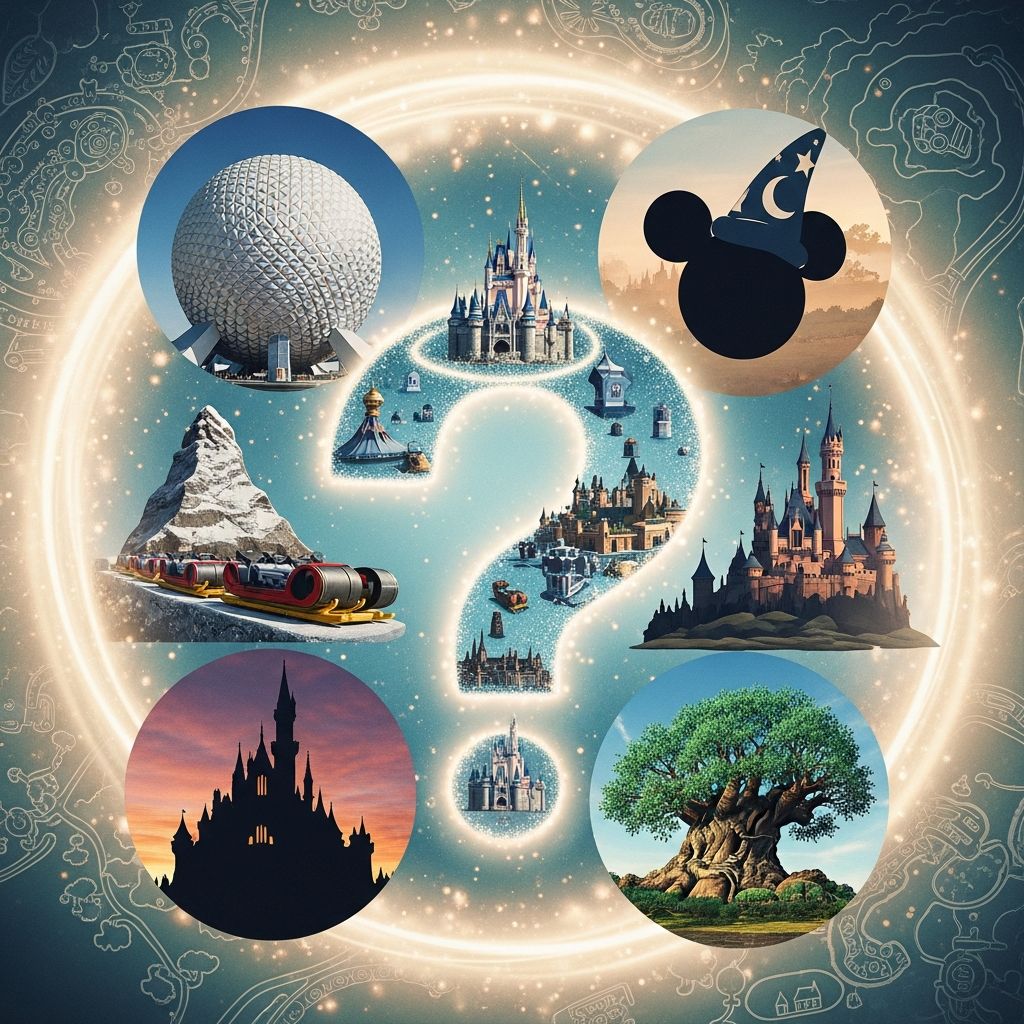
The Disney theme parks stand as some of the most visited and beloved entertainment destinations in the world. Behind the magic and wonder lies a fascinating history filled with remarkable achievements, unexpected challenges, and innovative attractions. Whether you’re a casual visitor or a devoted Disney enthusiast, exploring the rich heritage of these parks reveals surprising stories that shaped modern entertainment. This comprehensive guide presents intriguing facts and questions that illuminate the evolution of Disney’s theme park empire.
The Foundations of Disney’s Theme Park Legacy
Walt Disney’s vision extended far beyond animated films. In the mid-20th century, he conceptualized a place where families could experience entertainment together in a controlled, magical environment. His original plans involved building a small attraction adjacent to his studios in Burbank, California, but he recognized this location was too confined for his ambitious vision. Instead, Disney identified a property in Anaheim consisting of 160 acres of orange and walnut groves, which would become the site of Disneyland.
When Disneyland opened on July 17, 1955, it represented a revolutionary approach to entertainment. The park’s opening day, often referred to as “Black Sunday” by insiders, encountered numerous obstacles. The temperature soared to an unusual 101°F, and a local plumbers’ strike forced Disney to choose between operational drinking fountains or functioning toilets—he selected the latter. Additionally, freshly poured asphalt hadn’t fully cured, causing visitors’ high-heeled shoes to sink into the pavement. Despite these tribulations, Disneyland proved the viability of the theme park concept and launched an industry.
Understanding the Structure and Scale of Walt Disney World
Walt Disney’s original vision evolved into something grander than a single park. Following his death in 1966, his brother Roy O. Disney championed the Florida project. Walt Disney World officially opened to the public on October 1, 1971, with Magic Kingdom as its centerpiece. Unlike Disneyland, which exists as a singular entity, Walt Disney World comprises four distinct theme parks, each offering unique experiences and attractions.
The four parks that comprise Walt Disney World include Magic Kingdom, Epcot, Disney’s Hollywood Studios, and Disney’s Animal Kingdom. Each park occupies a vastly different footprint. Magic Kingdom spans 107 acres, making it the smallest of the four properties. Conversely, Animal Kingdom sprawls across 580 acres, establishing itself as the largest theme park at Walt Disney World. Epcot and Hollywood Studios occupy intermediate positions, though precise measurements vary based on how boundaries are defined.
Visitor Attendance and Park Growth Over Time
The initial reception of Magic Kingdom surprised even optimistic projections. When the park first welcomed guests in 1971, daily attendance averaged approximately 10,000 visitors. This modest figure reflected both the novelty of the destination and the limited regional awareness during those early years. As word spread and transportation infrastructure improved, attendance grew exponentially. In contemporary times, Magic Kingdom attracts an average of 53,000 visitors daily, demonstrating the explosive growth in demand for Disney experiences over five decades.
The addition of subsequent parks accelerated overall resort visitation. Disney’s Hollywood Studios introduced guests to behind-the-scenes entertainment and movie-themed attractions. Epcot, which stands for Experimental Prototype Community of Tomorrow—a name Walt Disney himself coined in 1966—offered futuristic attractions and cultural experiences. The opening of Animal Kingdom on Earth Day, April 22, 1998, rounded out the portfolio, each addition drawing new audiences and extending average stay lengths at the resort.
Iconic Landmarks That Define Each Park
Cinderella Castle dominates Magic Kingdom’s skyline, rising 189 feet tall and adorned with blue and gold turrets and soaring spires. The castle contains a functional Cinderella Suite, though few guests realize this detail. The structure has become the most recognizable symbol of Magic Kingdom and appears on virtually every promotional material associated with the park.
Epcot’s signature landmark, Spaceship Earth, presents a striking geometric form rising 180 feet into the air. The geodesic sphere comprises two interconnected spherical structures housing a ride track. The exterior displays 11,324 aluminum triangle tiles that catch sunlight throughout the day, creating a dynamic visual experience as guests approach the icon.
Animal Kingdom’s Tree of Life commands attention with its massive 145-foot height and intricate design. The trunk features 337 sculpted animals representing diverse species, creating an enchanting focal point. The structure serves as both a thematic anchor and a functional hub from which various lands branch outward.
Notable Attractions and Their Historical Significance
Certain attractions hold special significance within Disney parks history due to their innovative designs or pioneering technologies. Pirates of the Caribbean, for instance, introduced dark ride technology that became a template for future attractions. The ride’s success and enduring popularity established it as one of Disney’s most celebrated creations, still drawing substantial crowds decades after its debut.
The Carousel of Progress, with its theme song “Great Big Beautiful Tomorrow,” represents an iconic Disneyland attraction that transitioned to Magic Kingdom. This continuously operating theater demonstrates Disney’s commitment to technological storytelling innovation, creating narratives through rotating theater environments rather than traditional linear progression.
More recently, Star Wars: Galaxy’s Edge at Hollywood Studios represents the largest single-themed expansion ever constructed at a Disney Park, spanning 14 acres. The Millennium Falcon docked within this immersive land measures more than 100 feet in length, showcasing modern Disney’s ambitious approach to immersive theming. Attractions like Guardians of the Galaxy: Cosmic Rewind broke new ground as the first Disney coaster featuring both reverse launch capability and full 360-degree vehicle rotation.
Fascinating Details Hidden in Plain Sight
Disney parks contain countless details designed to reward observant guests. In Tower of Terror at Hollywood Studios, every clock throughout the building is frozen at 8:05, representing the exact moment lightning struck the building on Halloween night in 1939, causing the mysterious disappearance of guests. This meticulous attention to thematic detail exemplifies Disney’s narrative commitment.
The Walt Disney World Railroad operates four steam-powered trains originally constructed between 1916 and 1928, meaning some locomotives exceed 100 years in age. These functioning antiques continue providing transportation while serving as mobile pieces of entertainment history.
Expedition Everest stands as Florida’s tallest artificial mountain at nearly 200 feet, inspired by Himalayan peaks. This engineering feat creates the illusion of towering wilderness within a subtropical climate, demonstrating Disney’s mastery of environmental storytelling.
Opening Day Experiences and Early Park Attractions
Magic Kingdom’s opening day in 1971 featured 23 rides and attractions. This represented an ambitious initial offering that provided guests with diverse experiences across themed lands. The Prince Charming Regal Carousel, formerly known as Cinderella’s Golden Carousel, holds the distinction of being the oldest attraction at Magic Kingdom, having been originally constructed for Detroit’s Belle Isle Park in 1917. Disney purchased this historic carousel in 1967 and incorporated it into the park’s opening day lineup.
The carousel’s journey illustrates how Disney sources and repurposes vintage attractions. Before arriving at Magic Kingdom, it spent time at Olympic Park in Irvington, New Jersey. This acquisition strategy allowed Disney to combine authentic historical artifacts with newly constructed attractions, creating a diverse attraction portfolio.
Admission Prices and Economic Evolution
Financial accessibility has transformed dramatically since Walt Disney World’s inception. When Magic Kingdom opened in 1971, admission cost a mere $3.50. This remarkably affordable entry price reflected both the era’s economic conditions and Disney’s intent to make the experience accessible to middle-class families. Contemporary admission prices bear little resemblance to these original figures, reflecting decades of inflation, increased operational costs, and enhanced offerings.
The Role of Imagineers in Park Development
Imagineers represent the creative force behind Disney park attractions and experiences. These specialized professionals combine imagination with engineering expertise to devise and construct theme park experiences. The term encompasses designers, engineers, storytellers, and technical specialists who collaborate on every aspect of park development, from initial conceptualization through opening day execution and ongoing refinement.
Construction and Material Innovation
Many iconic Disney structures employ innovative materials and construction techniques. Spaceship Earth’s exterior comprises aluminum triangle tiles, while the sphere’s interior housing the ride mechanism uses steel, concrete, plaster, and molded fiberglass. This combination of materials allows for both structural integrity and aesthetic appeal, enabling the geodesic sphere to function as both landmark and attraction simultaneously.
Cultural Events and Seasonal Celebrations
Beyond permanent attractions, Disney parks host seasonal events that draw repeat visitation. The Epcot International Flower & Garden Festival ranks among the longest-running flower and garden festivals in the United States, spanning more than a mile and a half of gardens throughout the park and featuring 70 individual character topiaries. These events extend the value proposition of park visits and create reasons for guests to return seasonally.
Evolution of Park Attractions and Investment
Since 2017, Walt Disney World has debuted a new attraction yearly, along with three new themed lands. This ongoing investment demonstrates Disney’s commitment to maintaining park relevance and guest excitement. The consistent introduction of fresh experiences, combined with regular refurbishment of existing attractions, maintains operational appeal across repeat visitations.
Iconic Symbols and Merchandise
Mickey ears have served as the quintessential Disneyland souvenir since the park’s opening in 1955, tracing their heritage back to The Mickey Mouse Club television series. These simple headwear items have evolved into one of Disney’s most recognizable merchandise categories, worn by millions of visitors as both practical sun protection and nostalgic keepsake.
Memorable Moments and Cultural Impact
Disney parks influenced American popular culture in unexpected ways. In 1987, following the tradition of prominent athletes being asked about their future plans after winning major competitions, Disney began sponsoring advertisements featuring victorious sports figures. When asked “Now that you’ve won, what are you going to do next?” by off-screen narrators, winning athletes would respond, “I’m going to Disneyland!” This marketing innovation created a cultural association between achievement and Disney parks that persisted for decades.
Quick Facts Quiz Section
- Opening Year: Disneyland opened in 1955, while Walt Disney World opened in 1971
- Park Count: Walt Disney World features four theme parks
- Original Admission: Magic Kingdom’s 1971 opening admission cost $3.50
- Spaceship Earth Height: 180 feet tall
- Animal Kingdom Opening: April 22, 1998
- Cinderella Castle Height: 189 feet tall
- Oldest Carousel: Built in 1917 before arriving at Magic Kingdom
- Railroad Trains: Original steam locomotives from 1916-1928
FAQ Section
When did Disneyland first open to the public?
Disneyland opened on July 17, 1955, in Anaheim, California.
What makes Spaceship Earth unique?
Spaceship Earth stands 180 feet tall and features 11,324 aluminum triangle tiles on its exterior. It houses a geodesic sphere design with internal ride mechanisms.
Which Disney park is the largest?
Disney’s Animal Kingdom spans 580 acres, making it the largest theme park at Walt Disney World.
How many attractions were at Magic Kingdom on opening day?
Magic Kingdom featured 23 rides and attractions on its opening day in 1971.
What is the oldest attraction at Magic Kingdom?
The Prince Charming Regal Carousel, built in 1917, is the oldest attraction at Magic Kingdom.
What does EPCOT stand for?
EPCOT stands for Experimental Prototype Community of Tomorrow, a name coined by Walt Disney himself in 1966.
References
- Disneyland Trivia — Useful Trivia. Accessed April 2026. https://www.usefultrivia.com/history_trivia/disneyland_trivia.html
- Disney World Trivia — Magic Guides. Accessed April 2026. https://magicguides.com/disney-world-trivia/
- Disney World Facts Even You Might Not Know — Disney Parks Blog. Accessed April 2026. https://disneyparksblog.com/wdw/disney-world-facts-to-quiz-your-friends-on/
- 125 Disney Trivia Questions and Answers — Parade. Accessed April 2026. https://parade.com/1041219/alexandra-hurtado/disney-trivia/
- Disneyland Trivia — Mickey Mouse Park. Accessed April 2026. https://mickeymousepark.com/disneyland.aspx?Page=57
Similar Articles




Read full bio of medha deb