Exploring Ancient Ireland’s Timeless Trails
Embark on a captivating road trip through Ireland's prehistoric tombs, sacred hills, and medieval monastic wonders spanning 3000 years of history.
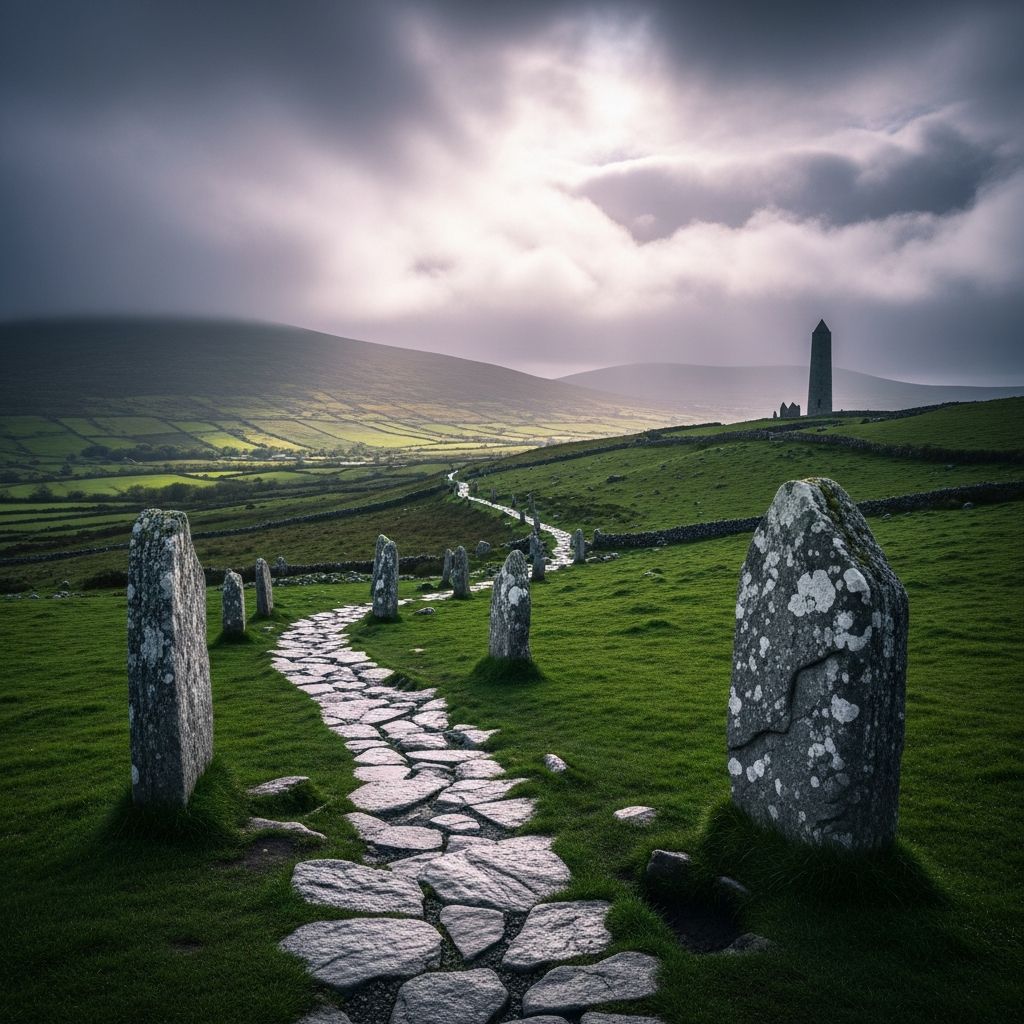
Ireland’s central regions hold some of the world’s oldest archaeological treasures, inviting travelers to trace human history from the Stone Age to early Christianity. This curated 4-day road trip, spanning roughly 300 miles, weaves through emerald valleys, limestone outcrops, and riverbanks dotted with megalithic monuments and sacred enclosures. Designed for self-drive explorers, it highlights Ireland’s profound prehistoric legacy alongside its enduring spiritual heritage.
Why Journey Through Ireland’s Ancient Heartland?
The island’s midlands and southeast form a natural corridor of antiquity, where Neolithic farmers built monumental tombs over 5,000 years ago, Celtic kings ruled from hilltop forts, and monks established thriving communities amid Viking raids. These sites, managed by Heritage Ireland, offer more than ruins—they evoke rituals, battles, and daily lives of ancient peoples. Driving here reveals how Ireland’s landscape itself is a living archive, with sites like passage tombs aligning to solstices and monastic crosses bearing intricate biblical carvings.
Expect winding country roads flanked by grazing sheep, sudden vistas of misty hills, and quiet villages serving hearty pub fare. Spring and autumn provide ideal weather, fewer crowds, and vibrant foliage contrasting stone facades. Essential preparations include a reliable rental car, Ordnance Survey maps for rural navigation, and bookings for guided tours at key monuments.
Day 1: Dawn of Civilization at Brú na Bóinne and Slane
Begin in County Meath at Brú na Bóinne, a UNESCO World Heritage site encompassing over 40 passage tombs from 3200 BCE—older than the pyramids of Giza. The centerpiece, Newgrange, is a 19-meter-high mound with a corbelled passage where winter solstice sunlight pierces the chamber for 17 minutes annually. Visitors enter via shuttle from the Brú na Bóinne Visitor Centre, marveling at spiral engravings symbolizing unknown cosmologies. Nearby Knowth features satellite tombs and the largest collection of megalithic art in Europe.
- Pro Tip: Book tickets months ahead; audio guides enhance the experience with reconstructions of Neolithic life.
- Combine with satellite sites like Dowth for a full morning immersion.
A short drive leads to Slane, a picturesque village overlooked by the Hill of Slane, site of St. Patrick’s Easter fire in 433 CE that challenged pagan kings. Explore Slane Distillery for a modern twist on ancient grains, then picnic by the River Boyne, where mythic battles unfolded.
Day 2: Royal Legacy on the Hill of Tara and Loughcrew Cairns
Ascend the Hill of Tara, Ireland’s mythical seat of High Kings, rising 512 feet above the plains. This ceremonial complex includes the Mound of the Hostages—a passage tomb reused over millennia—and the Stone of Lia Fáil, said to roar under rightful rulers. Panoramic views stretch 40 miles on clear days, with folklore linking Tara to the Tuatha Dé Danann gods.
Head northwest to Loughcrew Cairns, often called Ireland’s Stonehenge. Perched on Sliabh na Caillí (Hag’s Mountain), these 5,000-year-old tombs cluster atop windswept hills. Cairn T, the largest, frames equinox sunrises through its backstone, showcasing astronomical precision. Hike the trails for solitude and sweeping vistas of boglands.
| Site | Era | Key Feature | Best Time to Visit |
|---|---|---|---|
| Hill of Tara | Bronze Age to Celtic | Stone of Destiny | Sunset for views |
| Loughcrew Cairns | Neolithic | Equinox alignments | Early morning |
Day 3: Celtic Strongholds at Tulsk and Clonmacnoise
In County Roscommon, Tulsk marks Cruachan Aí (Rathcroghan), the otherworldly capital of Connacht’s queens and warriors. This 6-square-mile complex boasts over 240 monuments, including Rathnadarve—a triple-ringed fairy fort—and the cave of Oweynagat, portal to the Otherworld in legends. Guided walks reveal its role in the Táin Bó Cúailnge epic.
Continue to Clonmacnoise on the Shannon’s banks, founded in 545 CE by St. Ciarán. This monastic city flourished as a scriptorium and trade hub until the 13th century, despite Viking sacks. Highlights include the Round Tower, whispering gallery Cathedral, and high crosses like the Cross of the Scriptures, adorned with biblical scenes. The visitor center’s exhibits detail daily monastic life.
Day 4: Monastic Majesty at Cashel and Beyond
Culminate at the Rock of Cashel in Tipperary, a limestone crag crowned by a 12th-century cathedral, round tower, and Cormack’s Chapel with frescoes rivaling continental Europe. Gifted to the church by King Muirchertach in 1101, it witnessed Brian Boru’s coronation and witnessed turbulent medieval history. Wander the Celtic crosses and cemetery for atmospheric reflections.
Extend your adventure to Jerpoint Abbey, a 12th-century Cistercian gem near Kilkenny with ornate tomb sculptures and a towering cloister. Its transept houses unique effigies of knights and knights.
Practical Itinerary Planner
- Day 1: Brú na Bóinne (3 hrs), Slane (2 hrs). Overnight in Navan.
- Day 2: Tara (2 hrs), Loughcrew (3 hrs). Stay in Oldcastle.
- Day 3: Tulsk/Cruachan (2.5 hrs), Clonmacnoise (3 hrs). Lodge in Athlone.
- Day 4: Cashel (3 hrs), Jerpoint (1.5 hrs). End in Kilkenny.
Total driving: 6-8 hours spread out. Fuel costs ~€80; site entries €20-45pp.
Hidden Gems and Side Trips
- Trim Castle: Ireland’s largest Anglo-Norman fortress, filming site for Braveheart.
- Glendalough: 6th-century valley monastery with lakes and towers.
- Kilkenny’s Medieval Mile: Castle, cathedral, and witch trial lore at Kyteler’s Inn.
Best Seasons and Logistics
April-May or September-October avoid peak summer queues. Rent automatics for ease on narrow roads; apps like Park4Night aid wild camping where permitted. Local B&Bs offer storytelling over breakfast. Sustainable travel: Stick to paths, support OPW sites.
Frequently Asked Questions
Is this trip suitable for families?
Yes, interactive centers engage kids; shorter days suit all ages.
What clothing to pack?
Layers, waterproofs, sturdy boots for uneven terrain.
Are sites wheelchair accessible?
Partially; Brú na Bóinne and Clonmacnoise offer good access, others hilly.
Can I do this without a car?
Tours from Dublin cover highlights, but self-drive maximizes flexibility.
Any modern twists?
Pair visits with craft breweries using ancient barley varieties or solstice festivals.
References
- Ireland’s Ancient East — Heritage Ireland (OPW). Accessed 2026. https://heritageireland.ie/visit/irelands-ancient-east/
- Clonmacnoise Monastery — Office of Public Works (OPW). Ongoing. https://www.heritageireland.ie/visit/places-to-visit/clonmacnoise/
- Brú na Bóinne Visitor Centre — World Heritage Ireland (OPW). Accessed 2026. https://www.heritageireland.ie/visit/places-to-visit/bru-na-boinne-visitor-centre-newgrange-knowth-and-dowth/
- Rock of Cashel — Heritage Ireland (OPW). Accessed 2026. https://www.heritageireland.ie/visit/places-to-visit/rock-of-cashel/
- Ancient Ireland Mini-Group Tour — My Ireland Tour. 2026. https://www.myirelandtour.com/tours/2026/ancient-ireland-tour.php
Similar Articles






Read full bio of medha deb