Exploring Slovakia: Your Complete Transport Guide
Navigate Slovakia effortlessly with trains, buses, cars, bikes, and city transit for an unforgettable adventure across its stunning landscapes.
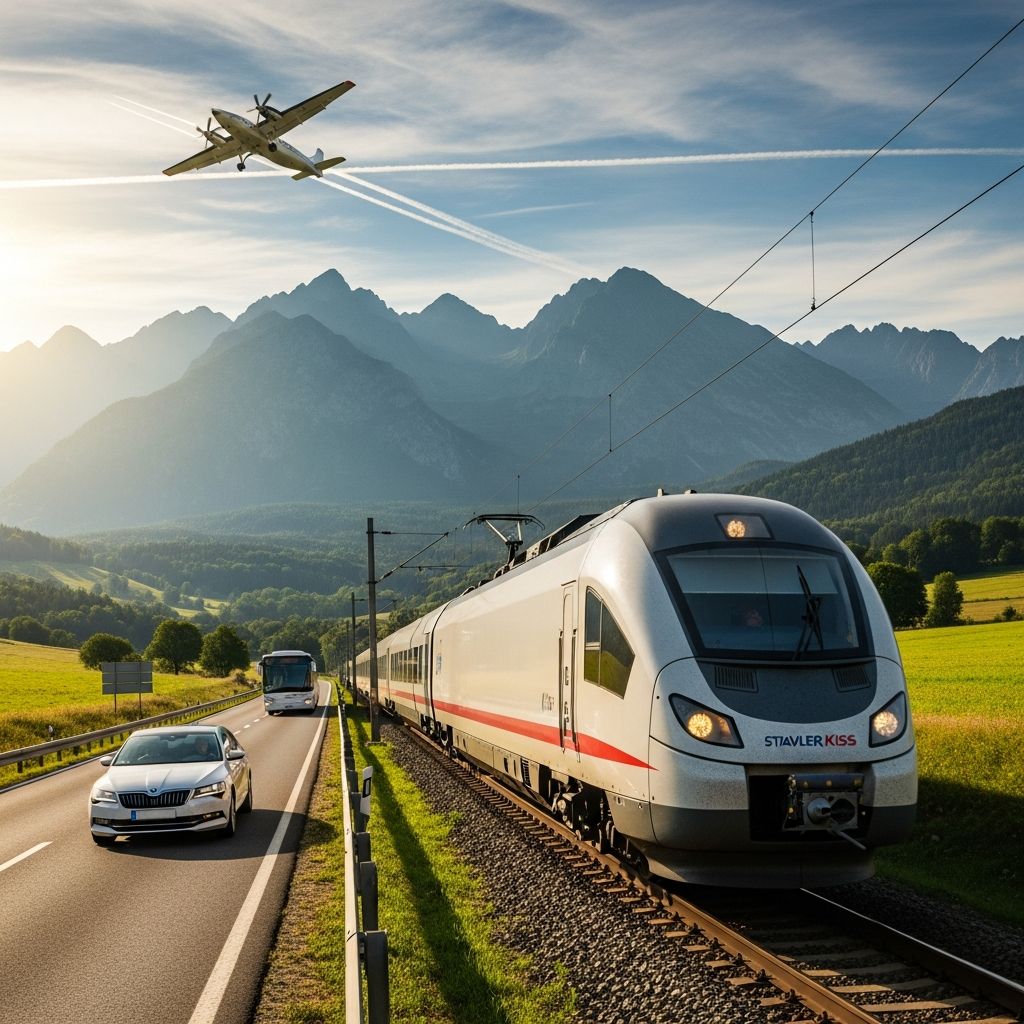
Slovakia’s compact size and diverse terrain make it ideal for travelers seeking both urban excitement and rural serenity. With a well-developed network of trains, buses, roads, and bike paths, getting from Bratislava’s vibrant streets to the High Tatras’ peaks is straightforward and often inexpensive. This guide breaks down every option, helping you choose based on budget, speed, and scenery.
Rail Journeys: Scenic and Affordable Connectivity
Trains form the backbone of long-distance travel in Slovakia, linking major hubs like Bratislava, Košice, Žilina, and Banská Bystrica with reliability and comfort. Operated primarily by Železničná spoločnosť Slovensko (ZSSK), the network spans electrified tracks covering nearly half the routes, ensuring smooth rides through rolling hills and valleys.
Train categories vary to suit different needs: local Osobný (Os) trains stop frequently for short hops; Zrýchlený (Zr) services skip smaller stations; Rýchlik (R) fast trains connect cities efficiently; and premium InterCity (IC) or EuroCity (EC) options offer reserved seats for international links. The Bratislava to Košice route, taking 4-5 hours, showcases countryside vistas at fares around €0.50 per 100 km for standard seats.
Private operators like RegioJet and Leo Express add competition with modern amenities on select routes. Students under 26 and certain groups may qualify for free tickets, while motorail services ferry cars starting at €39.90 per person. Always check ZSSK or CP.sk for timetables, as peak seasons fill up fast.
Bus Networks: Reaching Remote Corners
Buses complement trains by accessing rural areas and villages where rails don’t reach, with over 57,000 km of roads supporting an extensive system. State-run Slovenská Autobusová Doprava (SAD) dominates, alongside Slovak Lines and others offering suburban and long-distance services.
Suburban lines link towns to cities, while intercity routes provide direct paths, often cheaper than trains but slower. Tickets, bought from drivers or stations, are affordable; use CP.atlas.sk for schedules, stops, and prices. Buses feature low-floor access for easier boarding.
| Route Type | Average Duration | Cost Example (Bratislava-Košice) |
|---|---|---|
| Express Bus | 5-6 hours | €15-25 |
| Local Bus | 7+ hours | €10-20 |
| Train Comparison | 4-5 hours | €12-20 |
Buses shine for flexibility in less-touristed spots, with stations providing maps and info booths.
Urban Mobility: Mastering Bratislava and Beyond
In Bratislava, Dopravný podnik Bratislava (DPB) runs an integrated system under IDS BK, unifying buses, trams, and trolleybuses—no metro needed. Tickets work across operators, including ZSSK trains. Validate on board; options include 60-minute (€1.60), 90-minute (€2.50), or 24-hour (€4.80) passes.
- Buses and Trolleybuses: Cover outskirts and night routes.
- Trams: Efficient for central travel; low-floor models aid accessibility.
- Frequency: Daytime every 10-15 minutes, less at night.
Košice and other cities mirror this with similar fares. Apps like IDS BK simplify planning.
Self-Driving Adventures: Freedom on the Roads
Slovakia’s roads invite road trips, with toll-free 1st-3rd class routes (up to 90 km/h) and tolled motorways/expressways (D1 primary, up to 130 km/h) in top condition. Vehicles under 3.5t need electronic vignettes (€10/week) for tolled sections.
Drive Bratislava to Ukraine’s border in under 7 hours, detouring to castles and spas. Rent cars at airports; fuel is reasonable, but watch speed cameras. Winter tires mandatory November-March.
Cycling Trails: Pedal Through Paradise
Over 13,000 km of paths cater to all levels, including EuroVelo 6 along the Danube—flat, scenic, with stops. Bratislava offers 100 km city routes plus 800 km regional.
- Family-Friendly: Danube paths, low crowds mid-week.
- Mountain Biking: Tatras for thrill-seekers.
- Rentals: Available in cities; e-bikes growing popular.
Spring-summer weekends bustle; helmets advised.
Alternative Rides: Taxis, Rideshares, and Accessibility
Taxis via Bolt or Hopin cost €5-10 city-wide; avoid street hails to dodge scams. Biking shares and ferries on the Danube add variety.
Accessibility excels: low-floor buses/trams, wheelchair taxis (book ahead), tactile paving, and Braille at stations. Bratislava’s main rail hub is fully equipped, though Old Town cobbles challenge.
Planning Tips for Smooth Travels
Combine trains/buses for efficiency; download CP.sk app. Free ‘Slovak Help’ tickets for eligible Ukrainians via border police. Rail passes cover most, reservations for peaks.
Frequently Asked Questions
Are trains free for some travelers?
Yes, students under 26 and Ukrainians with ‘Slovak Help’ get free suburban trains/buses under conditions.
How do I buy road tolls?
Electronic vignette via app or gas stations for cars under 3.5t.
Is public transport accessible?
Highly so, with low-floor vehicles and aids; plan for historic areas.
Best app for schedules?
CP.hnonline.sk or CP.atlas.sk for all modes.
Driving in winter?
Mandatory snow tires; chains for mountains.
References
- Transport. How to travel around Slovakia by car, bus and train? — Welcome to Slovakia. 2023. https://www.welcometoslovakia.sk/en/transport/
- Getting Around In Slovakia: Transportation Tips — Vagabondish. 2022-10-15. https://vagabondish.com/getting-around-slovakia-transportation-tips/
- A Guide to Transportation in Bratislava in 2024 — Placement Slovakia. 2024-01-01. https://www.placementslovakia.com/blog/a-guide-to-transportation-in-bratislava-in-2024
- How to get around in Slovakia — Rough Guides. 2023. https://www.roughguides.com/slovakia/getting-around/
- Getting around Slovakia — Lonely Planet. 2023-05-20. https://www.lonelyplanet.com/articles/getting-around-slovakia
Similar Articles





Read full bio of medha deb