
Global Tea Rituals: 8 Time-Honored Traditions Explained
Discover the diverse ways tea shapes cultures worldwide, from ancient ceremonies to everyday hospitality rituals.
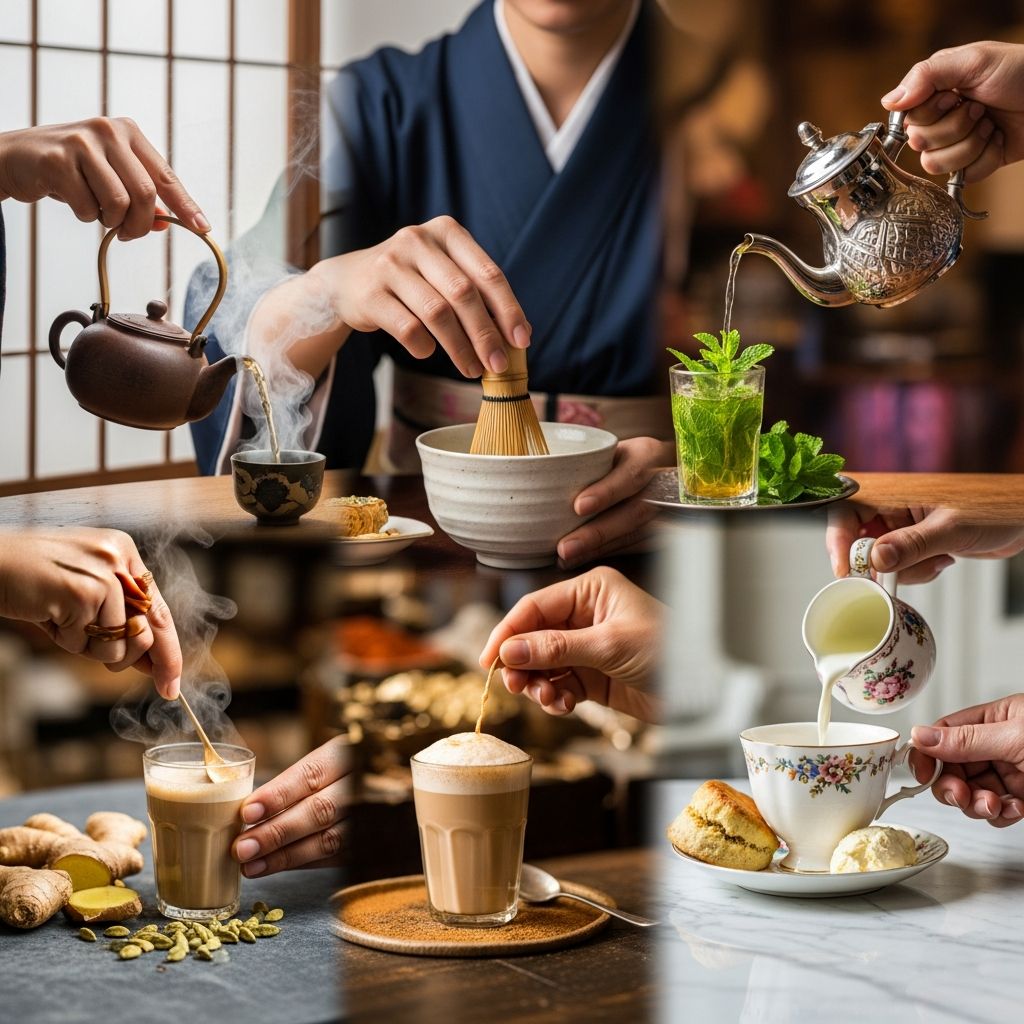
Tea transcends mere refreshment, serving as a vessel for cultural expression, social bonding, and spiritual reflection across the globe. Originating in ancient China over 5,000 years ago, its journey has woven intricate rituals into the fabric of societies from East Asia to North Africa and beyond. This exploration delves into distinctive practices, revealing how each nation’s approach reflects its values, history, and environment.
Ancient Origins: China’s Enduring Legacy
China stands as the cradle of tea civilization, with legends tracing its discovery to Emperor Shen Nong around 2737 BC, when leaves inadvertently infused boiling water, yielding a fragrant brew. Initially prized for medicinal properties, tea evolved into a daily staple by 2000 BC, integral to gifting, courtship, and imperial tributes.
Central to this heritage is Gongfu Cha, a precise brewing art from Fujian province, refined in Taiwan. Practitioners employ small teapots and gaiwans—lid-covered bowls—for multiple short infusions, unlocking layered flavors from oolong, green, or black teas. This method emphasizes mindfulness, harmony, and hospitality, turning preparation into meditation. Taiwan’s oolong dominance elevates Gongfu Cha, where guests savor evolving tastes across pours, fostering communal tranquility.
Japan’s Zen-Inspired Precision: The Way of Tea
Introduced from China, tea in Japan transformed into a profound spiritual discipline via Chanoyu, or the ‘Way of Tea.’ Codified by Sen Rikyu in the 16th century, this ritual integrates Zen Buddhism’s ideals of simplicity and presence. A tea master meticulously whisks matcha—finely ground green tea—into frothy elixir using bamboo tools in serene teahouses.
Every gesture, from utensil handling to guest positioning, symbolizes impermanence and respect. Participants contemplate seasonal motifs in ceramics and gardens, cultivating wabi-sabi—beauty in imperfection. Modern Japan blends this with everyday sencha or vending machine teas, yet Chanoyu endures as cultural education for mindfulness.
India’s Vibrant Masala Chai: Spice and Street Life
In India, tea manifests as chai, a spiced black tea simmered with milk, cardamom, ginger, and cloves. Ubiquitous on streets and in homes, it’s brewed strong to combat daily hustle. This tradition, amplified post-19th-century British plantations, symbolizes resilience and warmth.
Vendors pull frothy brews between vessels, serving in earthen kulhads that enhance earthy notes. Chai stalls foster conversations, embodying India’s social pulse. Variations abound regionally, but the core ritual unites generations in flavorful communion.
Morocco’s Hospitable Mint Infusion
North Africa’s Touareg tea, or Maghrebi mint tea, exemplifies generosity. Green tea blends with fresh spearmint and ample sugar, poured from height into ornate glasses for frothy heads. Served thrice—each pour milder—refusal breaches hospitality norms.
This ‘Berber whiskey’ ritual, performed with flourish, welcomes guests and seals bonds. Accompanied by sweets, it underscores communal values in riads and markets, where preparation artistry rivals performance.
Turkey’s Daily Black Brew Ritual
Turkish tea culture pulses through daily life, with çay—strong black brew—sipped from tulip-shaped fincans multiple times daily. Brewed in double-stacked çaydanlıks, it’s offered with water and lokum as hospitality’s cornerstone.
Pouring from afar signals abundance; sharing in cafes cements friendships. This tradition, rooted in Ottoman cafes, remains a social lubricant across generations.
Britain’s Elegant Afternoon Repast
Born in the 1840s from Anna, Duchess of Bedford’s hunger fix, afternoon tea elevates British sophistication. Tiered stands brim with finger sandwiches, scones slathered in clotted cream and jam, paired with Earl Grey or Darjeeling.
Served in silver pots amid chintz settings, it bridges lunch and dinner, nurturing etiquette and conversation. Revived in luxury hotels, it endures as refined leisure.
Thailand’s Cooling Iced Indulgence
Contrasting heat, Thailand’s cha yen—Thai iced tea—features black tea steeped bold, sweetened with condensed milk, spiced with star anise and tamarind, poured over ice. Street carts vibrantly serve this orange-hued nectar alongside fiery cuisine.
Its floral, licorice notes refresh, embodying tropical adaptability and vendor ingenuity.
Mongolia and Central Asia: Nomadic Milk Teas
In Mongolia, suutei tsai—salted milk tea—sustains with green tea boiled in milk and yak butter, respecting water sanctity. Shared in yurts, it nourishes during meals.
Kazakh syi-ayak involves handwashing before black tea with milk or cardamom in piyala bowls, prioritizing elders. Post-meal lingering reinforces unity.
Comparative Overview of Tea Traditions
| Region | Key Tea Type | Main Ritual Elements | Cultural Role |
|---|---|---|---|
| China/Taiwan | Oolong/Green | Gongfu infusions, gaiwan | Mindfulness, hospitality |
| Japan | Matcha | Whisking, Zen etiquette | Spiritual presence |
| India | Chai (spiced black) | Street boiling, milk froth | Social bonding |
| Morocco | Mint green | Three pours from height | Generosity ritual |
| Turkey | Black | Çaydanlık, fincan glasses | Daily hospitality |
| Britain | Earl Grey | Tiered savories/sweets | Afternoon elegance |
| Thailand | Iced black | Spiced, condensed milk | Heat relief |
Modern Evolutions and Global Fusion
Globalization blends traditions: matcha lattes in cafes, chai in Western supermarkets. Yet core rituals persist, adapting via sustainability—organic leaves, fair trade. International Tea Day celebrates this unity.
Travelers immerse via teahouses, deepening appreciation. Home replication demands authentic tools, patience for cultural nuance.
Frequently Asked Questions
What is the oldest tea tradition?
China’s, dating to 2737 BC per legend, with Gongfu Cha as a refined practice.
How does Japanese tea differ from Chinese?
Japan’s Chanoyu uses powdered matcha whisked for froth, emphasizing Zen ritual; China’s Gongfu infuses whole leaves multiple times.
Why is Moroccan tea poured from height?
To aerate, create foam, and symbolize abundance.
Is British afternoon tea still popular?
Yes, especially in hotels as a tourist draw.
Can I try Thai iced tea at home?
Yes: strong black tea, star anise, tamarind syrup, condensed milk over ice.
References
- Famous Tea Ceremonies – Explore Global Traditions — Paper & Tea. 2023. https://www.paperandtea.com/blogs/journal/tea-ceremonies
- Interesting Tea Traditions Around the World — Tea Bloom. 2023. https://www.teabloom.com/blog/interesting-tea-traditions-around-the-world/
- 10 Global Tea Traditions: A Journey Through Culture and History — Camellios. 2023. https://camellios.com/blogs/the-camellios-blog/10-global-tea-traditions-a-journey-through-culture-and-history
- Tea Culture Around The World — Twinings. 2023. https://twinings.co.uk/blogs/news/tea-culture-around-the-world
- Tea from Around the World — Mystic Monk Coffee. 2023. https://www.mysticmonkcoffee.com/pages/tea-from-around-the-world
- Tea Traditions, Tea Culture of the World, Tea History — The Tea Spot. 2023. https://www.theteaspot.com/pages/tea-traditions
- Tea culture — Wikipedia. 2026-04-22. https://en.wikipedia.org/wiki/Tea_culture
- International Tea Day: 7 unique tea traditions from around the world — Euronews (YouTube). 2022-05-21. https://www.youtube.com/watch?v=qx9LF-N7J1E
Similar Articles







Read full bio of Sneha Tete