Discover Kerala’s Charm: A Complete 10-Day Travel Guide
Experience India's tropical paradise with culture, nature, and authentic experiences
Kerala, often referred to as ‘God’s Own Country,’ represents one of India’s most captivating destinations. This southwestern state distinguishes itself through its verdant landscapes, aromatic spice gardens, intricate network of waterways, and deep-rooted cultural heritage. A 10-day journey through Kerala allows travelers to experience the remarkable diversity that makes this region unforgettable, from its vibrant urban centers to serene natural wonders.
Understanding Kerala’s Unique Appeal
Kerala stands apart from other Indian regions due to its exceptional geographical and cultural characteristics. The state’s identity emerges from centuries of trade, diverse religious communities, and a commitment to sustainable tourism. The landscape transitions dramatically from bustling port cities to misty mountain peaks, offering visitors an extraordinary range of experiences within a relatively compact area.
The state’s charm lies in its carefully preserved traditions, world-class cuisine, and the warmth of its inhabitants. Kerala’s backwaters remain legendary among travelers, while its hill stations provide respite from tropical heat. This combination makes Kerala suitable for diverse traveler preferences, whether seeking cultural immersion, adventure, relaxation, or culinary exploration.
Preparing Your Kerala Journey
Optimal Travel Duration and Timing
A 10-day itinerary represents the ideal duration for experiencing Kerala’s primary attractions without excessive rushing. This timeframe permits exploration of multiple regions while accommodating travel between destinations and allowing moments for genuine cultural connection. The extended duration enables visitors to slow down and appreciate the nuanced beauty that makes Kerala distinctive.
Kerala’s tropical climate features warm temperatures year-round, though seasonal variations significantly impact the travel experience. The monsoon season brings rejuvenation to the landscape but may limit certain outdoor activities. Planning your visit during dry seasons typically ensures optimal visibility and accessibility to all attractions.
Transportation Considerations
Navigating Kerala requires understanding the region’s transportation network. Regular bus services connect major towns and cities, though travel times between distant locations can extend significantly. For instance, journeys from Kochi to Munnar typically require approximately five hours, while routes to Thekkady demand six hours of travel time. Consider booking private transportation for comfort, or embrace local buses for authentic cultural engagement.
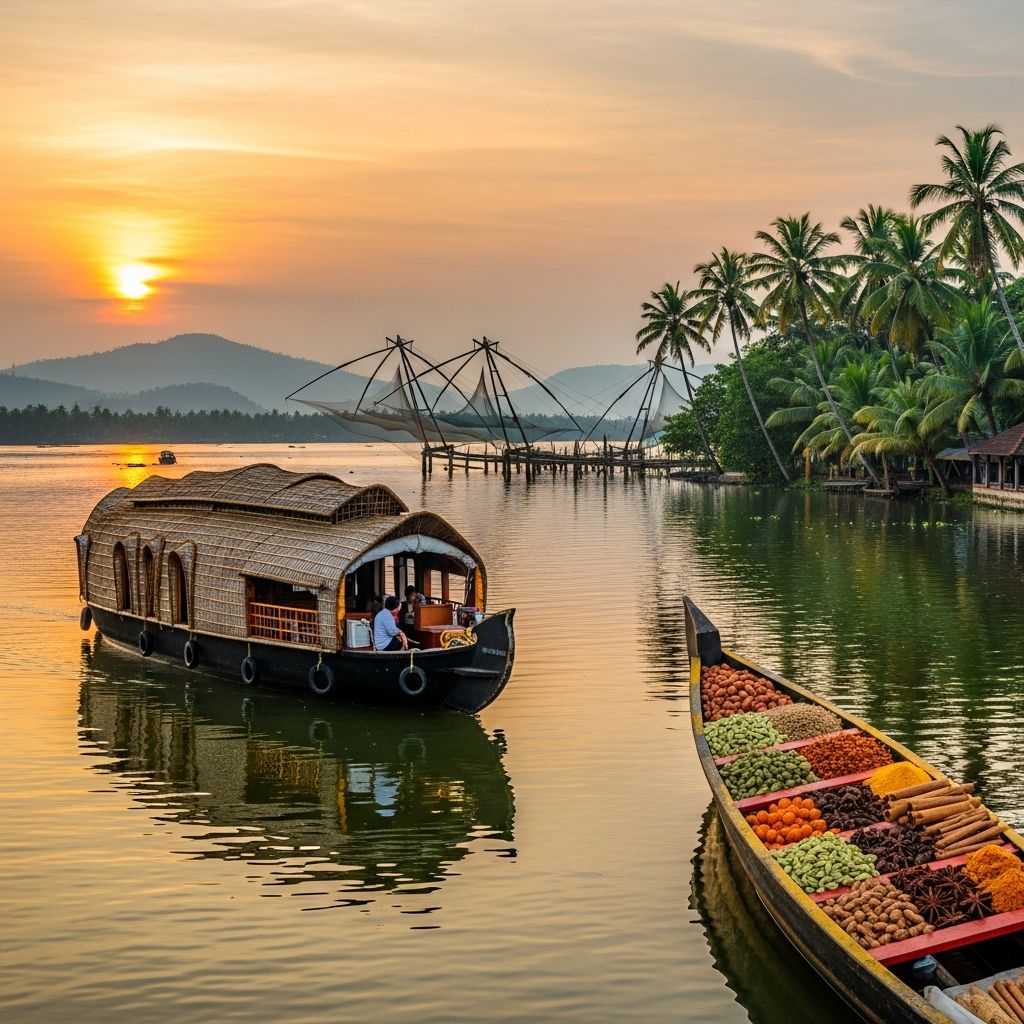
Houseboats represent the quintessential transportation experience for backwater exploration. These traditional vessels provide accommodation and dining while enabling intimate observation of rural waterside life and traditional crafts.
Days 1-2: Immersing in Kochi’s Historical Tapestry
Discovering Fort Cochin’s Heritage
Your Kerala adventure begins in Kochi, a city where centuries of cultural convergence have shaped a unique urban landscape. The iconic Chinese fishing nets, locally called cheenavala, dot the waterfront near Vasco da Gama Square. These magnificent wooden structures, introduced by Chinese traders around 1400 CE from the court of Kublai Khan, remain operational and represent Kerala’s most recognizable emblem.
Fort Cochin emerges as a living museum where colorful murals adororn heritage buildings and contemporary art thrives alongside traditional expressions. The neighborhood showcases cafes, galleries, and museums celebrating both historical and modern artistic movements. Wandering these streets reveals the layers of Kerala’s multicultural identity.
Exploring Cultural Landmarks
The Mattancherry Palace represents architectural fusion, blending European and traditional Kerala nalukettu design elements. Inside, intricate Hindu murals depicting scenes from the Ramayana, Mahabharata, and Puranic legends command attention. These artistic masterpieces provide profound insights into Kerala’s spiritual traditions and artistic sophistication.
The Pardesi Synagogue in Jew Town preserves remarkable details including an elaborate brass prayer platform (bimah) encircled by Belgian chandeliers, Murano-glass lamps, and hand-painted Chinese willow-pattern tiles. This sacred space exemplifies the religious tolerance and commercial prosperity that characterized Kochi’s historical development.
Evening and Dining Experiences
After sunset, venture to establishments offering authentic Kerala cuisine. Traditional restaurants serve cashew-paneer curries and pachakari stews in atmospherically antique-filled settings. Alternatively, experience three-hour Kerala feasts served in restored 1930s bungalows, offering immersive gastronomic journeys through regional flavors.
Days 3-4: Exploring Kerala’s Verdant Interior
Choosing Your Highland Destination
Moving inland from the coastal region, travelers encounter two compelling options: Munnar or Periyar Tiger Reserve. Both destinations provide access to the UNESCO-listed Western Ghats, a biodiversity hotspot containing myriad wildlife species. Regular bus services from Ernakulam’s central station facilitate connections to Munnar (approximately five hours) or Kumily near Periyar (approximately six hours).
Munnar: Tea Plantations and Mountain Vistas
Munnar, situated among rolling hills at 1524 meters (5000 feet) where three rivers converge, represents Kerala’s premier hill station. The landscape frequently disappears beneath swirling mist, creating an otherworldly atmosphere that exemplifies the Western Ghats’ mystical character.
Tea plantations blanket the surrounding terrain, creating verdant patterns across hillsides. Visitors can explore these agricultural landscapes through guided treks ranging from gentle dawn walks capturing sunrise moments to ambitious hikes toward elevated lookouts such as Meesappulimala, Kerala’s second-highest peak at 2650 meters (8694 feet).
Additional attractions include:
- Tea museums documenting production methods and regional history
- Viewpoint sites providing panoramic vistas across multiple valleys
- Spice plantations offering aromatic explorations and educational experiences
- Waterfalls tumbling through emerald vegetation
- Wildlife encounters in their natural habitats
Periyar Tiger Reserve Alternative
Periyar National Park presents opportunities for wildlife observation and ecological education. The reserve encompasses diverse fauna within protected forest environments, accessible through guided tours and boat expeditions across Periyar Lake.
Days 5-6: Navigating Kerala’s Enchanting Backwaters
Understanding the Backwater System
The Alleppey backwaters represent one of Kerala’s most significant attractions, comprising interconnected lakes, rivers, canals, and lagoons stretching along the coastline. This unique aquatic network, often compared to Venice, represents the quintessential Kerala experience where contemporary life intersects with timeless traditions.
The Houseboat Experience
A two-day houseboat cruise transports visitors through peaceful waterways, delivering experiences that encompass dramatic sunsets and sunrise moments, freshly prepared Kerala meals, and glimpses of South Indian birdlife. The journey facilitates exploration of backwater villages where traditional industries such as coir production and toddy-tapping continue according to centuries-old methods.
This experience emphasizes Kerala’s connection to its natural environment and the harmonious integration of human communities within aquatic ecosystems. The slow pace of travel allows genuine observation and contemplation.
Alternative Backwater Destinations
Beyond Alleppey, other backwater communities offer similar experiences with potentially fewer tourists. Munroe Island presents comparable opportunities for waterway exploration and cultural engagement, appealing to travelers seeking more intimate encounters.
Days 7-8: Coastal Exploration and Beach Experiences
Beach Destination Options
Kerala’s extensive coastline features numerous beaches, each offering distinct atmospheres. Kovalam attracts varied crowds seeking beach resort experiences, while Varkala appeals particularly to backpackers and spiritual seekers.
Varkala functions as an important Hindu pilgrimage center surrounding the 12th-century Janardhana Swamy temple dedicated to Vishnu. Pilgrims visit this sacred site year-round, while visitors observe beach cremations representing final rites ceremonies. This sacred-secular intersection creates a uniquely profound travel experience.
Beach Activities and Attractions
Coastal destinations offer diverse activities:
- Swimming and water sports in designated areas
- Lighthouse visits providing panoramic coastal views
- Museum and palace explorations revealing local history
- Zoological park visits observing regional fauna
- Waterfront dining experiencing local seafood specialties
- Sunset observation from various vantage points
Days 9-10: Final Experiences and Departure Preparations
Leisurely Exploration
Allocating final days for unhurried exploration allows revisiting favorite locations or discovering overlooked attractions. This period accommodates flexibility for spontaneous discoveries or deeper engagement with places that captured your interest.
Culinary and Shopping Experiences
Kerala’s culinary tradition merges seafood with local spices, reflecting both geographical advantages and historical trade connections. Take opportunities to sample regional specialties not yet experienced, whether at beachfront shacks or fine dining establishments.
Shopping for Kerala’s distinctive products—spices, tea, artisanal crafts, and textiles—provides meaningful souvenirs. Local markets offer authentic experiences, while government-approved spice shops guarantee quality.
Practical Considerations for Your Journey
Accommodation and Transportation Integration
Successful Kerala travel involves strategic accommodation placement considering travel times between regions. Booking lodging in Kochi for initial days, hill stations for mid-journey, backwater locations for extended stays, and coastal areas for final days optimizes the experience while minimizing excessive travel.
Packing Essentials
Kerala’s tropical climate requires lightweight, breathable clothing suitable for humid conditions. Waterproof bags protect belongings during water-based activities. Sunscreen, insect repellent, and medications address tropical health considerations. Comfortable walking shoes facilitate exploration of urban centers and nature trails.
Frequently Asked Questions About Kerala Travel
What is the best time to visit Kerala?
October through March provides optimal conditions with moderate temperatures and minimal rainfall. This period offers ideal visibility for sightseeing and outdoor activities, though accommodations command premium pricing.
How much does a Kerala trip typically cost?
Budget varies significantly based on accommodation choices, dining preferences, and activity selections. Mid-range travelers can expect daily expenditures of $40-80 USD, while luxury experiences substantially increase costs.
Is Kerala safe for solo travelers?
Kerala generally welcomes solo travelers with good safety records. Exercise standard precautions, stay aware of surroundings, and utilize registered transportation services.
What languages are spoken in Kerala?
Malayalam represents the primary language, though English and Hindi are widely understood in tourist areas and hotels.
Can visitors experience authentic Kerala without tourist infrastructure?
Yes, venturing beyond major destinations reveals authentic village life, traditional industries, and genuine cultural interactions. Local guides and homestay arrangements facilitate such experiences.
Summary: Capturing Kerala’s Essence
A 10-day Kerala journey encompasses diverse experiences reflecting the region’s multifaceted character. From heritage exploration in colonial-era cities to meditative moments floating through backwaters, from misty mountain walks through tea gardens to spiritual engagement at coastal temples, Kerala delivers transformative travel experiences. The state’s combination of natural beauty, cultural depth, culinary excellence, and hospitality creates lasting impressions that encourage return visits.
References
- See the best of Kerala on this 10-day itinerary — Lonely Planet. https://www.lonelyplanet.com/articles/kerala-itinerary
- A 1-Week Kerala Itinerary, India — We Are Global Travellers. https://weareglobaltravellers.com/2020/07/kerala-itinerary/
- Kerala Itinerary 5 Days: Plan a 5-days Kerala trip with SOTC — SOTC. https://www.sotc.in/blog/indian-holidays/an-escape-to-gods-own-country-the-perfect-5-days-in-kerala/
- Kerala itinerary: how to spend 3 weeks in Kerala — Backpack Adventures. https://www.backpackadventures.org/kerala-itinerary/
- The Ultimate Kerala Itinerary: Travel guide for 1 week, 10 days or 2 weeks — Isle of Nomads. https://isleofnomads.com/travel-and-discover/countries/india/kerala-itinerary-guide
Similar Articles



Read full bio of medha deb