
Managing Travel Mishaps: A Guide to Salvaging Your Trip
Learn proven strategies to recover from vacation disasters and transform setbacks into cherished memories.
Travel represents one of life’s greatest pleasures—the promise of new experiences, unfamiliar landscapes, and transformative moments. Yet between dream and reality lies a gap where things frequently go awry. Whether your luggage disappears into airport limbo, your accommodation becomes unexpectedly unavailable, or illness strikes far from home, vacation disasters can threaten to derail even the most meticulously planned journeys. The difference between a trip salvaged and one permanently tainted by negativity often comes down to preparation, perspective, and practical response strategies.
Understanding the Immediate Impact of Travel Setbacks
When something goes wrong during vacation, the initial response is often visceral. Your body experiences a physiological stress reaction that transcends rational thought, triggering anxiety, frustration, or despair. This biological response represents your nervous system attempting to process unexpected threat or loss. Rather than fighting this natural reaction through force of willpower alone, acknowledging the legitimate impact of the setback proves essential for moving forward effectively.
The first critical step involves assessing the situation objectively and without panic. Before spiraling into worst-case scenarios, pause and evaluate what has actually occurred. Did you lose your travel documents? Experience vehicle trouble? Face accommodation issues? Is illness affecting your ability to participate in planned activities? Understanding the precise nature of the problem clarifies what requires immediate attention versus what can be addressed later. This assessment prevents your mind from catastrophizing and keeps you focused on actionable next steps.
Creating Emotional Space for Processing Disappointment
Travel professionals and experienced travelers consistently emphasize that suppressing negative emotions during crises often intensifies them. When your vacation derails, allowing yourself a controlled outlet for frustration actually accelerates recovery. This might involve stepping away from your group temporarily to cry in private, dancing to high-energy music, or physically releasing tension through stretching and breathing exercises. The goal isn’t to wallow in negativity but to give your body permission to process the emotional shock before moving into problem-solving mode.
Consider these evidence-based emotional release techniques:
- Find a private space and allow yourself 10–15 minutes to fully experience disappointment without judgment
- Engage in physical activity such as stretching, walking, or dancing to discharge stress hormones
- Practice controlled breathing exercises to activate your parasympathetic nervous system
- Connect with a trusted friend or family member who can provide emotional validation
- Journal about the situation without filtering, allowing emotions to flow onto paper
Once you’ve given yourself permission to feel disappointed, you’ll often find the emotional intensity decreases and cognitive clarity returns.
Reframing Problems as Unexpected Opportunities
One of the most powerful mental shifts available to travelers facing setbacks involves consciously reframing the narrative around what has occurred. Lost luggage doesn’t represent a vacation killer—it becomes a minimalist challenge and a story worth telling. An unexpected detour due to navigation errors transforms into an impromptu discovery of hidden gems. A cancelled excursion opens space for alternative activities that might prove equally or more memorable.
This reframing strategy works because it redirects your focus from what you cannot control toward possibilities within your sphere of influence. When you fixate on the original plan that fell apart, you amplify disappointment with every passing moment. When you shift attention toward what you can do with the situation now, you reclaim agency and possibility. Many seasoned travelers report that their favorite vacation memories stem directly from moments when things didn’t go according to plan.
The psychological technique involves adopting a specific mantra: “This will make an excellent story later.” By viewing the setback through this lens, you mentally position yourself as someone collecting experiences rather than someone whose plans were ruined. This subtle but significant mindset shift changes how you process the immediate challenge and how you remember it years hence.
Practical Preparation: The Emergency Travel Kit
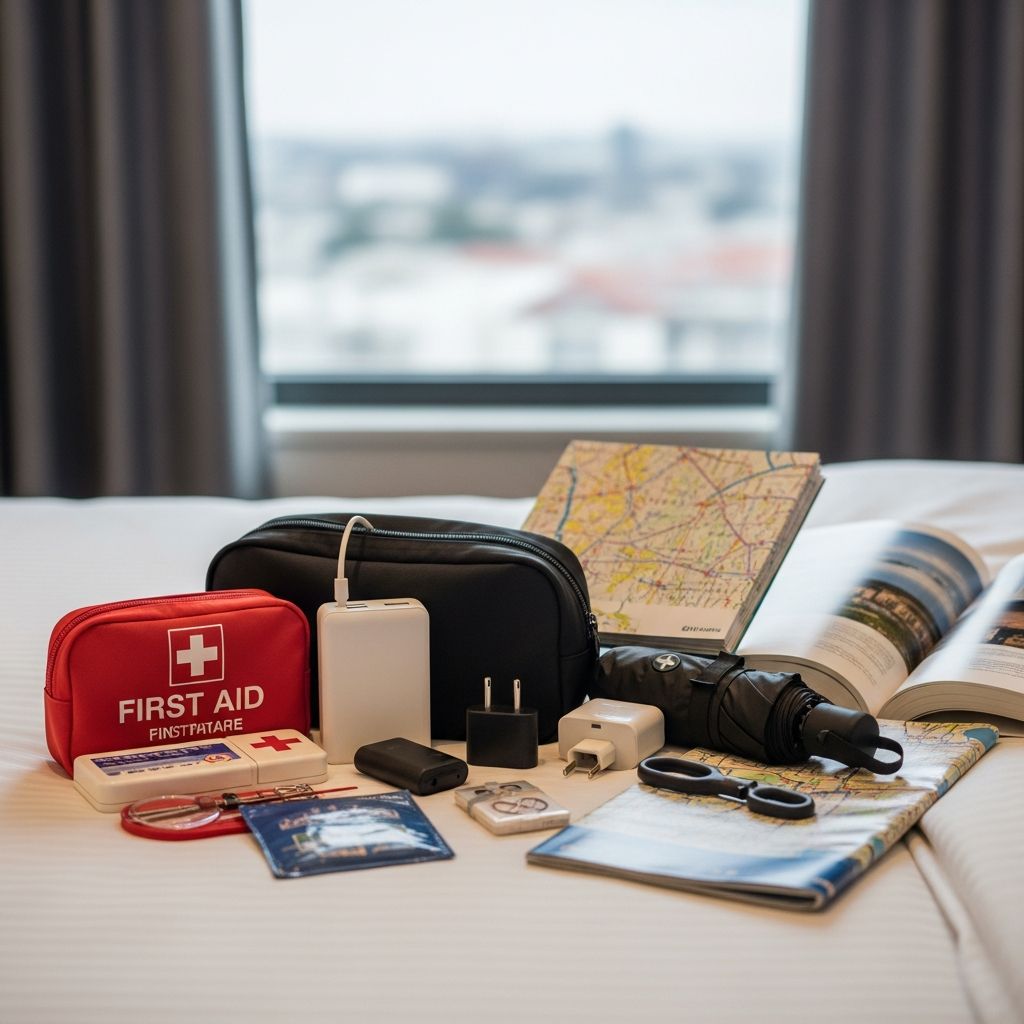
Prevention and preparation form the foundation of effective crisis management. Before departure, assemble a comprehensive emergency travel kit containing items that address foreseeable problems. This kit should include:
- Non-perishable snacks to address hunger during delays or when normal dining isn’t accessible
- Entertainment items such as books, tablets, or games for managing downtime during disruptions
- Basic first-aid supplies and any essential medications in original containers
- Copies of critical documents stored separately from originals
- Universal power adapters and portable battery packs for devices
- Change of clothes or basic toiletries in carry-on luggage
- Contact information for emergency services and relevant institutions
Having these items readily available prevents minor inconveniences from becoming major crises. Facing a transportation delay with snacks, entertainment, and a charged device transforms a frustrating wait into manageable downtime. The investment in preparation pays dividends when inevitable disruptions occur.
Managing Common Accommodation and Transportation Disruptions
Lodging and transportation failures represent the most frequent vacation disruptors. Hotels overbook rooms, promised amenities disappear, flights get cancelled, and rental vehicles break down. Rather than viewing these situations as catastrophes, effective travelers develop predetermined response protocols.
When facing accommodation issues such as rooms not being ready at arrival time or discovering facility problems, maintain composure and focus on immediate solutions. The hotel’s fault, while frustrating, doesn’t change your current situation. Instead, work with staff to identify alternatives: Can you store luggage and explore the area? Is a room upgrade available? Can the issue be resolved within a reasonable timeframe? Approaching these conversations collaboratively rather than accusatorily increases the likelihood of favorable resolution.
Transportation disruptions, from missed connections to cancelled flights, test travelers’ flexibility. When confronted with these scenarios, resist blame and focus instead on available options. Speak with airline staff about alternative flights, explore whether compensation or vouchers apply to your situation, and consider whether brief delays actually provide opportunities for rest or local exploration. Sometimes the unplanned extra hours in an airport or missed connection leads to unexpected adventures that become trip highlights.
Communicating Effectively Within Your Travel Group
When traveling with others, communication patterns often determine whether minor setbacks escalate into major conflicts. Under stress, groups tend toward blame, defensiveness, or emotional withdrawal. Implementing communication strategies before problems arise prevents small issues from becoming group dysfunctions.
Establish a group agreement beforehand addressing how you’ll handle disruptions. Designate who will take the lead in problem-solving for different scenario types. Use inclusive language when discussing challenges, employing “we” rather than “you” to foster collaborative problem-solving rather than blame assignment. When someone suggests a solution, approach it with curiosity rather than immediate criticism, recognizing that diverse perspectives often generate better outcomes than individual thinking.
If specific group members struggle with flexibility or patience, discuss this honestly before departure. Perhaps one person will manage logistics while others handle emotional support. Perhaps the group agrees to a timeout protocol when tensions rise. These predetermined agreements prevent in-the-moment conflicts and maintain group cohesion when stress levels are highest.
Building Financial Buffers Into Travel Plans
Many vacation disasters carry financial consequences: unexpected hotel nights, missed flight rebooking fees, emergency supplies, or medical expenses. Travelers who account for these potential costs navigate them far more gracefully than those caught unprepared. Financial advisors recommend allocating 10–20% of your total travel budget as an emergency contingency fund.
This buffer transforms what could be a catastrophe into merely an inconvenience. Instead of sleeping in an airport terminal, you can book a modest hotel room. Rather than forgoing medical attention due to cost concerns, you can seek proper treatment. When you’ve budgeted for emergencies, you make decisions based on what’s genuinely best rather than what’s cheapest during crisis moments.
Consider additionally:
- Purchasing comprehensive travel insurance covering cancellations, medical emergencies, and delayed baggage
- Maintaining travel credit cards with emergency assistance benefits
- Carrying multiple payment methods including credit cards and cash in different currencies
- Documenting payment receipts and maintaining flexible booking options when possible
Strategic Scheduling and Buffer Time
Overstuffed itineraries and tight connections create vulnerability to cascading failures. When one element goes wrong in an packed schedule, everything downstream suffers. Building deliberate buffer time into your travel schedule creates resilience against inevitable delays and allows space for unexpected opportunities.
Rather than scheduling activities immediately upon arrival at a destination, build in 30–60 minutes of unstructured time. This approach virtually eliminates the stress of delayed transportation and provides opportunities to rest, orient yourself, or pursue spontaneous interests. Similarly, schedule fewer activities per day than you think you can accomplish, accepting that you’ll sometimes have unexpected downtime rather than constantly racing to the next scheduled event.
Paradoxically, this seemingly wasteful approach to time actually results in greater overall satisfaction and fewer perceived disruptions. When you arrive at an activity after leisurely pace rather than rushed scramble, you’re better positioned to enjoy it. When a planned excursion gets cancelled, you have time flexibility to substitute an alternative without feeling cheated.
Technology Integration With Analog Backup
Modern travel relies heavily on digital tools—mapping applications, translation software, reservation confirmations, and communication platforms. However, technology failures introduce their own complications. Rather than depending solely on digital solutions, successful travelers maintain parallel analog systems.
Print backup copies of critical reservations, accommodation addresses, and emergency contact information. Carry physical maps of your destination. Memorize essential contact numbers rather than relying exclusively on phone contacts. Download offline maps and translation applications before losing internet connectivity. This dual-system approach ensures that technology failures don’t strand you without options.
Seeking and Accepting Help During Crisis Moments
Travel disruptions often create moments where accepting help from strangers or new acquaintances becomes necessary. While maintaining appropriate safety awareness, recognizing when to accept offered assistance versus when to politely decline requires judgment and self-trust. Many travelers report that accepting help during vulnerable moments led to unexpectedly meaningful connections and faster problem resolution.
If someone offers guidance to an unfamiliar location, assistance with a logistical problem, or companionship during a difficult moment, pause before reflexively declining. Consider whether your instincts suggest they’re genuinely helpful. Sometimes the healthiest response to travel disasters involves accepting the helping hand that extends your way, recognizing that most people are fundamentally kind and that asking for or accepting help represents wisdom rather than weakness.
FAQ: Common Travel Mishap Questions
What should I do if I lose my passport while traveling?
Contact your nearest embassy or consulate immediately. They can issue emergency travel documents allowing you to return home. In the interim, avoid panicking and follow official channels rather than attempting workarounds that might complicate your situation. Have your passport number recorded separately from the original document to accelerate replacement.
How do I manage anxiety after a travel disaster occurs?
Allow yourself to feel disappointed initially, then consciously redirect attention toward what you can control moving forward. Practice breathing exercises, connect with supportive people, and remember that resilience develops through navigating setbacks, not through avoiding them entirely.
Should I cut my trip short after things go wrong?
Consider this decision carefully after emotions have settled. Sometimes continuing provides valuable perspective on what initially seemed catastrophic. Other times, genuine safety concerns or medical issues necessitate early departure. Make this decision deliberately rather than in the heat of disappointment.
How do I prevent travel disasters entirely?
Some setbacks are preventable through careful planning, but others remain inherent to travel. Accept that disruptions represent part of the travel experience rather than exceptions. Thorough planning reduces frequency but cannot eliminate disruptions entirely.
Conclusion: Resilience Through Perspective
Travel disruptions test our emotional resilience, problem-solving capabilities, and ability to maintain perspective during challenging moments. While no strategy completely prevents setbacks, combining practical preparation, emotional intelligence, financial buffers, and strategic planning dramatically improves your capacity to navigate whatever occurs. Years after a trip, you’ll rarely remember the original itinerary that went perfectly. Instead, you’ll recall the setbacks you overcame, the people who helped you, and how you adapted when plans changed. These moments of resilience often become the trip’s most treasured memories, transforming initial disasters into unexpected adventures that shaped your journey in profound ways.
References
- What to Do When Your Vacation Sucks — Manifesting Travel. https://www.manifestingtravel.com/what-to-do-when-your-vacation-sucks
- When Family Travel Plans Go Wrong (10 Real-Life Tips) — Two Restless Homebodies. https://freedomsprout.com/when-family-travel-plans-go-wrong/
- Travel Disasters: What to Do When It All Goes Wrong — Sherpani. https://sherpani.com/blogs/the-escape-plan/vacation-disasters
- How to Feel Better When Things Go Wrong — Rick Steves Travel Forum. https://community.ricksteves.com/travel-forum/trip-reports/how-to-feel-better-when-things-go-wrong
- Oh No! 5 Ways to Cope When Your Travel Plans Go Wrong — Two Restless Homebodies. https://www.tworestlesshomebodies.com/oh-5-ways-cope-travel-plans-go-wrong/
Similar Articles








Read full bio of medha deb