Navigating Budapest: Transport Guide
Master Budapest's efficient public transit, from historic metro lines to scenic trams and bike shares, for seamless city exploration.
Navigating Budapest: Your Complete Transport Guide
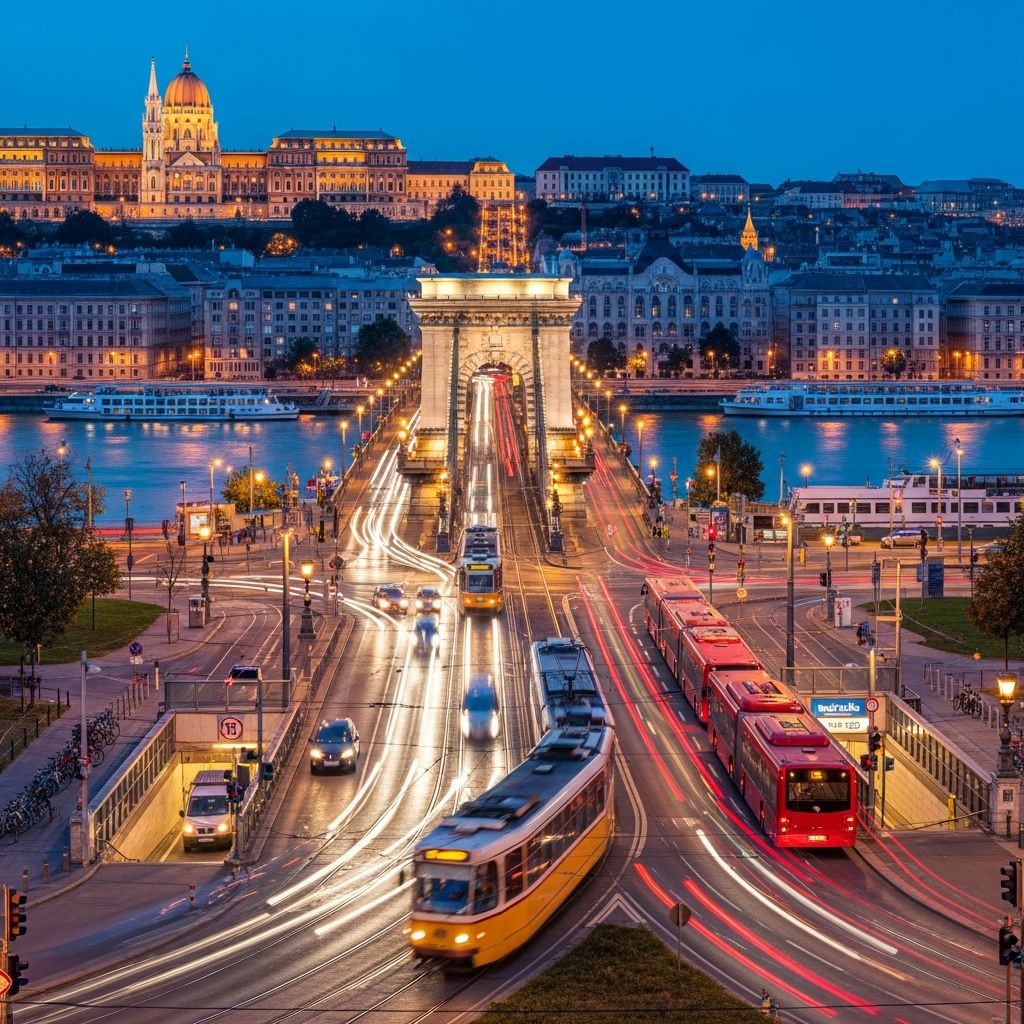
Budapest’s public transportation network stands out for its reliability, affordability, and coverage, making it simple for visitors to explore both Buda and Pest sides of the Danube. Operated primarily by BKK (Budapest Közlekedési Központ), the system includes metro, trams, buses, and innovative options like bike sharing, ensuring access to major landmarks such as the Parliament, Buda Castle, and thermal baths.
Why Budapest’s Transit Excels for Travelers
The city’s transport infrastructure blends history and modernity. Its metro, second-oldest in Europe after London, features UNESCO-recognized Line 1, while newer lines connect key areas efficiently. With over 200 bus routes, extensive trams, and 24/7 services, you can reach anywhere without a car. Fares are budget-friendly, and multi-day passes offer unlimited rides, ideal for sightseeing.
Metro System: Fast and Historic Underground Travel
Budapest’s four metro lines form the quickest way to cross the city, serving 52 stations with frequent service from 4:30 a.m. to 11:50 p.m. Peak hours see trains every 2 minutes, easing crowds at hubs like Deák Ferenc tér.
- Line M1 (Yellow): Dating to 1896 and a UNESCO site, it runs under Andrássy Avenue from Vörösmarty tér to Hősök tere, perfect for accessing Heroes’ Square and the City Park.
- Line M2 (Red): Connects Déli pályaudvar in Buda to Örs vezér tere in Pest, passing Keleti station for intercity trains.
- Line M3 (Blue): Links Újpest with Kőbánya-Kispest, including airport bus connections and central interchanges.
- Line M4 (Green): Opened in 2014, it spans from Kelenföld to Keleti, serving Gellért Baths and the Great Market Hall with fully accessible stations.
Interchanges occur at Deák Ferenc tér (M1-M2-M3), Keleti pályaudvar (M2-M4), and Kálvin tér (M3-M4), centralizing travel.
Iconic Trams: Scenic Routes Along the Danube
Yellow trams define Budapest’s streets, with 40+ lines offering one of Europe’s largest networks. They use the same tickets as metro and buses, running frequently along boulevards and riversides.
- Tram 2: The star attraction, paralleling the Pest Danube bank from Jászai Mari tér to Közvágóhíd, showcasing Parliament, Chain Bridge, and Buda Castle views—a must for photographers.
- Trams 4 and 6: Traverse the Grand Boulevard (Nagykörút) from Széll Kálmán tér to endpoints in Újbuda, linking Pest bridges. Tram 6 runs 24/7, vital for nightlife.
- Other notables: Tram 1 partially hugs the Buda riverfront; lines 17, 19, and 59A/B serve outer areas with accessibility features.
Trams provide low-floor access on key routes, enhancing usability for all travelers.
Buses: Extensive Coverage Day and Night
Over 200 daytime bus lines (1-299) blanket the city from suburbs to center, with express options skipping stops. Night buses (900-999) operate 11:50 p.m. to 4:30 a.m., ensuring round-the-clock mobility.
- Daytime: Frequent, punctual service to attractions like Margaret Island or Gellért Hill.
- Night: Routes like 900, 950 replace metros, with adjusted paths.
- Airport: 100E Express (200E regular) zips from Liszt Ferenc Airport to Deák Ferenc tér in 35-45 minutes.
Buses complement trams in hilly Buda, climbing to Castle District or Citadella.
Bike Sharing and Walking: Eco-Friendly Alternatives
MOL Bubi, Budapest’s public bike system, features 5,000+ bikes at 300+ stations citywide. Tourists register via app as ‘occasional users,’ paying per ride (first 30 minutes free, then tiered fees). Ideal for flat Pest paths or Danube paths.
Walking shines in compact centers: Pest’s Váci utca to Parliament (20 mins), Buda’s Castle Hill trails. Wide sidewalks and pedestrian zones make it feasible, especially with trams for longer hauls.
Taxi, Rideshares, and Trains: Flexible Options
Fotaxi or Bolt apps provide metered rides; avoid street hails to dodge scams—base fares ~800 HUF, per km ~400 HUF. HÉV suburban trains (H5-H9) and cogwheel railway (60) extend to outskirts like Szentendre.
Trains suit airport-to-center if flying into Keleti, with MÁV coordination.
Ticket Types and Payment Essentials
All modes share BKK tickets: single (450 HUF, 90 mins transfer), 24h (2,500 HUF), 72h (5,500 HUF), 7-day (6,500 HUF). Validate paper tickets onboard; app tickets scan via BudapestGO.
| Pass Type | Price (HUF) | Validity | Best For |
|---|---|---|---|
| Single Ticket | 450 | 90 mins, 1 transfer | Short trips |
| 24-Hour | 2,500 | 24 hours | Day tours |
| 72-Hour | 5,500 | 72 hours | Weekends |
| 7-Day | 6,500 | 7 days | Long stays |
| Budapest Card | From 11,000 | 24-72h + attractions | Full experience |
Buy via machines, apps, or kiosks; kids under 6 free, EU seniors discounted.
Airport Transfers: Smooth Arrivals
Liszt Ferenc Airport (BUD) connects via 100E bus (direct to center, ticket onboard/app), 200E to M3 metro, or taxis (~10,000 HUF). Trains via shuttle to Kőbánya-Kispest.
Accessibility and Night Travel
M4 metro and select trams/buses offer low-floor access, elevators at major stops. Night services include trams 6/60, night buses, and HÉV lines.
Practical Tips for Smooth Journeys
- Download BudapestGO app for routes, tickets, live tracking.
- Validate every ride—fines 8,000 HUF.
- Peak crowds 7-9 a.m., 4-6 p.m.; use trams for views.
- Pickpocket-aware in tourist zones.
- Bikes/trams combo for hybrid trips.
Frequently Asked Questions (FAQs)
What’s the cheapest way to get around Budapest?
Single tickets or walking for short distances; 24/72h passes for multiple rides.
Does public transport run 24 hours?
Yes, via night buses (900+), Tram 6, and select metros/HÉV.
Are bikes free in Budapest?
MOL Bubi first 30 mins free after unlock fee; app registration required.
How to avoid taxi scams?
Use apps like Bolt; fixed rates from airport stands.
Is the metro accessible for wheelchairs?
M4 fully; others partial—check BKK site.
References
- Getting around Budapest — Budapest.org. 2023. https://www.budapest.org/en/getting-around-budapest/
- Best Way to Get Around Budapest — GetYourGuide. 2024. https://www.getyourguide.com/explorer/budapest-ttd29/how-to-get-around-in-budapest/
- Your practical guide to Budapest public transport — BKK/Urban Access Regulations (official PDF). 2022. https://urbanaccessregulations.eu/images/stories/pdf_files/HU_Leaflet_Budapest_public_transport_in_English.pdf
- The Ultimate Public Transportation Guide to Budapest (2026) — E-Magine Tours. 2026-01-01. https://emaginetours.com/blog/ultimate-public-transportation-guide-to-budapest/
- Getting Around Budapest Like a Pro — Never Two Full. 2024. https://nevertwofull.com/getting-around-budapest-like-a-pro/
- Guide for tourists on tickets and passes — BKK Official. 2025. https://bkk.hu/en/tickets-and-passes/validation-of-paper-tickets/
Similar Articles






Read full bio of medha deb