Navigating Colombia: Complete Travel Transportation Guide
Master Colombia's diverse transport options for seamless regional exploration
nn
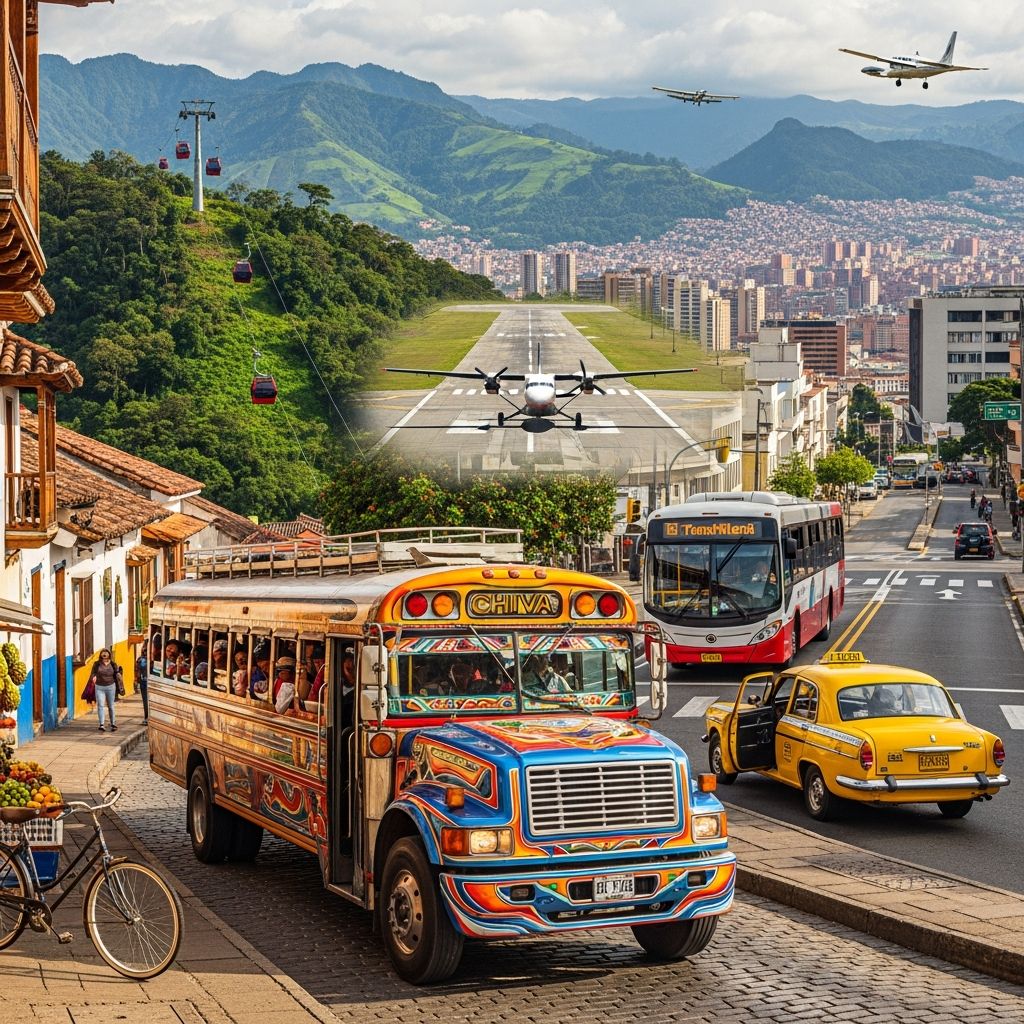
Colombia’s vast and varied landscape presents both opportunities and challenges for travelers seeking to explore this diverse nation. From the bustling streets of Bogotá to remote rural communities nestled in the Andes mountains, getting around requires understanding multiple transportation options. Most visitors employ a strategic combination of cost-effective domestic flights, extensive long-distance bus networks, and affordable local transit systems to maximize their journey while minimizing expenses.
nn
Understanding Colombia’s Transportation Ecosystem
nn
The Colombian transportation network reflects the country’s geography and economic development. Due to mountainous terrain and considerable distances between major cities, travel times can extend significantly beyond what kilometer measurements suggest. A journey that appears relatively short on a map might require 8-12 hours of actual travel time, necessitating thoughtful planning and realistic expectations.
nn
The transportation landscape divides into three primary categories: long-distance intercity travel, urban municipal transit, and regional short-distance options. Each serves distinct purposes and appeals to different traveler preferences regarding comfort, cost, and convenience.
nn
Long-Distance Bus Travel: The Backbone of Colombian Transport
nn
Buses represent the most economical and widely-utilized transportation method throughout Colombia, connecting virtually every city, town, and remote community across the nation. The extensive bus network demonstrates remarkable coverage, making it possible to reach destinations that air travel cannot practically serve. For budget-conscious travelers, bus journeys between major centers offer exceptional value—a nine-hour ride from Medellín to Bogotá typically costs around 65,000 Colombian pesos, while the eleven-hour journey from Bogotá to Cali ranges approximately 80,000 pesos.
nn
Long-distance buses, known locally as flotas, have undergone significant modernization in recent years. Established companies operating the most reliable routes equip their vehicles with reclining seats, footrests, air conditioning, and increasingly, Wi-Fi connectivity. Numbered seating assignments and organized baggage systems provide a structured travel experience superior to informal minibus alternatives.
nn
However, the affordability comes with certain trade-offs. Extended journeys frequently feature entertainment through loud music and films, sometimes of questionable content, that accompany passengers for the entire duration. Additionally, not all bus companies maintain equivalent standards regarding punctuality, driver competence, or vehicle maintenance.
nn
Selecting Reputable Bus Operators
nn
Choosing established bus companies significantly improves the travel experience. Operators with proven track records include Bolivariano, Copetran, Brasilia, Rápido Ochoa, Berlinas, and Flota Magdalena. These companies typically maintain modern fleets, employ professional drivers, and adhere to schedules more consistently than smaller competitors.
nn
Night buses offer a practical solution for longer journeys, allowing travelers to sleep during transit and preserve daytime hours for exploration. This strategy also reduces accommodation costs by combining travel with lodging, though comfort levels vary considerably depending on the operator.
nn
Regional Minibus Services: Speed and Flexibility
nn
For intermediate distances and routes connecting smaller towns, busetas and colectivos provide faster alternatives to full-size buses. These minivans and small buses typically accommodate 10-20 passengers and operate primarily during daylight hours, roughly between 6 AM and 6 PM.
nn
Colectivos distinguish themselves through speed and accessibility. Their compact size allows navigation through challenging terrain and smaller towns where larger buses cannot venture. However, they depart only when sufficiently full, meaning travelers may experience unpredictable waiting periods. The modest pricing reflects this trade-off—these services cost less than major bus routes but require flexibility regarding departure times.
nn
Shuttle services operate differently, departing on predetermined schedules from designated terminals or private offices. These options prove particularly popular for specific well-traveled routes, such as the Cartagena to Santa Marta corridor, where companies like Marsol and Berlinastur offer frequent departures.
nn
Colectivo Travel Tips
nn
- n
- Avoid prepaying for luggage until observing that the vehicle is nearly full and ready for immediate departure
- Expect minimal comfort—tight seating, limited air conditioning, and frequent stops characterize these journeys
- Plan for schedule uncertainty; allow extra time in itineraries when relying on colectivos
- Request stops anywhere along routes, providing greater flexibility than scheduled bus services
- Pay drivers directly upon boarding or during transit
n
n
n
n
n
nn
Urban Transit Systems in Major Colombian Cities
nn
Colombia’s largest metropolitan areas have invested substantially in rapid transit infrastructure, creating efficient public transportation networks that operate on dedicated lanes similar to metro systems. These networks utilize automated ticket machines, secure access points, and organized boarding platforms.
nn
Bogotá’s TransMilenio System
nn
The capital city operates the TransMilenio, an articulated bus rapid transit system functioning on exclusive trunk lines throughout the metropolis. This network serves as the primary transit backbone, connecting El Dorado Airport to central attractions like La Candelaria, the Gold Museum, and peripheral neighborhoods including Suba and Usaquén.
nn
TransMilenio’s infrastructure includes main trunk routes featuring dedicated lanes and feeder bus services that transport passengers from outlying areas to primary transit lines. The system allows travelers to bypass Bogotá’s notorious traffic congestion, significantly reducing journey times compared to personal vehicles.
nn
Complementing TransMilenio, the SITP (Sistema Integrado de Transporte Público) extends coverage through regular buses serving neighborhoods and less centrally-located areas. Both systems require the Tu Llave card, a rechargeable transit pass available at system stations and enabling travel across the entire network.
nn
Navigation apps prove invaluable for planning routes. TransMi App, Moovit, and Google Maps all provide reliable information regarding routes, transfers, and estimated travel times. During peak hours, expect substantial crowds and increased vigilance regarding personal belongings.
nn
Medellín’s Metro and Cable Car Innovation
nn
Medellín represents a transportation pioneer within Colombia, featuring the nation’s sole metro system. This modern, straightforward network offers affordable fares under one euro, efficiently covering extensive distances across the sprawling city.
nn
Beyond the metro, Medellín’s distinctive four-line cable car system connects hillside neighborhoods while providing stunning city panoramas. The cable cars particularly serve areas like Comuna 13, establishing connections to communities previously isolated by geography.
nn
Cali and Cartagena Transit Networks
nn
Cali operates the Masivo Integrado de Occidente (MIO), functioning similarly to Bogotá’s TransMilenio with dedicated bus lanes and organized infrastructure. Cartagena features the Transcaribe, another bus rapid transit system adapted to the coastal city’s unique layout.
nn
Domestic Air Travel: Connecting Distant Regions
nn
For travelers prioritizing time efficiency or covering vast distances, domestic flights provide reasonable alternatives despite higher costs than bus travel. The Colombian airline industry offers competitive pricing that, while exceeding bus fares, remains affordable compared to international standards.
nn
Multiple carriers operate scheduled routes connecting major cities, making air travel particularly practical for routes like Bogotá to Cartagena or Medellín to Santa Marta. These flights circumvent challenging mountain passes and reduce travel times from hours to minutes, justifying the expense for time-constrained visitors.
nn
Taxis and Ride-Sharing Services
nn
Urban taxis provide convenient short-distance transportation within cities. Official taxis display distinctive yellow coloring with clearly visible identification numbers. These vehicles operate relatively cheaply, though travelers unfamiliar with local prices may encounter surcharges.
nn
Travelers can locate taxis at designated ranks, airports, shopping centers, or hail them directly from streets. While generally safe, visitors should exercise judgment—if a situation feels uncomfortable, wait for another vehicle. Agreeing on fares beforehand with unmarked taxis prevents misunderstandings.
nn
Urban areas increasingly offer motorized rickshaws and small motorcycles for short trips. These nimble vehicles navigate traffic efficiently and provide an authentic local experience, though negotiating prices before boarding remains essential.
nn
Booking Transportation and Planning Routes
nn
Reservation Methods
nn
- n
- Online platforms: Various websites allow advance ticket purchases, though not all schedules appear in all systems
- Terminal websites: Transportation centers provide comprehensive information about long and short-distance services with available bus companies
- Company websites: Individual bus operators maintain their own booking systems
- Terminal visits: Visiting the Terminal de Transporte (main bus station) in person offers the most straightforward and reliable approach
- Telephone reservations: Many smaller operators accept bookings via phone calls
n
n
n
n
n
nn
Understanding Colombian Geographic Navigation
nn
Colombian cities utilize a grid system incorporating calles (streets running east-west) and carreras (avenues running north-south). Understanding this nomenclature simplifies navigation and communication with drivers or locals. Cross-referencing this system with maps and transit apps enables efficient route planning.
nn
Safety Considerations for Transportation
nn
Colombia’s urban transit systems rank as safe and efficient, particularly during daytime and early evening hours. However, travelers should exercise heightened caution during late-night transit, especially on Bogotá’s TransMilenio system. Pickpocketing presents a genuine concern in crowded conditions, requiring awareness and secure storage of valuables.
nn
Bus travel safety improves significantly when selecting established operators over informal services. These companies maintain better vehicle maintenance, employ professional drivers, and implement security protocols.
nn
Frequently Asked Questions
nn
What transportation method offers the best value?
nn
Buses provide superior value for budget travelers, with fares typically ranging from minimal amounts for urban transit to moderate costs for long-distance routes. Colectivos offer additional savings for shorter distances, though comfort diminishes accordingly.
nn
How reliable are Colombian buses?
nn
Reliability varies considerably by operator. Established companies like Bolivariano and Copetran maintain consistent schedules and modern vehicles, while smaller operators prioritize speed over punctuality. Selecting reputable services significantly improves reliability.
nn
Are urban transit systems safe at night?
nn
Safety decreases substantially during evening and nighttime hours. Travelers should avoid TransMilenio after dark and consider taxis or ride-sharing services for late-hour transportation.
nn
Can travelers rent vehicles in Colombia?
nn
While rental cars exist, challenging mountain roads, variable road conditions in certain regions, and inconsistent driving standards make this option less practical for many travelers. Public transportation and organized tours provide safer alternatives for navigating difficult terrain.
nn
What payment methods do buses accept?
nn
Long-distance buses typically require advance booking with credit card or cash payment. Colectivos and regional services usually demand cash payments directly to drivers.
nn
Comparative Transportation Options
nn
| Transport Type | Best For | Cost Level | Comfort | Speed |
|---|---|---|---|---|
| Long-Distance Buses | Major intercity routes | Budget-friendly | Good | Moderate |
| Colectivos/Busetas | Regional short distances | Very cheap | Minimal | Fast |
| Urban Transit (BRT) | City navigation | Cheap | Adequate | Fast |
| Domestic Flights | Distant major cities | Moderate | Good | Very fast |
| Taxis | Short urban distances | Moderate | Good | Variable |
nn
Practical Transportation Strategy
nn
Experienced travelers typically combine multiple transportation methods strategically. Longer intercity journeys utilize established bus companies or flights, while urban exploration relies on transit cards and taxis. Regional connections employ colectivos for efficiency, and specific scenic routes benefit from organized tour operators providing both transportation and guided experiences.
nn
Planning journeys several days in advance allows booking with preferred operators and potentially securing better prices. Flexibility regarding departure times and willingness to adapt itineraries based on available services reduce frustration and often lower costs.
nn
Understanding that Colombian distances translate to substantial travel times encourages realistic itinerary design. A journey appearing feasible based on kilometers may prove impractical when accounting for mountainous terrain, road conditions, and actual driving speeds. Building buffer time into schedules prevents missed connections and reduces stress.
nn
References
n
- n
- Transportation and Mobility in Colombia — Colombia Travel (Official Tourism Board). 2024. https://colombia.travel/en/practical-information/transport-mobility-colombia
- Transport and Driving in Colombia — Expat Arrivals. 2024. https://www.expatarrivals.com/americas/colombia/transport-and-driving-colombia
- How to get around Colombia, from buses to bicycles — Lonely Planet. 2024. https://www.lonelyplanet.com/articles/getting-around-colombia
- Transportation in Colombia: By Bus, Taxi, Air and Sea — World Nomads. 2024. https://www.worldnomads.com/explore/south-america/colombia/getting-around-colombia
- The Basics of Public Transportation in Bogota, Colombia — Uncover Colombia. 2024. https://uncovercolombia.com/blog/the-basics-of-public-transport-in-bogota/
- Best Ways To Travel Around Colombia: Transportation — Tom Plan My Trip. 2024. https://www.tomplanmytrip.com/travel-around-colombia-transportation/
n
n
n
n
n
n
n
n
Similar Articles








Read full bio of medha deb