Navigating Milwaukee: Complete Transport Guide
Discover seamless ways to explore Milwaukee by bus, streetcar, bike, foot, or car in this detailed guide to local mobility options.
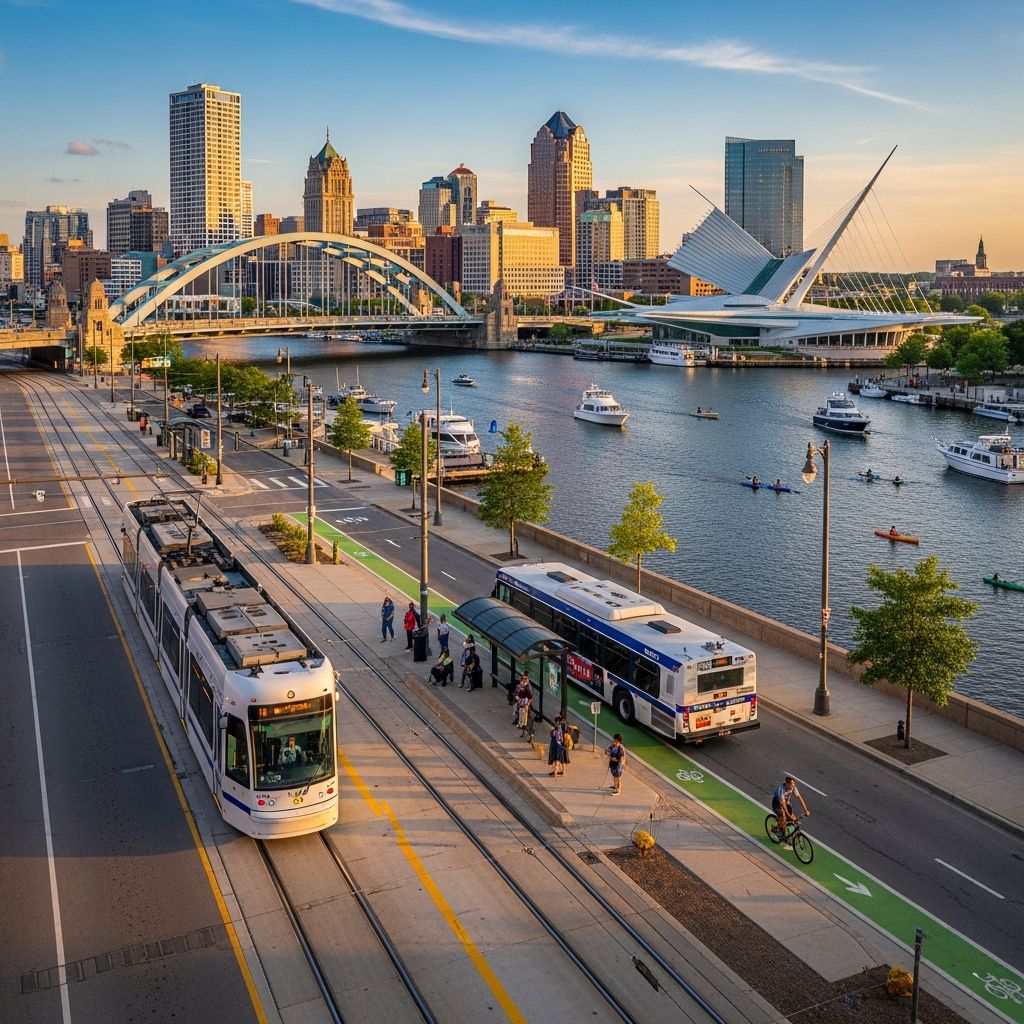
Milwaukee offers a variety of efficient and affordable transportation choices that make discovering its vibrant neighborhoods, lakefront attractions, and cultural hotspots straightforward. Whether you prefer the freedom of walking along scenic paths, the convenience of public transit systems like buses and streetcars, or the flexibility of biking and driving, the city’s compact layout ensures easy access to key areas.
Embracing Milwaukee’s Walkable Core
The heart of Milwaukee shines as a pedestrian paradise, particularly its downtown district, which spans just a few compact miles. Visitors can stroll effortlessly between landmarks without needing vehicles. A standout feature is the Milwaukee RiverWalk, a 3-mile paved pathway that snakes through the city center, linking lively spots like the Beerline B area to the Historic Third Ward and Old World Third Street.
This river-hugging trail not only provides breathtaking views of the water and skyline but also passes by numerous eateries, breweries, and public art installations. In good weather, it’s ideal for casual exploration, with wide sidewalks accommodating groups and families. Even in cooler months, the path remains cleared, inviting year-round use. For those staying centrally, many hotels, museums, and entertainment venues fall within a 15-20 minute walk, minimizing transit needs.
Public Bus Services: MCTS Essentials
The Milwaukee County Transit System (MCTS) forms the backbone of the city’s public transportation, delivering reliable bus coverage across downtown and beyond. With dozens of routes, including the innovative Connect 1 Bus Rapid Transit (BRT) line, riders can reach suburbs, airports, and major attractions seamlessly.
To get started, download the free Umo app for trip planning, live tracking, and mobile payments. Enter your starting point and destination to receive customized routes via the app, Google Maps, or Apple Maps. Buses arrive frequently downtown, and real-time updates help you time your wait perfectly—aim to be at stops 5 minutes early.
Fares are straightforward and budget-friendly. Adult regular fare stands at $2.75 per ride, with reduced rates of $1.25 for seniors, children aged 6-11, and those with disabilities. Children 5 and under ride free. Opt for the WisGo card through the Umo app or retail spots for fare capping benefits: $8.25 daily, $33 weekly, or $99 monthly for adults; lower caps apply to reduced fares. Cash works too, but lacks transfer perks.
| Fare Type | Per Ride | Daily Cap | Weekly Cap | Monthly Cap |
|---|---|---|---|---|
| Adult (12-64) | $2.75 | $8.25 | $33 | $99 |
| Reduced (65+, 6-11, Disability) | $1.25 | $4 | $16.50 | $49.50 |
All MCTS buses feature front ramps for wheelchair access, ensuring inclusivity. Bike racks on every bus allow hybrid commuting—secure your wheels and hop on for longer stretches.
The Hop Streetcar: Downtown Connector
For a modern, scenic ride through Milwaukee’s core, The Hop streetcar delivers. This electric line spans 2 miles, starting at the Milwaukee Intermodal Station and circling key downtown zones, including the lakefront, convention center, and entertainment districts.
Service runs daily: Monday-Friday 5 a.m. to midnight, weekends from 7 a.m. Vehicles arrive every 15-20 minutes, with fares matching MCTS at $2.75 per ride (WisGo compatible). It’s perfect for bar-hopping in the Third Ward or reaching Fiserv Forum for events. An interactive map on the official site helps plot stops.
The Hop enhances connectivity, bridging gaps between bus lines and walkable areas while offering air-conditioned comfort and panoramic views.
Biking Adventures with Bublr Bikes
Milwaukee embraces cycling with its extensive bike-friendly infrastructure, including dedicated lanes and paths along the lake and river. The Bublr Bikes share program, part of the BCycle network, stations bikes across downtown and into Wauwatosa.
Grab a bike via the app—passes from other BCycle cities work here. Rates start low for short trips, scaling for longer ones. Pair with MCTS bike racks for versatile journeys: pedal locally, then bus further. Helmets aren’t provided, so bring your own; locks secure bikes at stations.
- Station Density: Heavy in downtown, lighter in outskirts.
- Best Routes: Oak Leaf Trail for off-road fun, lakefront paths for views.
- Seasonal Tips: Available year-round, but salt in winter affects chains.
Driving and Parking in Milwaukee
Interstates I-94 and I-43 converge here, providing smooth access from Chicago (90 minutes south) or beyond. The Marquette Interchange handles heavy traffic efficiently post-2008 upgrades.
Downtown parking abounds: street meters, garages, and lots with rates around $2-3/hour, capped daily. Apps like ParkMobile simplify payments. Avoid rush hours (7-9 a.m., 4-6 p.m.) on weekdays. Electric vehicle charging stations dot the area, supporting green travel.
Rideshares, Taxis, and Group Options
Uber and Lyft thrive, with surge pricing minimal outside events. Taxis via zTrip or apps offer accessibility. For groups, companies like GO Riteway, Lamers Bus Lines, and Tootl provide shuttles, coaches, and luxury rides—ideal for tours or events.
Scooters (Bird/Lime) pepper sidewalks for quick hops, regulated downtown.
Accessibility and Inclusivity Features
Milwaukee prioritizes all travelers. MCTS and The Hop are fully ADA-compliant with ramps and low floors. Paratransit via MCTS connects those needing door-to-door service. Private firms like Tootl accommodate wheelchairs.
Seasonal and Event-Based Travel Tips
Summer festivals boost transit; use Umo for real-time adjustments. Winter salt aids paths but demands sturdy shoes. Airports link via buses (20-30 minutes to downtown).
Cost Comparison: Choosing Your Mode
| Option | Cost (Short Trip) | Best For |
|---|---|---|
| Walking | Free | Downtown exploration |
| MCTS Bus | $2.75 | County-wide travel |
| The Hop | $2.75 | Core attractions |
| Bublr Bike (30 min) | $3.50 | Flexible fun |
| Rideshare | $8-15 | Nightlife, groups |
Frequently Asked Questions (FAQs)
What is the best way to get from the airport to downtown?
MCTS Route 80 or 82 buses take 20-30 minutes for $2.75; taxis/Uber cost $25-35.
Are Milwaukee buses running on holidays?
Schedules vary; check ridemcts.com or Umo app for updates.
Can I take my bike on The Hop streetcar?
Yes, bikes are allowed in designated areas outside peak hours.
How walkable is Milwaukee overall?
Highly in downtown; suburbs favor transit or cars.
What apps help with navigation?
Umo for transit, Bublr for bikes, Transit or Google Maps for all.
With these options, Milwaukee ensures every visitor enjoys stress-free mobility amid its breweries, markets, and waterfront charms.
References
- Transportation | Getting Around Milwaukee — Visit Milwaukee. 2026 (accessed). https://www.visitmilwaukee.org/plan-a-visit/getting-here-and-around/transportation/
- Route Map – The Hop MKE | Milwaukee Streetcar — The Hop MKE. 2026 (accessed). https://thehopmke.com/interactive-map/
- How to Ride MCTS — Ride MCTS. 2026 (accessed). https://www.ridemcts.com/how-to-ride
- Getting Around – Milwaukee Downtown — Milwaukee Downtown. 2026 (accessed). https://www.milwaukeedowntown.com/getting-around/
- Ride MCTS | Milwaukee County Transit System — Ride MCTS. 2026 (accessed). https://www.ridemcts.com
Similar Articles







Read full bio of medha deb