San Francisco Transport: Essential Guide To Getting Around
Master San Francisco's diverse transit options from buses and cable cars to ferries and BART for seamless city exploration.
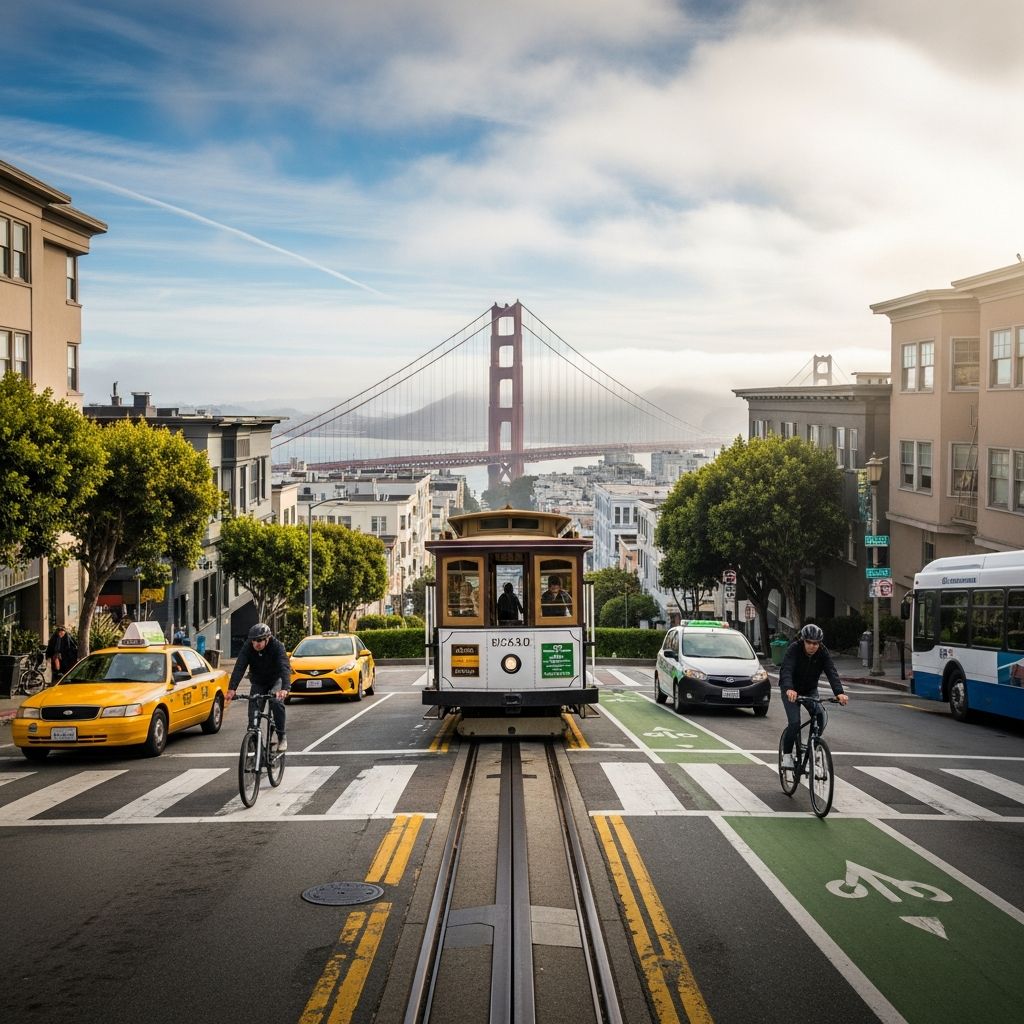
San Francisco’s transportation network blends modern efficiency with iconic charm, offering visitors multiple ways to explore its hilly streets and waterfront attractions. From the rumbling cable cars to swift BART trains and scenic ferries, understanding these options ensures smooth travel across the city and beyond.
Overview of Public Transit Systems
The city’s core transit is managed by the San Francisco Municipal Transportation Agency (SFMTA), known as Muni, which operates buses, light rail, streetcars, and cable cars covering every neighborhood. Complementing Muni are regional services like BART for airport and East Bay connections, ferries across the Bay, and buses from surrounding counties.
- Muni: Citywide buses, Metro light rail, historic streetcars, and cable cars.
- BART: Rapid transit linking San Francisco to Oakland, SFO airport, and Peninsula cities.
- Ferries: Water crossings to Marin County and Oakland.
- Regional buses: SamTrans, Golden Gate Transit for airport and North Bay access.
As of 2026, contactless payments with major credit/debit cards (Visa, Mastercard, Amex, Discover) are widely accepted on Muni, BART, ferries, and cable cars, simplifying fares for tourists.
Muni Buses and Light Rail: Everyday Essentials
Muni buses navigate San Francisco’s steep inclines and one-way streets, with stops marked by yellow poles, white curb paint, or shelters. Routes like the 30-Stockton connect downtown to Chinatown and North Beach.
The Muni Metro light rail, often called trolleys, runs partly underground downtown and surfaces elsewhere. Lines including J, K, L, M, N, and T serve key areas from Embarcadero to Balboa Park. Stations feature island platforms mid-street or subterranean access; use the official Metro map for planning.
| Line | Key Destinations | Notes |
|---|---|---|
| N-Judah | Ocean Beach, Sunset District, Downtown | Frequent, extends to Oracle Park |
| T-Third Street | Bayview, Sunnydale, Embarcadero | Surface and subway segments |
| F-Market | Fisherman’s Wharf, Ferry Building | Historic streetcars, tourist favorite |
Fares start at $2.50 for adults; transfers valid for 90-120 minutes. Download the MuniMobile app or load a Clipper Card for seamless payments.
Iconic Cable Cars: A Historic Ride
San Francisco’s cable cars, operating since 1873, grip underground cables to climb Nob Hill and Russian Hill. Three lines persist: Powell-Hyde (to Lombard Street), Powell-Mason (to North Beach), and California Street (Financial District to Van Ness).
Rides cost $9 one-way in 2026, payable via Clipper, app, or exact cash. Expect queues at turnaround points like Powell and Market; ride mid-week for shorter waits. These aren’t just transport—they’re rolling landmarks offering panoramic views.
BART: Regional Rapid Transit
Bay Area Rapid Transit (BART) excels for longer trips, with trains zipping under Market Street to Civic Center, then across the Bay to Oakland or south to SFO airport. From SFO, take the Red or Blue AirTrain (free) to Garage G, then board a San Francisco-bound train.
Fares vary by distance ($2-$15); use Clipper or contactless cards. Stations like Powell and Montgomery are downtown hubs. BART operates 5am- midnight weekdays, shorter weekends.
Ferries and Water Crossings
San Francisco Bay Ferries connect the Ferry Building to Oakland Alameda and Vallejo, while Golden Gate Ferries serve Sausalito, Larkspur, and Tiburon. These offer stunning skyline views and avoid traffic.
Tickets ($10-$20) via Clipper or terminal purchase; schedules align with commutes and tourists. The F-line streetcar complements by linking waterfront spots.
Airport Transfers: Seamless Arrivals
San Francisco International Airport (SFO) links directly to the city via BART ($10, 30 minutes to Powell Station), SamTrans buses ($2-$5, Routes 292/398 to downtown), or Muni 398 express.
- BART: Fastest, follows AirTrain from terminals.
- SamTrans: Budget option, stops at all terminals.
- Rideshares: Uber/Lyft ~$20-40, designated zones.
For Amtrak arrivals, Thruway buses from Emeryville connect downtown.
Biking, Walking, and Alternatives
Walkable zones include Union Square, Embarcadero, and Fisherman’s Wharf. Bay Wheels bikeshare stations dot the city; unlock via app for $4.99/30 minutes.
PresidiGo shuttles loop the Presidio for free. Rideshares fill gaps, but public options are cheaper and greener.
Fares, Passes, and Payment Tips
Clipper Card ($3 base) stores value and passes, usable across agencies. Day passes: $5.50 (1-day), $13 (3-day), $24 (7-day). MuniMobile app avoids ticket machines.
|Pass Type|Adult Price|Coverage|
| Pass Type | Adult Price | Coverage |
|---|---|---|
| 1-Day | $5.50 | Muni only |
| Visitor 3-Day | $13 | Muni + cable cars |
| 7-Day | $24 | Muni passport |
| Clipper Excursion (SF Bay Ferry) | Varies | Regional |
2026 updates: Cable cars $9/ride, transit passes slightly higher. Tap contactless cards everywhere Clipper works.
Planning Your Route
Use Transit app or Google Maps for real-time tracking. Check SFMTA alerts for delays; hills mean slower buses uphill.
Frequently Asked Questions
Is San Francisco public transit reliable for tourists?
Yes, it’s extensive but can face delays from traffic or construction. Plan extra time for hills and peaks.
How do I pay for cable cars?
Clipper, MuniMobile, contactless card, or exact cash ($9). No change given.
What’s the best way from SFO to downtown?
BART for speed ($10, 30 min); SamTrans for budget ($2.50).
Do ferries accept Clipper Cards?
Yes, SF Bay Ferry and Golden Gate Ferries do.
Are Muni vehicles accessible?
Most are wheelchair-friendly with low floors or ramps.
Practical Advice for Smooth Travels
Validate fares before boarding Metro/BART. Secure belongings on crowded routes. Dress in layers for variable weather. Combine walking with transit for immersive experiences.
San Francisco’s system rewards familiarity—start with a Clipper Card and app to unlock efficient, affordable mobility.
References
- Transportation Basics: How to Get Around San Francisco — SF Travel. 2026. https://www.sftravel.com/info/transportation-basics-how-to-get-around-san-francisco
- Getting Around San Francisco in 2026 — Inside Guide to San Francisco Tourism. 2025-12-10. https://www.inside-guide-to-san-francisco-tourism.com/getting-around-san-francisco.html
- Your Guide to San Francisco Public Transportation — Extranomical. 2026. https://www.extranomical.com/blog/transportation-in-san-francisco/
- How to Get Around San Francisco — Visit California. 2026. https://www.visitcalifornia.com/experience/getting-around-san-francisco/
- Getting Around San Francisco — SFMTA. 2026. https://www.sfmta.com/getting-around-san-francisco
- Muni Transit — SFMTA. 2026. https://www.sfmta.com/muni-transit
- Using BART — BART. 2026. https://www.bart.gov/guide
Similar Articles







Read full bio of medha deb