
Undefined Pompeii Erotic Art: Inside Lupanar And Elite Villas
Discover the shocking sensual frescoes of ancient Pompeii that reveal Roman attitudes toward sex and desire preserved by volcanic ash.
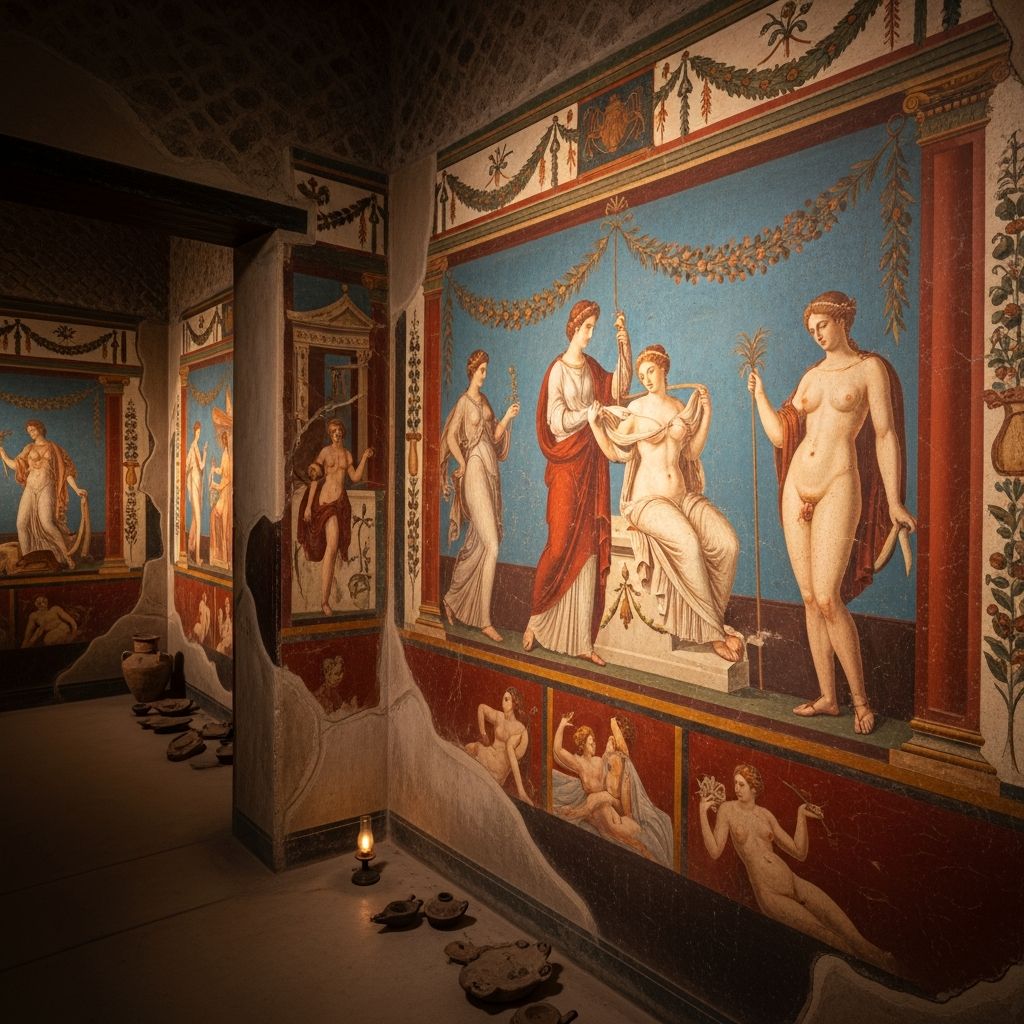
The ancient city of Pompeii, entombed by the catastrophic eruption of Mount Vesuvius in 79 CE, offers a unique window into Roman life, particularly its unapologetic embrace of eroticism. Frescoes depicting explicit sexual acts adorn walls from modest brothels to opulent villas, challenging modern preconceptions about ancient morality. These vivid artworks, preserved under layers of ash, reveal a society where sensuality permeated public and private spaces alike.
The Volcanic Vault: Preservation of a Sensual Past
When Vesuvius erupted, it buried Pompeii and nearby Herculaneum under pyroclastic flows, sealing buildings and their decorations in a time capsule. Excavations beginning in the 18th century uncovered thousands of frescoes, statues, and graffiti featuring nudity, intercourse, and mythological lovers. Unlike later Roman periods influenced by emerging Christianity, pre-eruption Pompeii celebrated erotic themes openly.
This preservation allowed archaeologists to study intact domestic interiors. Walls in atriums, peristyles, and cubicula burst with color: couples in coital bliss, phalluses as protective symbols, and gods like Priapus in exaggerated fertility poses. The sudden burial prevented the iconoclasm that destroyed similar art elsewhere, providing irreplaceable evidence of Roman visual culture.
From Streets to Bedrooms: Where Erotic Art Thrived
Erotic imagery was not confined to shadowy corners but integrated into everyday environments. In public spaces like the Suburban Baths outside Pompeii’s walls, changing rooms displayed explicit scenes of group encounters and solo pleasures, setting a provocative tone for bathers. These baths, primarily social hubs rather than brothels, suggest sensuality enhanced communal relaxation.
- Public Displays: Large-scale frescoes on exterior walls likely advertised nearby lupanars (brothels), drawing clients with promises of available pleasures.
- Private Homes: Elite residences like the House of the Vettii featured Priapus frescoes symbolizing wealth—his oversized phallus weighed against gold coins—alongside intimate cubicles for enslaved staff possibly doubling as discreet pleasure rooms.
- Bathhouses: Hallways leading to dressing areas at the Suburban Baths hosted vivid depictions, blending hygiene with erotic stimulation.
In peristyle gardens, colonnaded courtyards displayed pygmy orgies and lovemaking scenes, blending humor with desire to entertain guests. This ubiquity indicates erotic art served decorative, apotropaic (evil-warding), and aphrodisiac functions.
Pompeii’s Lupanar: Epicenter of Commercial Sensuality
The most infamous site is the Lupanar, a two-story brothel with ten cramped cubicula, each fitted with a stone bed and accessed via narrow corridors. Walls here teem with over 100 graffiti—client boasts, prostitute names, price lists—paired with frescoes illustrating positions from missionary to more acrobatic feats.
These images functioned as a visual menu, guiding illiterate patrons through fantasies. The brothel’s balcony overlooked a latrine, underscoring the gritty reality behind the art. Despite its notoriety, scholars debate if all such decorated rooms were strictly commercial; some homes hosted similar setups for private indulgences.
| Feature | Description | Artistic Highlights |
|---|---|---|
| Cubicula | 10 small rooms, 5 per floor | Frescoes of intercourse, oral sex |
| Stone Beds | Mattress-less platforms | Surrounded by explicit panels |
| Graffiti | Client inscriptions | Prices, propositions, boasts |
| Balcony & Latrine | Functional add-ons | Overlooks active areas |
Elite Villas and Mythological Passions
Wealthy Pompeians commissioned sophisticated erotic art. The House of the Vettii, reopened after 20 years of restoration, showcases Priapus frescos alongside mythological tableaux like Leda and the Swan, where the nude heroine’s inviting gaze and ornate sandal evoke mutual desire.
These weren’t mere titillation; they symbolized status and virility. Phallic symbols warded off misfortune, while scenes of gods in ecstasy elevated human acts to divine levels. In a kitchen-adjacent room, accessible only via an iron door, erotic panels hint at enslaved workers’ quarters repurposed for liaisons, blurring lines between domesticity and vice.
Shrouded in Secrecy: 19th-Century Scandal
Rediscovery shocked Victorian excavators. Officials at Naples’ Museo Archeologico Nazionale locked erotic finds in a ‘secret cabinet’ from 1849 to 2000, accessible only to select scholars or bribed men. This reflected Christian-influenced prudery clashing with Roman openness.
As Massimo Osanna noted, Pompeiians viewed phalluses as prosperity emblems, not obscenities. The 2019 exhibition ‘Art and Sensuality in the Houses of Pompeii’ finally showcased these pieces publicly, proving erotic art’s normalcy in elite and common homes alike.
Decoding Roman Sexuality Through Art
Frescoes reveal a culture prizing pleasure without modern shame. Depictions span heterosexual, homosexual, and group acts, often with status cues—larger figures denoting elites. John Clarke’s analysis highlights how art guided fantasies, from brothel illusions to home rituals.
Unlike brothels’ utilitarian panels, villa art was rhetorical, promoting love, rank, and harmony. This challenges anachronistic judgments, showing Romans integrated sex into social fabric seamlessly.
Modern Access and Exhibitions
Today, visitors explore restored sites like the House of the Vettii and Lupanar. Exhibitions rotate secret cabinet artifacts, contextualizing them via audio guides and panels. Herculaneum mirrors Pompeii with its own baths and villas boasting similar sensuality.
Ethical viewing emphasizes respect; photography restrictions protect fragile pigments. Guided tours decode symbolism, enhancing appreciation of this bold heritage.
FAQs: Pompeii’s Erotic Legacy
Is Pompeii’s erotic art only in brothels?
No, it appears in homes, baths, and streets, indicating widespread acceptance.
Why was it hidden for so long?
19th-century moral standards deemed it obscene, leading to locked storage until 2000.
What does Priapus symbolize?
Fertility, abundance, and protection against evil.
Can families visit these sites?
Yes, with age-appropriate guidance; explicit areas are optional.
Are there similar finds elsewhere?
Herculaneum yields comparable artifacts, preserved similarly.
Visiting Tips for Sensual Sites
- Book Pompeii tickets online to skip lines.
- Opt for small-group tours for in-depth insights.
- Visit early to avoid crowds at the Lupanar.
- Combine with Herculaneum for fuller context.
- Wear comfortable shoes for uneven ruins.
References
- Erotic Art in Pompeii and Herculaneum (NSFW!) — DailyArt Magazine. 2023. https://www.dailyartmagazine.com/erotic-art-pompeii-herculaneum-nsfw/
- Why Was Erotic Art So Popular in Ancient Pompeii? — Smithsonian Magazine. 2022-10-20. https://www.smithsonianmag.com/smart-news/why-was-erotic-art-so-popular-in-ancient-pompeii-180979988/
- The Erotic Art of Pompeii and Herculaneum — Travel Past 50. 2020. https://travelpast50.com/erotic-art-pompeii-herculaneum/
- Sex and Lots of Erotic Art to Prove It: The Erotic art of Pompeii — Western Oregon University (PDF). 2015. https://cdn.wou.edu/history/files/2015/08/Heath-Wellman.pdf
- Pompeii Has Reopened Its Infamous House of Vettii — Artnet News. 2023. https://news.artnet.com/art-world/pompeii-reopens-house-of-vettii-penis-fresco-2243508
- The Pleasure Principle: Pompeii’s Brothels and Erotic Art — Pompeii Tickets. 2024. https://www.pompeii-tickets.com/brothels/
Similar Articles







Read full bio of Sneha Tete