
The Art and Science of Professional Mattress Testing
Discover how sleep experts evaluate luxury beds and build careers in product testing
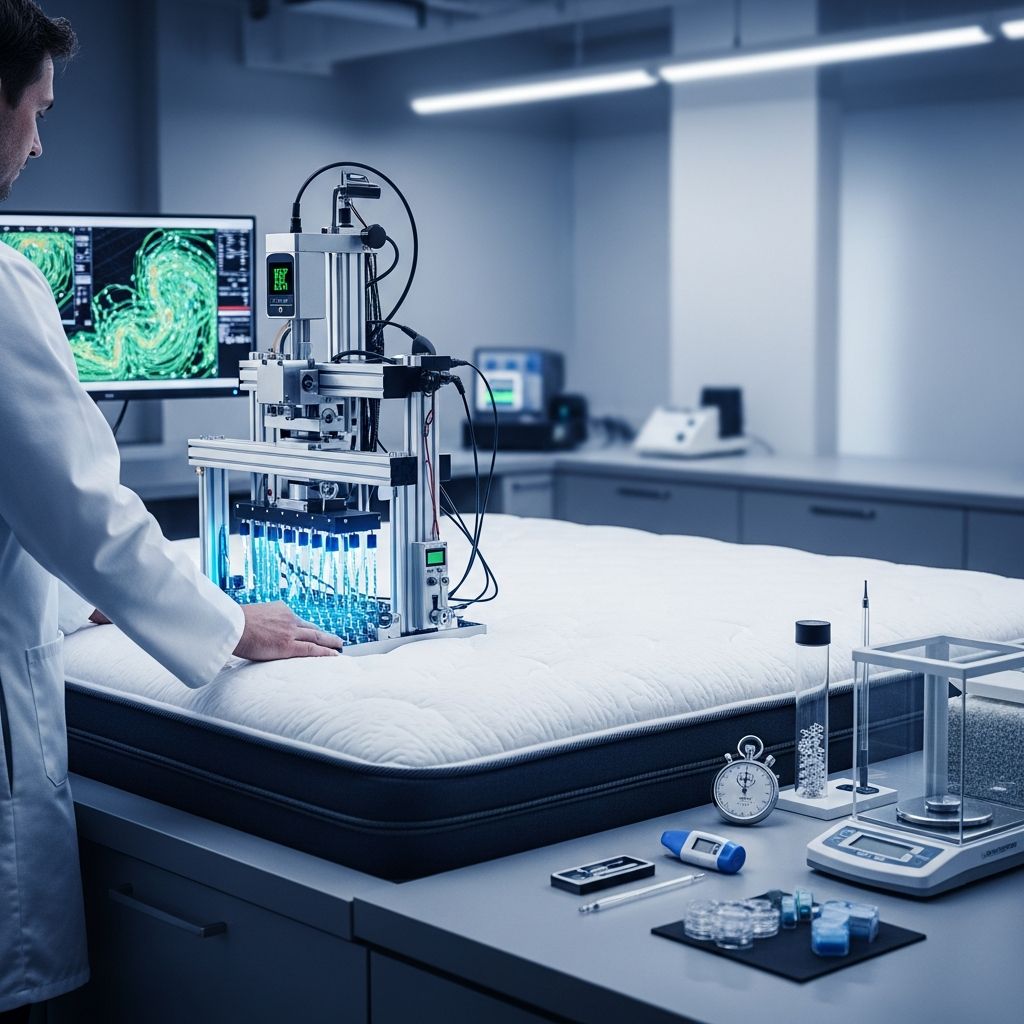
The mattress industry has evolved significantly over the past decade, transforming from a market driven primarily by consumer preference to one increasingly shaped by rigorous scientific evaluation. At the heart of this transformation lies a specialized profession: professional mattress testing. These dedicated experts dedicate their careers to evaluating sleep surfaces, providing manufacturers with critical feedback that influences product development and helping consumers make informed purchasing decisions. This emerging field combines elements of sleep science, engineering analysis, quality assurance, and personal experience to assess the complex relationship between humans and the surfaces where they spend approximately one-third of their lives.
Understanding the Modern Mattress Tester
A professional mattress tester, also referred to as a sleep product evaluator or quality assurance specialist in the sleep industry, occupies a unique position within manufacturing and retail environments. These professionals work for mattress manufacturers, luxury hotel chains, online review publications, and specialized testing laboratories. Their fundamental responsibility extends beyond simply lying on a bed and offering an opinion; rather, they engage in systematic, methodical assessment of sleep surfaces using both subjective experience and objective measurement tools.
The role has gained prominence as consumers increasingly demand evidence-based product information. Publications focused on wellness and consumer products now employ dedicated mattress testers who conduct comprehensive evaluations. Luxury hotel chains recognize the critical importance of sleep quality to guest satisfaction and employ specialists to evaluate and select premium bedding. Meanwhile, manufacturers rely on product testers to identify design flaws, comfort inconsistencies, and durability issues before products reach market.
Core Responsibilities and Daily Activities
The work of a professional mattress tester encompasses a diverse range of activities that go far beyond casual rest. Understanding these responsibilities provides insight into why the profession requires specialized training and dedication:
- Conducting extended sleep trials on prototype and production mattresses while documenting personal comfort experiences
- Analyzing pressure distribution across mattress surfaces using advanced heat-mapping technology that identifies high-stress areas on the body
- Evaluating motion transfer characteristics by assessing how movements from one side of the bed affect the other side
- Testing edge support consistency to determine mattress durability and long-term performance
- Examining temperature regulation properties and cooling or heating effectiveness
- Assessing muscle recovery and spinal alignment during extended rest periods
- Reviewing technological features integrated into smart mattresses and adjustable sleep systems
- Creating detailed technical reports that translate subjective experiences into actionable feedback for product teams
- Comparing competitor products to establish market positioning and identify innovation opportunities
- Testing mattresses across different body types and weights to ensure broad applicability
Advanced Testing Methodologies
Modern mattress evaluation relies on sophisticated testing approaches that combine personal assessment with scientific instrumentation. Understanding these methodologies reveals the depth and precision required in the field.
Pressure Mapping Technology
One of the most significant advances in mattress testing involves pressure mapping systems that use heat-mapping technology to visualize how pressure distributes across a sleeper’s body. These systems detect areas where pressure exceeds certain thresholds (typically measured in mmHg) and display them as color-coded heat maps. High-pressure zones appear as bright orange and red on the map, indicating areas where the mattress may not adequately support the body. This objective measurement complements subjective comfort assessments and helps identify design issues that might not be immediately apparent to the sleeper.
Motion Transfer Assessment
For couples or individuals who value undisturbed sleep, motion transfer represents a critical evaluation factor. Professional testers employ multiple approaches to measure this characteristic. One technique involves placing a large clear container filled with plastic balls on one side of the mattress while a tester performs standardized movements from the opposite side. The amount of ball movement within the container quantifies how effectively the mattress absorbs and isolates motion. Additionally, couple’s tests involve one blindfolded tester wearing noise-cancelling headphones while a partner performs a series of deliberate movements on the other side of the bed. The blindfolded tester then reports which movements were felt, providing real-world simulation of shared sleep experiences.
Edge Support Evaluation
Mattress durability and usability depend significantly on edge support quality. Professional testers measure edge support by placing weighted plates (typically 130–150 pounds) along mattress edges and measuring how much the edge dips under this standard weight. This assessment determines whether the mattress maintains structural integrity around its perimeter, a factor that influences both longevity and practical usability for individuals who sit or sleep near the bed’s edge.
Essential Skills and Qualifications
Success in professional mattress testing requires a combination of technical knowledge, physical capabilities, and analytical skills. Prospective testers should develop expertise in several key areas:
| Skill Category | Required Competencies |
|---|---|
| Technical Knowledge | Understanding of mattress construction, materials science, sleep physiology, and measurement instrumentation |
| Physical Attributes | Ability to sleep for extended periods, maintain consistent sleeping patterns, and adapt to different sleep surfaces |
| Analytical Abilities | Strong capacity to translate physical sensations into detailed written descriptions and identify patterns across multiple tests |
| Communication Skills | Ability to articulate nuanced comfort observations and write comprehensive technical reports for diverse audiences |
| Attention to Detail | Meticulous documentation of testing conditions, sleep quality metrics, and subjective observations |
Pathways to a Mattress Testing Career
Unlike more traditional professions with clearly defined educational pathways, mattress testing careers develop through varied routes depending on organizational context. Many professionals enter the field through quality assurance positions in manufacturing environments, where they gradually specialize in sleep product evaluation. Others transition from journalism or consumer product review backgrounds, bringing strong writing and analytical skills to sleep science publications. Some individuals advance into professional testing roles after working in luxury hospitality, where they gained expertise in premium bedding and guest comfort expectations.
Educational preparation typically includes courses in product testing methodology, sleep science fundamentals, materials evaluation, and technical report writing. While no specific degree requirement exists, backgrounds in engineering, consumer science, health sciences, or quality assurance provide valuable foundational knowledge. Many professionals supplement formal education with specialized certifications in sleep science or product testing protocols offered by industry associations.
Career Opportunities and Specializations
The mattress testing field offers diverse career paths depending on industry segment and organizational focus. Manufacturers employ testers to develop and refine products before commercial release, providing opportunities to influence design decisions at the earliest stages. Online consumer publications and review sites employ mattress testers who evaluate products for public-facing recommendations, reaching millions of consumers seeking purchasing guidance. Luxury hotel chains maintain testing teams to ensure their sleep offerings meet premium standards, directly impacting guest satisfaction and loyalty. Specialized sleep laboratories and research institutions conduct advanced testing focused on specific aspects like medical applications, therapeutic benefits, or innovative materials.
Compensation and Employment Outlook
Professional mattress testers earn compensation comparable to other quality assurance specialists and product evaluators. While specific salary data varies by geographic location and organizational type, the field remains competitive within the broader product testing industry. Growth in this field reflects expanding consumer interest in sleep quality, increasing emphasis on evidence-based product claims, and the mattress industry’s continued innovation in materials and technology. The emergence of luxury sleep markets and increasing consumer spending on premium bedding have expanded employment opportunities across multiple sectors.
The Science Behind Sleep Product Evaluation
Professional mattress testing draws from sleep science research demonstrating that sleep quality directly influences physical health, cognitive function, and overall wellbeing. Testers must understand how mattress characteristics affect spinal alignment, pressure point relief, temperature regulation, and sleep cycle progression. This scientific foundation ensures that evaluations assess factors that genuinely impact sleep quality rather than focusing solely on subjective comfort impressions.
The field continues to evolve as technology advances. Smart mattresses with temperature control, adjustable firmness, and sleep tracking capabilities require testers to evaluate both traditional comfort factors and technological functionality. Emerging materials like phase-change fabrics, gel-infused foams, and hybrid constructions demand specialized knowledge to assess their performance characteristics accurately.
Frequently Asked Questions
What qualifications do I need to become a mattress tester?
Most positions require a high school diploma or equivalent as a baseline. Many employers prefer candidates with experience in quality assurance, product testing, or related fields. Strong writing skills, attention to detail, and the ability to sleep consistently are essential attributes. Some positions may require or prefer relevant certifications in sleep science or product testing methodology.
How long does a typical mattress testing evaluation take?
Comprehensive mattress evaluations typically span several weeks to several months. Extended sleep trials allow testers to experience how mattresses perform over time, identifying issues that may emerge after initial nights of use. Multiple evaluation phases address different aspects of performance, from initial comfort assessment to long-term durability observations.
Do mattress testers test products alone?
Testing approaches vary by organization. While individual sleep trials provide valuable single-sleeper perspective, many comprehensive evaluations involve multiple testers with different body weights and sleeping positions. This diversity ensures products perform well across varied user types rather than optimizing for a narrow demographic profile.
How do testers maintain objectivity during evaluation?
Standardized testing protocols, consistent documentation practices, and objective measurement tools help minimize bias. Blind testing approaches prevent testers from knowing mattress brand or price point, reducing unconscious preference influences. Multiple independent testers evaluating the same products provide comparative validation of findings.
What makes luxury mattress testing different from standard mattress evaluation?
Luxury mattress testing often employs more rigorous evaluation standards, longer trial periods, and additional performance metrics. Luxury products typically command higher prices, creating expectations for superior performance across multiple dimensions. Testing methodologies may emphasize aspects like responsiveness, edge support consistency, and advanced technological features more heavily than budget product evaluations.
The Future of Sleep Product Evaluation
As the sleep industry continues advancing, professional mattress testing will likely become increasingly specialized and scientifically rigorous. Emerging technologies like biometric sleep monitoring, personalized firmness adjustment, and advanced climate control systems will require testers to develop deeper technical expertise. The growing recognition of sleep quality as fundamental to health and wellness suggests continued expansion of professional testing opportunities across multiple market segments.
The profession represents a unique convergence of personal experience, scientific methodology, and consumer advocacy. Professional mattress testers serve as essential intermediaries between manufacturers seeking to improve products and consumers seeking better sleep. As the field matures, career opportunities will likely expand, offering those passionate about sleep quality and product excellence a meaningful and distinctive career path.
References
- Becoming a Professional Bed Tester: Salary and Pathways — Indeed Career Advice. Accessed April 22, 2026. https://au.indeed.com/career-advice/finding-a-job/how-to-become-professional-bed-tester
- How We Test and Rate Mattresses — Fortune. https://fortune.com/how-we-test-mattresses/
- Test Lab: Expert Tested. Sleeper Approved — Sleep Foundation Research Methodology. Accessed April 22, 2026. https://www.sleepfoundation.org/research-methodology
Similar Articles








Read full bio of medha deb