
When Rabbits Travel Luxury: The Business Class Bunny Story
How one entrepreneur's emotional support bunny became an unlikely luxury traveler
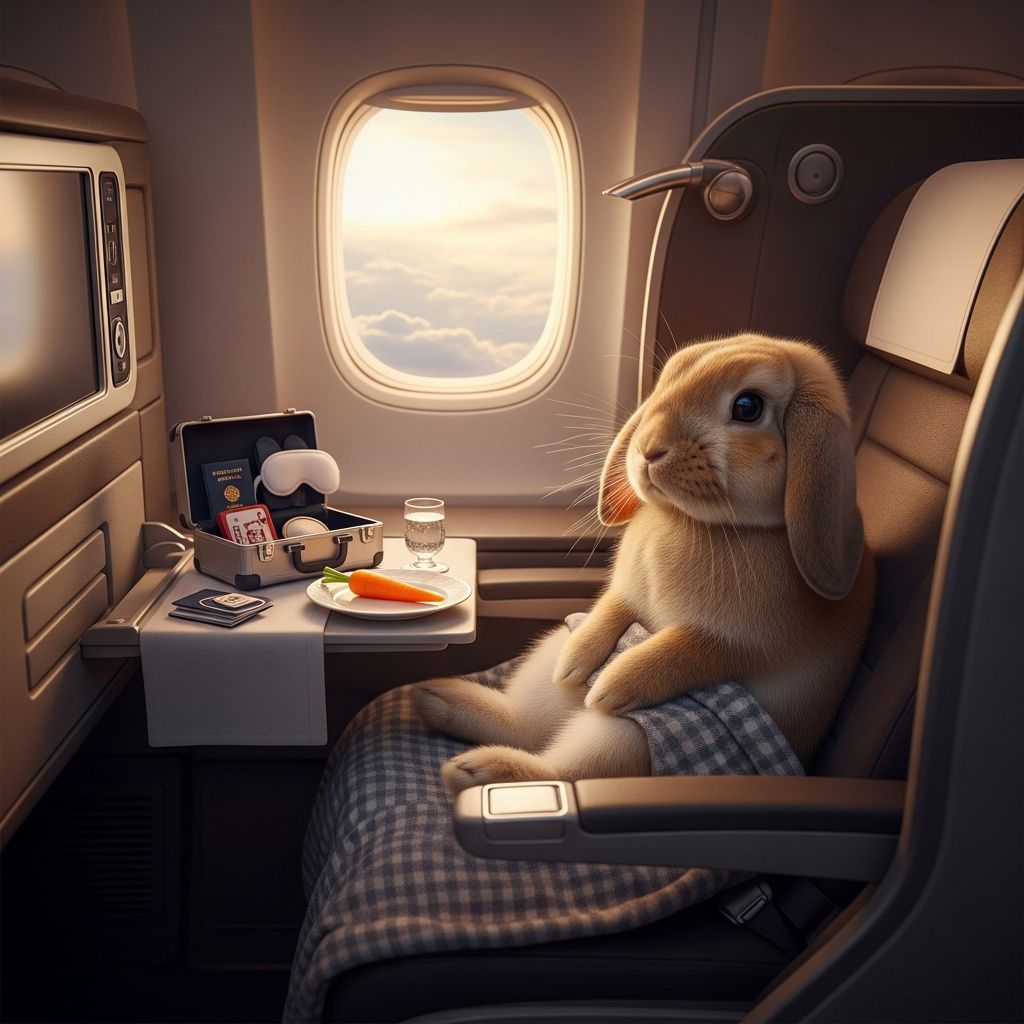
In late 2018, an extraordinary travel story unfolded at 30,000 feet above the Pacific Ocean. A small rabbit named Coco, dressed in formal attire complete with a bow tie, settled into a business class seat on a United Airlines flight traveling from San Francisco to Japan. What might seem like an elaborate publicity stunt was actually a genuine testament to the evolving landscape of pet travel, emotional support animal regulations, and the lengths owners will go to keep their beloved companions nearby during life transitions.
The Journey of a Determined Pet Owner
Takako Ogawa, a former Google employee and co-founder of analytics startup Panalyt Japan, faced a common challenge when relocating her life across the Pacific: what to do with her cherished eight-year-old rabbit, Coco. Rather than leaving her pet behind or enduring the stress of cargo hold travel, Ogawa found an innovative solution that would ultimately capture global attention and spark conversations about pet welfare during air travel.
Ogawa’s connection to Coco ran deep. The rabbit had been her faithful companion for years, and the prospect of a long flight in the cargo hold concerned the owner given Coco’s advanced age. Three years earlier, in 2015, when Ogawa had made the reverse journey from Japan to San Francisco, Coco had traveled in the aircraft’s hold. The experience had weighed on Ogawa’s mind, prompting her to explore alternative options for the return journey.
Understanding Emotional Support Animal Classification
The pathway to Coco’s remarkable journey began with understanding the distinction between emotional support animals and service animals. Emotional support animals (ESAs) provide comfort through companionship rather than performing specific trained tasks. Airlines maintain different regulations for these animals compared to traditional pets, often allowing them to travel in the cabin rather than cargo.
Recognizing this opportunity, Ogawa registered Coco as an emotional support animal with the airline. This classification proved instrumental in securing cabin access for her rabbit companion. The designation reflected the genuine emotional bond between Ogawa and Coco, while also enabling a more comfortable travel experience for both.
The Economics of Luxury Pet Travel
The financial arrangement for Coco’s business class journey was surprisingly modest. Ogawa paid $100 to bring her emotional support rabbit aboard the flight in a special carrying case. This relatively low cost opened doors to an experience that would normally require purchasing a full business class ticket, often costing thousands of dollars for transpacific routes.
The timing worked in Coco’s favor. Upon boarding, Ogawa discovered that the seat adjacent to hers in business class remained unoccupied. Rather than leaving it empty, she made the creative decision to allow Coco to occupy the premium space. This confluence of circumstances—the ESA registration, the available seat, and Ogawa’s thoughtful decision—created the perfect storm for an unforgettable travel experience.
The Viral Moment: When Internet Culture Discovered Coco
Although Coco’s business class flight occurred in late 2018, the photos remained relatively obscure for over a year. The images depicted an amusing yet endearing scene: a small rabbit in formal wear, surrounded by business class amenities. In certain photographs, Coco appeared to be enjoying champagne and croissants—luxuries typically associated with premium cabin experiences.
The story gained significant traction when travel and lifestyle websites began sharing these photographs. Publications including Metro, Business Insider, and various travel blogs picked up the story, and the images spread rapidly across social media platforms. What had been a private solution to a practical problem suddenly became a global phenomenon, sparking discussions about pet travel, airline policies, and the boundaries of emotional support animal classifications.
The viral spread particularly surprised Ogawa, who had been living in Japan at the time. The geographic distance between her location and the English-language media centers publishing the story created an unexpected delay in her awareness of Coco’s newfound celebrity status.
Coco’s Fashion Statement and Personality
Central to Coco’s appeal was her distinctive appearance. The blue Mini Rex rabbit didn’t simply board the aircraft as an ordinary pet; she was dressed in people clothes, complete with a fashionable bow tie. This sartorial choice transformed Coco from a mere travel companion into a character worthy of media attention.
The bow tie served multiple purposes. Beyond its aesthetic appeal, it signaled intentionality and care on Ogawa’s part. The formal attire suggested that this was no accidental or casual venture but rather a planned experience, adding to the charm and narrative of the journey. Coco’s composed demeanor in photographs—appearing to contentedly occupy her business class seat—contributed to the anthropomorphic quality that made the story so compelling to audiences worldwide.
A Brief History of Coco’s Travel Adventures
Coco’s business class experience was not her first international journey. Three years prior, in 2015, when Ogawa was making her initial move from Japan to the United States, Coco had accompanied her across the Pacific. That journey, however, had taken a different form. The younger rabbit had traveled in the aircraft’s cargo hold, a standard practice for pets that don’t qualify for cabin access.
The cargo hold experience likely influenced Ogawa’s later decision to pursue the emotional support animal route. While cargo holds are pressurized and temperature-controlled for safety, they lack the direct oversight and comfort that cabin proximity provides. For an aging rabbit, the alternative of business class cabin travel represented a significant quality-of-life improvement.
This continuity in Coco’s transatlantic travels underscored a larger narrative: the evolution of pet owner consciousness regarding animal welfare during air travel. Ogawa’s willingness to explore different options reflected growing awareness of pet comfort and stress reduction during long flights.
Emotional Support Animals in Modern Air Travel
Coco’s journey illuminated the expanding role of emotional support animals in commercial aviation. While trained service animals had long been accommodated aboard aircraft, the emotional support animal category represents a more recent evolution in airline policy.
Airlines typically allow emotional support animals to travel in the cabin without additional charges, though they may require documentation from healthcare providers. The classification provides genuine benefits for individuals experiencing anxiety, depression, or other conditions that benefit from animal companionship. However, the growing use of emotional support animal designations has also sparked debates within the aviation industry about verification standards and potential misuse.
Coco’s story exists within this broader context, though her owner’s approach appeared to prioritize the rabbit’s welfare rather than seeking unwarranted airline benefits. The emotional support designation aligned with the genuine bond between Ogawa and her long-time companion.
The Logistics of Small Animal Cabin Travel
Transporting a rabbit in a commercial aircraft cabin presents unique logistical considerations. Airlines require that animals be contained in appropriate carriers that don’t pose safety risks to other passengers or interfere with emergency procedures. The special carrying case used for Coco’s journey met these requirements while ensuring the rabbit’s security and comfort.
Size restrictions also apply. Smaller animals like rabbits are generally more feasible for cabin travel than larger pets. Their minimal space requirements and reduced likelihood of creating disturbances make them more compatible with the cabin environment, though airline policies vary by carrier.
The bow tie and formal attire, while charming, also served practical purposes. Containing and securing a small animal during a long flight requires careful planning. The outfit both protected Coco from temperature fluctuations and made her easily identifiable and photographable—factors that contributed to her eventual viral fame.
What Makes This Story Remarkable
Several factors converged to make Coco’s journey genuinely unique rather than merely amusing:
- Age and Welfare Consideration: Ogawa’s primary motivation was ensuring her aging rabbit’s comfort, not seeking novelty or social media attention.
- Regulatory Navigation: The owner successfully maneuvered complex airline policies and animal classification systems to achieve the best outcome for her pet.
- Timing and Circumstance: The fortuitous availability of an adjacent empty business class seat enabled an experience that wouldn’t have occurred with full occupancy.
- Authenticity: Unlike staged travel stories, this experience emerged organically from real-world problem-solving.
- Global Media Interest: The combination of luxury travel, cute animal, and human-animal bond created a story with universal appeal.
Frequently Asked Questions About Pet Airline Travel
Can all rabbits fly on commercial airlines?
Not all rabbits are suitable for air travel. Airlines typically restrict cabin travel to animals registered as emotional support or service animals. Age, health status, and airline-specific policies all influence feasibility. Rabbits must be healthy enough to withstand flight conditions and stress.
What documentation is required for emotional support animals?
Most airlines require a letter from a mental health professional confirming the individual’s need for an emotional support animal. The documentation must be recent and come from a licensed provider.
How much does it cost to bring a pet in the cabin?
Emotional support animals typically travel free in the cabin, requiring only a $100-$150 registration or cabin pet fee. This contrasts significantly with the cost of purchasing a business or first-class ticket.
Are there risks to animals traveling by air?
Air travel can be stressful for animals due to noise, pressure changes, and unfamiliar environments. Veterinary consultation before travel is advisable to ensure the animal can safely handle flight conditions.
Has airline policy on emotional support animals changed since Coco’s flight?
Yes, many airlines have implemented stricter verification requirements for emotional support animals in recent years, seeking to reduce potential misuse of the classification.
The Lasting Impact of Coco’s Story
While Coco’s business class adventure lasted only the duration of a transpacific flight, its cultural impact extended far beyond that journey. The story prompted conversations about pet welfare, airline policies, and the evolving relationship between humans and their animal companions in an increasingly mobile world.
For Takako Ogawa, the experience represented a successful solution to a genuine problem. For millions of internet users, it provided a heartwarming reminder that sometimes the most innovative solutions come from prioritizing compassion and creativity within existing systems.
Coco’s journey stands as a testament to what becomes possible when an owner genuinely prioritizes their pet’s wellbeing, understands available regulations, and thinks outside conventional solutions. Whether viewed as a delightful aberration or a harbinger of more pet-friendly travel practices, the story of a rabbit in a bow tie enjoying business class remains one of aviation’s most endearing anecdotes.
References
- Photos: a Bowtie-Wearing Rabbit Flew Business Class — Business Insider. 2020-01-10. https://www.businessinsider.com/rabbit-business-class-flight-photos-2020-1
- Why Coco the bunny flew business class from San Francisco to Japan — South China Morning Post. 2020-03-17. https://www.scmp.com/magazines/style/news-trends/article/3048237/why-coco-bunny-flew-business-class-san-francisco-japan
- Adorable bunny travels in business class — Getaway Magazine. https://www.getaway.co.za/travel-news/adorable-bunny-travels-on-business-class/
- CEO’s pet rabbit flew business class from San Francisco to Japan — Mothership. 2020-01-29. https://mothership.sg/2020/01/rabbit-fly-business-class/
- Emotional Support Rabbit Flies United Business Class To Japan — Simple Flying. https://simpleflying.com/united-emotional-support-rabbit/
Similar Articles







Read full bio of medha deb