
Island Traditions: Shikoku’s Culinary Heritage
Explore how water, geography, and centuries of tradition shaped Shikoku's distinctive food culture
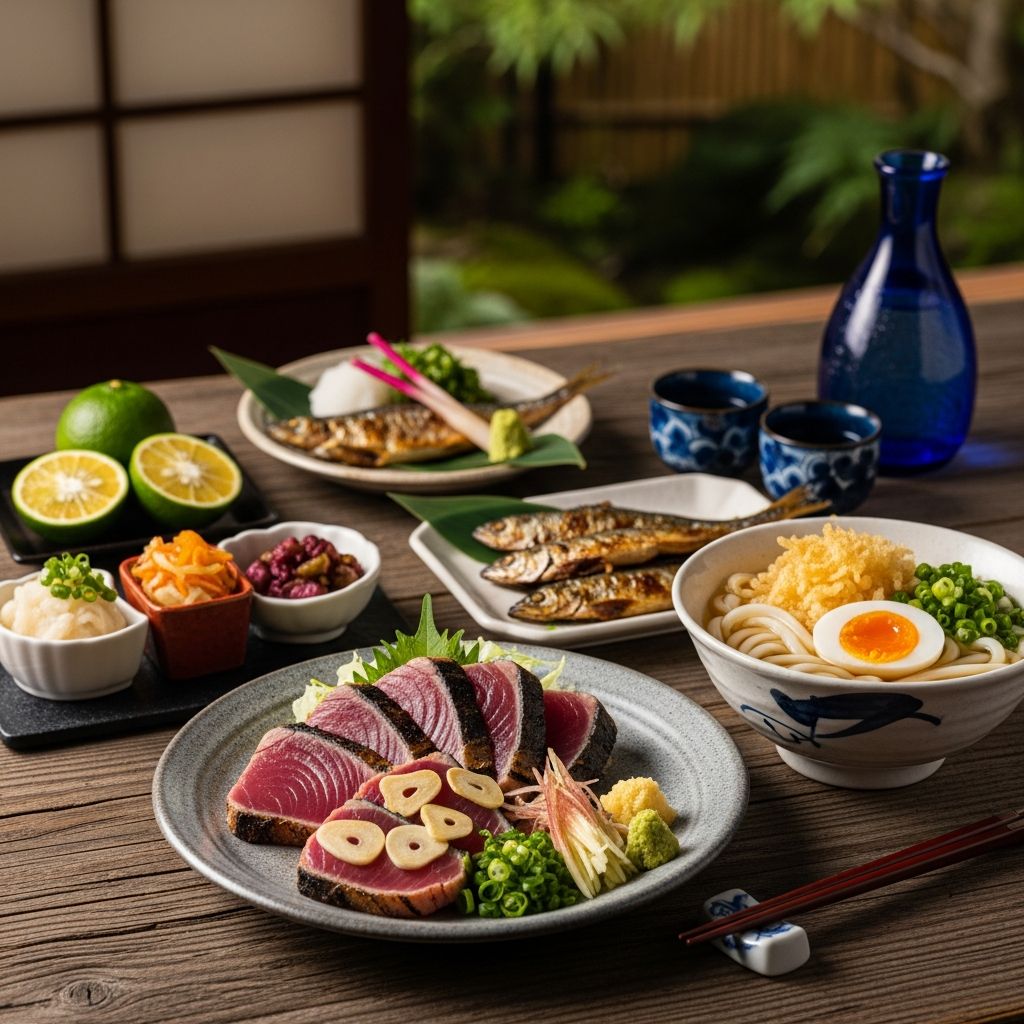
Shikoku, Japan’s smallest main island, represents a remarkable intersection of environmental stewardship and gastronomic excellence. The four prefectures comprising this region—Kagawa, Tokushima, Kochi, and Ehime—have developed distinctive food cultures that reflect their unique relationships with the surrounding landscape, climate, and historical circumstances. These culinary traditions emerged not from abundance, but from the island’s challenging terrain and resourceful inhabitants who learned to work harmoniously with their environment.
The foundation of Shikoku’s food identity rests upon its exceptional water systems and the geographic constraints that shaped settlement and agricultural practices. Mountains covering approximately 84% of Kochi Prefecture’s land area dictated which crops could flourish and which fishing communities would thrive. This geographic determinism created a natural laboratory for culinary innovation, where limitations became advantages and traditional knowledge transformed scarcity into distinctive flavor profiles.
The Role of Water in Shaping Regional Identity
Water serves as the central organizing principle of Shikoku’s entire food system. Pristine water sources flowing from the island’s mountainous interior provided the foundation for traditional industries that sustained communities for centuries. The Iya Valley’s crystalline waters, in particular, enabled the development of regional specialties that remain iconic representations of Japanese culinary heritage.
The relationship between water quality and food preparation extends beyond simple ingredient sourcing. Dashi broths—fundamental to Japanese cooking—benefit profoundly from mineral content and purity that characterize Iya’s water sources. Craftspeople understood that water wasn’t merely a cooking medium but an active ingredient contributing essential flavors and textural qualities to finished dishes.
This water-centric philosophy influenced not only what grew in the region but how inhabitants approached food preservation, preparation, and community gathering. Festivals and celebrations throughout Shikoku historically centered on water management and thanksgiving for abundant harvests, embedding hydrology directly into the region’s cultural calendar and food traditions.
Mountain Valleys and the Birth of Buckwheat Noodles
The dramatic topography of Shikoku’s interior valleys created conditions that led to one of Japan’s most celebrated noodle traditions. During the 12th century, when the Taira clan retreated to Iya Valley following their defeat in the Genpei War, they encountered agricultural challenges that forced innovation. Rice cultivation, requiring flat paddies and consistent irrigation, proved impractical on the valley’s steep gradients.
Buckwheat emerged as the ideal solution. This hardy crop thrives on angular terrain, requires minimal water management infrastructure, and possesses a remarkably short growing season. The combination of these practical advantages with Iya’s exceptional water quality created conditions where soba noodle production could become not merely viable, but exceptional.
Traditional Iya soba differs significantly from other Japanese buckwheat noodles. The preparation process begins with stone milling of buckwheat kernels into flour, a labor-intensive technique that preserves delicate flavors that modern industrial milling diminishes. Water from local sources gets incorporated into the dough with minimal or no binding agents, resulting in noodles that possess distinctive thickness, shortness, and a tendency toward gentle breakage during consumption.
The finished product appears humble—thick strands served in aromatic dashi broth enriched with the same water used in noodle preparation. Yet this simplicity masks profound technical skill and generations of accumulated knowledge about ingredient selection, timing, and technique. Iya soba represents a perfect marriage between geographic constraint and culinary mastery.
Coastal Abundance and Fishing Traditions
While Shikoku’s interior valleys developed distinctive noodle cultures, the island’s extensive coastlines evolved equally sophisticated seafood traditions. The Inland Sea and the Pacific Ocean provided dramatically different resources that shaped individual prefecture cuisines.
Kochi Prefecture developed particular renown for bonito fishing and preparation. Unlike mainland Japan’s preference for maguro (bluefin tuna), Kochi elevated katsuo (skipjack tuna or bonito) to iconic status through distinctive preparation methods. Katsuo no tataki, the prefecture’s most famous dish, features lightly seared bonito scored with precise knife work and served with yuzu ponzu sauce, garlic, and onions.
The quality of bonito preparation depends significantly on knife craftsmanship. Kochi’s reputation for Tosa Uchihamono—hand-forged knives produced through centuries-old techniques—directly enabled the precision cutting that transforms raw fish into elegant sashimi. The clean cuts created by expertly maintained blades preserve cellular integrity and bring out subtle freshness that cruder cutting obscures.
Tokushima’s coastal regions developed their own seafood identity centered on what locals call kaizoku ryori, or “pirate food.” This tradition emphasizes fresh, minimally processed preparations that highlight ingredient quality. Amego no hirarayaki employs ancient stone cooking techniques passed through generations, while deep-fried preparations and miso-flavored skewered preparations showcase the region’s diverse seafood catch.
The Sawachi Tradition: Feasting and Social Hierarchy
Beyond individual dishes, Shikoku developed sophisticated entertaining traditions that expressed social status and cultural values. The sawachi tradition—elaborate platters overflowing with carefully arranged compositions of seafood, vegetables, and prepared items—emerged from formal dining practices established during the Edo Period among the samurai class.
These magnificent platters initially represented displays of wealth and power, featuring expensive ingredients arranged on costly serving vessels. The Tosa Clan, recognizing the competitive escalation of such displays, issued regulations limiting sawachi consumption to prevent excessive wealth demonstrations. Despite these restrictions, the tradition survived and evolved into a meaningful cultural practice reflecting hospitality, respect for seasonal ingredients, and artistic sensibility.
Modern sawachi platters showcase remarkable diversity. Nama sawachi feature raw preparations including sashimi, while kumimono sawachi combine sushi, simmered foods, fish cakes, deep-fried items, fruits, and confections into intricate compositions. Individual platters might center on steamed red bream or other locally significant proteins. Each arrangement requires technical skill, aesthetic judgment, and deep knowledge of ingredient seasonality and flavor compatibility.
Regional Specializations Across Four Prefectures
While Shikoku shares fundamental principles of water-centered agriculture and seafood traditions, each prefecture developed distinct specializations reflecting local geography and historical development.
Kagawa Prefecture emerged as an agricultural innovator, successfully cultivating wagyu cattle rivaling Kobe beef in quality. The prefecture’s cattle feeding practices incorporate dried olives remaining after oil extraction, creating distinctive fat quality and flavor profiles. Kagawa achieved particular significance as the birthplace of Japan’s first commercial olive cultivation, establishing agricultural diversity uncommon in other island regions.
Ehime Prefecture built its identity around citrus cultivation in its island territories. Fresh lemons thrive in the maritime climate, enabling unique culinary applications. Contemporary kaiseki cuisine preparation incorporates Setouchi lemons into sophisticated multi-course meals, where the citrus provides subtle flavor notes throughout grilled fish, rice, and hand-cut tofu preparations.
Tokushima Prefecture developed distinctive noodle traditions beyond Iya soba. Tokushima ramen features particular broth characteristics and noodle preparations unique to the prefecture. Tarai udon represents another significant noodle specialty, while Awaodori chicken—a free-range local breed characterized by rich, sweet flavors—provides distinctive protein preparations unavailable elsewhere.
Kochi Prefecture, the largest in area, developed the most elaborate food culture reflecting its position as a historically significant political and economic center. Beyond bonito preparations, Kochi maintains ancient food traditions including shio-natto (salty fermented beans) produced in the Sagawa Basin for approximately three centuries, and Goishi tea associated with Edo Period Tosa Clan prominence.
Preservation Techniques and Flavor Development
Shikoku’s food culture developed sophisticated preservation methods enabling communities to maintain consistent nutrition despite seasonal variation. Fermentation, drying, and salt-curing techniques transformed seasonal abundance into year-round sustenance while developing complex flavors valued in their own right.
The extensive use of vinegar in Kochi cuisine reflects both preservation necessity and flavor preference. Vinegar’s preservative properties enabled fish and vegetable preservation while contributing distinctive acidic notes that characterize regional taste profiles. This preference became so embedded in local identity that contemporary cooks maintain vinegar-forward approaches even when preservation considerations have diminished.
Mountain vegetables and foraged ingredients supplement cultivated crops throughout Shikoku. The integration of wild plants into regular cuisine reflects practical resourcefulness and deep ecological knowledge about which plants thrive in specific microenvironments. This foraging tradition maintains connection to ancestral land management practices and contributes distinctive flavor elements unavailable through commercial agriculture.
Educational Transmission and Culinary Schools
Recognizing that traditional techniques risk disappearing as communities modernize, Shikoku has established formal schools and cooperative organizations dedicated to culinary education. The Nakano Udon School in Takamatsu teaches handmade Sanuki udon preparation, transmitting the ancient culinary art developed during the Edo Period when Sanuki Province (now Kagawa) became renowned for noodle excellence.
These thick, square-shaped wheat noodles possess distinctly chewy textures developed through specific kneading and cutting techniques. Traditional service involves sardine-based dipping sauce and enthusiastic slurping demonstrating appreciation rather than table manners violations. The school’s existence ensures that younger generations can access knowledge that might otherwise disappear as elderly practitioners retire.
Folk cooperatives like Oku-Iya Menme Juku offer hands-on buckwheat noodle preparation experiences, enabling visitors to participate directly in traditional processes. These educational experiences create economic incentives for knowledge preservation while fostering appreciation for the skill and physical effort required for artisanal food preparation.
Contemporary Challenges and Future Directions
Shikoku’s food traditions face pressures common to rural Japan, including aging populations, youth migration to urban centers, and competition from industrialized food production. The remote location that preserved traditional practices for centuries now complicates economic viability and knowledge transmission.
However, growing international interest in authentic Japanese food experiences and domestic recognition of intangible cultural value create new opportunities. Tourism focused on culinary experiences generates economic returns that justify traditional practices’ continuation. Designation of regional specialties as protected geographical indications encourages quality maintenance and traditional technique preservation.
Contemporary chefs balance respect for ancestral knowledge with innovation that keeps traditions relevant to modern palates and contexts. This creative tension produces evolving food cultures that maintain recognizable connection to historical roots while incorporating contemporary ingredients and techniques.
Frequently Asked Questions
- What distinguishes Iya soba from other Japanese buckwheat noodles?
- Iya soba uses little or no binding agent, resulting in thicker, shorter noodles that are easily torn. The preparation employs stone milling and water from pristine Iya Valley sources, creating distinctive flavor profiles unavailable in industrially produced noodles.
- Why is bonito so significant in Kochi cuisine?
- Unlike mainland Japan’s preference for bluefin tuna, Kochi’s long bonito fishing tradition and distinctive preparation methods like katsuo no tataki established bonito as the defining regional protein. Precise knife work using hand-forged Tosa blades contributes significantly to presentation and flavor quality.
- What role does water play in Shikoku’s food culture?
- Water quality directly influences dashi broths, noodle preparation, and cooking techniques. Pristine mountain water sources enabled traditional industries and influenced agricultural practices, making water a central organizing principle of regional cuisine.
- How has the sawachi tradition evolved since the Edo Period?
- Originally displays of wealth among the samurai class, sawachi platters transformed into meaningful entertaining traditions emphasizing hospitality and seasonal ingredient respect. Modern variations include nama sawachi (raw preparations), kumimono sawachi (mixed preparations), and specialty platters centered on individual proteins.
- Where can visitors experience traditional Shikoku cooking techniques?
- Educational institutions like Nakano Udon School in Takamatsu and Oku-Iya Menme Juku offer hands-on instruction in traditional noodle preparation. Many restaurants throughout Shikoku maintain ancestral recipes and preparation methods.
References
- Shikoku Cuisine and Culture — Lonely Planet. Accessed 2026. https://www.lonelyplanet.com/articles/shikoku-cuisine-culture
- The Regional Cuisine of Shikoku — Japan Travel (Kochi Prefecture). https://en.japantravel.com/kochi/the-regional-cuisine-of-shikoku
- Shikoku’s Local Flavours: Explore 4 Prefectures’ Cuisines — Japan National Tourism Organization (JNTO). https://www.japan.travel/en/ca/cuisine/shikoku/
- Discovering Local Cuisine Keeping the Okyaku Culture Alive — Shun Gate. https://shun-gate.com/en/roots/roots_90/
- The Flavors of Kochi — A Taste Born from Nature and Craft — Kochi Amigo. https://kochiamigo.jp/en/news/the-flavors-of-kochi-a-taste-born-from-nature-and-craft/
- Discover the Flavourful Gastronomy of Shikoku, Japan — Wanderlust Magazine. https://www.wanderlustmagazine.com/inspiration/discover-the-flavourful-gastronomy-of-shikoku-japan/
Similar Articles








Read full bio of medha deb