Shikoku’s Culinary Treasures
Discover the vibrant flavors, fresh seafood, and unique traditions of Shikoku's regional cuisine and culture.
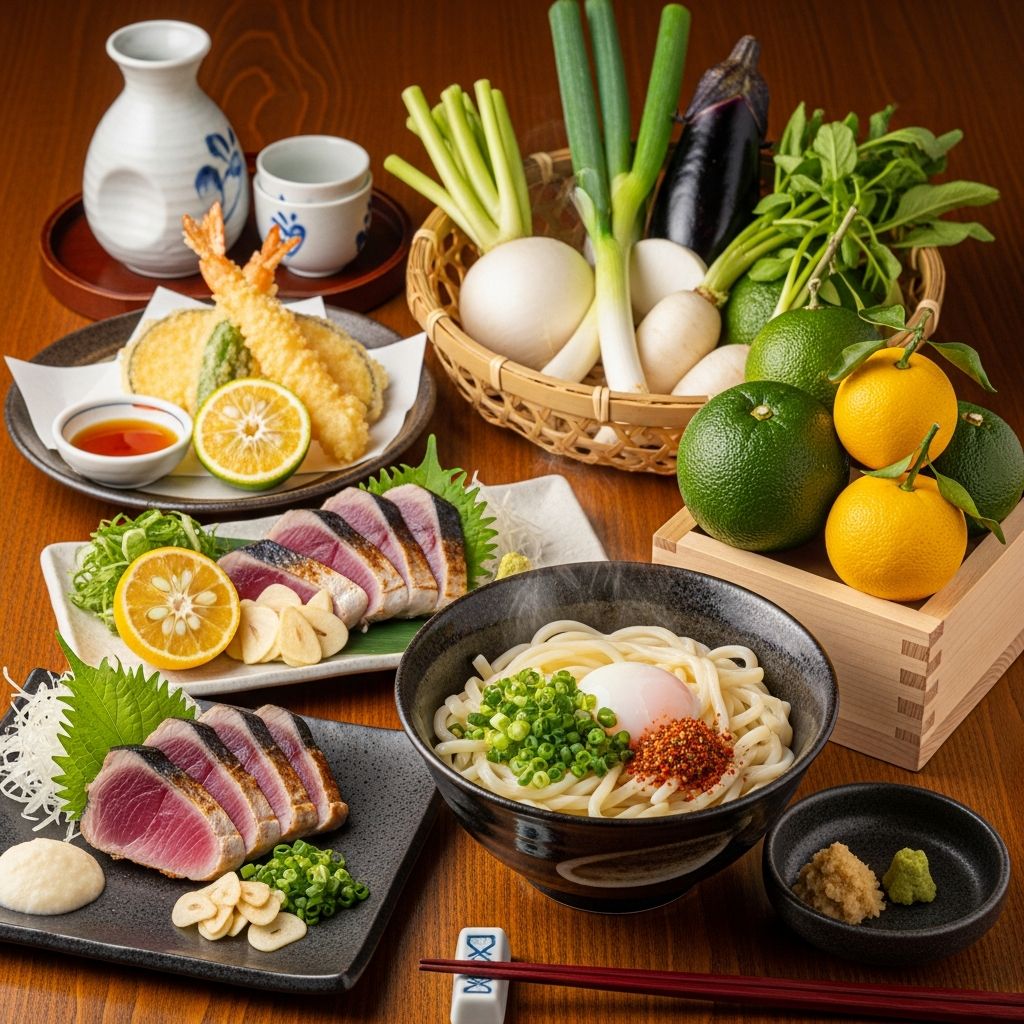
Shikoku, Japan’s smallest main island, boasts a food culture shaped by its mountains, seas, and mild climate. Comprising Ehime, Kagawa, Kochi, and Tokushima prefectures, the region offers dynamic simplicity in its dishes, emphasizing fresh ingredients like seafood, buckwheat, and citrus fruits.
The Island’s Unique Food Landscape
Shikoku’s rugged terrain and surrounding waters create isolated micro-cultures, each prefecture developing distinct specialties. Mountains limit flatlands, fostering deep-rooted local traditions that travelers can savor on a gastronomic journey. Fresh catches from the Seto Inland Sea and Pacific Ocean dominate, paired with innovative noodle preparations and aromatic citrus.
Ehime: Citrus Kingdom and Sea Delights
Ehime’s Inland Sea location ensures pristine seafood and world-class mikan oranges. Tai-meshi, a flavorful sea bream rice dish, highlights the prefecture’s freshness obsession. Houraku-yaki presents a seafood medley on pine needles for subtle smokiness. Jakoten, a fish paste cake, offers a crispy, everyday snack rooted in local fishing heritage.
Citrus thrives here; Ehime’s mikan are nationally prized for their sweetness. Beyond eating fresh, they’re juiced or candied in desserts. Pair them with seafood platters for a balanced meal reflecting the prefecture’s bounty.
- Tai-meshi: Sea bream steamed with rice, soy, and ginger.
- Houraku-yaki: Mixed seafood grilled on fragrant pine.
- Jakoten: Ground fish patties, fried or simmered.
- Mikan: Sweet mandarins, eaten whole or processed.
Kagawa: Udon Paradise and Beyond
Known as Japan’s udon capital, Kagawa elevates Sanuki udon with chewy, square noodles in dashi broth. Eaten hot, cold, or curry-topped, it’s a daily staple. Shodoshima somen provides a thinner, elegant alternative.
Seafood shines with iriko, crunchy dried baby sardines. Honetsuki-tori, juicy bone-in chicken wings, adds hearty innovation. These dishes embody Kagawa’s blend of tradition and creativity.
| Dish | Description | Best Enjoyed |
|---|---|---|
| Sanuki Udon | Thick, firm wheat noodles in savory broth | Hot in winter, chilled in summer |
| Shodoshima Somen | Slim noodles with subtle flavor | Cold with dipping sauce |
| Honetsuki-tori | Grilled chicken on the bone | With beer at izakayas |
| Iriko Snack | Dried sardines for crunch | As bar nibbles |
Kochi: Bold Tuna and Seafood Feasts
Kochi’s Pacific coast yields katsuo no tataki, skipjack tuna seared over straw flames, served rare with garlic and ponzu. Its smoky char and fresh slice define simplicity. Sawachi ryori overflows with sashimi, tempura, and shellfish in a communal platter.
Nabeyaki ramen simmers in clay pots with vegetables and eggs. Tosa buntan, a massive citrus, adds zesty contrast. Sudachi and yuzu ponzu these dishes, replacing vinegar with aromatic tang.
- Katsuo Tataki: Straw-grilled bonito, half-raw inside.
- Sawachi Ryori: Assorted seafood extravaganza.
- Tosa Buntan: Giant pomelo-like fruit.
Tokushima: Wild Mountains Meet the Sea
Tokushima’s dramatic coasts inspire kaizoku ryori, ‘pirate food’—raw or grilled seafood platters evoking seafaring feasts. Amego no hirarayaki uses hot stones for sweetfish. Sobagome zosui blends buckwheat rice porridge, while dekomawashi skewers miso-glazed meats.
Mountain buckwheat and river fish fuel hearty meals. Iya soba, thick buckwheat noodles, offer rustic chewiness.
Citrus: Shikoku’s Zesty Signature
Sudachi, yuzu, and buntan elevate dishes beyond eating fresh. Used in dressings, baths, or garnishes, they impart floral acidity. Ehime leads production, but all prefectures cherish them.
Markets and Street Eats
Sunday markets like Nichiyoichi buzz with imoten (fish cakes) and tsugani-jiru (crab soup). Hirome Market in Kochi delivers year-round stalls for oysters, udon, and more. These spots immerse visitors in local vibes.
Sake Trails and Pairings
Shikoku’s 88 breweries form a pilgrimage route. Crisp sake pairs with oily fish or udon. Tokushima’s heritage shines with sake games and feasts.
Pilgrimage and Food Synergy
The 88-temple Ohenro route weaves through eateries. Pilgrims refuel on soba or katsuo, blending spirituality and sustenance.
Practical Tips for Food Explorers
- Visit early for market freshness.
- Try kaki-yaki oysters seasonally.
- Combine with temple hikes.
- Seek family-run spots for authenticity.
FAQs
What is Shikoku’s signature dish?
Sanuki udon from Kagawa and katsuo tataki from Kochi top lists, showcasing noodles and seafood.
Best time for citrus?
Winter for peak sweetness in mikan and buntan.
Vegetarian options?
Udon, soba, and citrus-based dishes abound; ask for no dashi.
How to travel for food?
Rent a car or use trains; markets cluster near stations.
Allergy notes?
Seafood heavy; wheat in noodles—check labels.
References
- The Regional Cuisine of Shikoku – Kochi — Japan Travel. 2023-10-15. https://en.japantravel.com/kochi/the-regional-cuisine-of-shikoku/62557
- Shikoku’s dynamic tourism offering captures 6th on Lonely Planet’s 2022 list — Japan National Tourism Organization. 2022-01-20. https://www.japan.travel/en/ca/news/shikokus-dynamic-tourism-offering-captures-6th-on-lonely-planet-s-2022-list-of-best-regions-to-visit/
- Tastes of Shikoku — Shikoku Tourism. 2024-05-10. https://shikoku-tourism.com/en/tastes-of-shikoku/tastes
- The Food Culture of Shikoku — Rexby. 2023-08-05. https://www.rexby.com/OffTheEatenTrack/t/the-food-culture-of-shikoku
- Welcome to Shikoku, awarded 2nd place in Lonely Planet’s Best in Asia Pacific — Japan Today. 2023-11-12. https://japantoday.com/category/features/travel/welcome-to-shikoku-awarded-2nd-place-in-lonely-planet%E2%80%99s-best-in-asia-pacific
Similar Articles







Read full bio of medha deb