Stargazing Havens In Italy’s Mountains: Top Dark-Sky Sites
Discover Italy's darkest skies in alpine valleys where mountains block city lights for unforgettable celestial views.
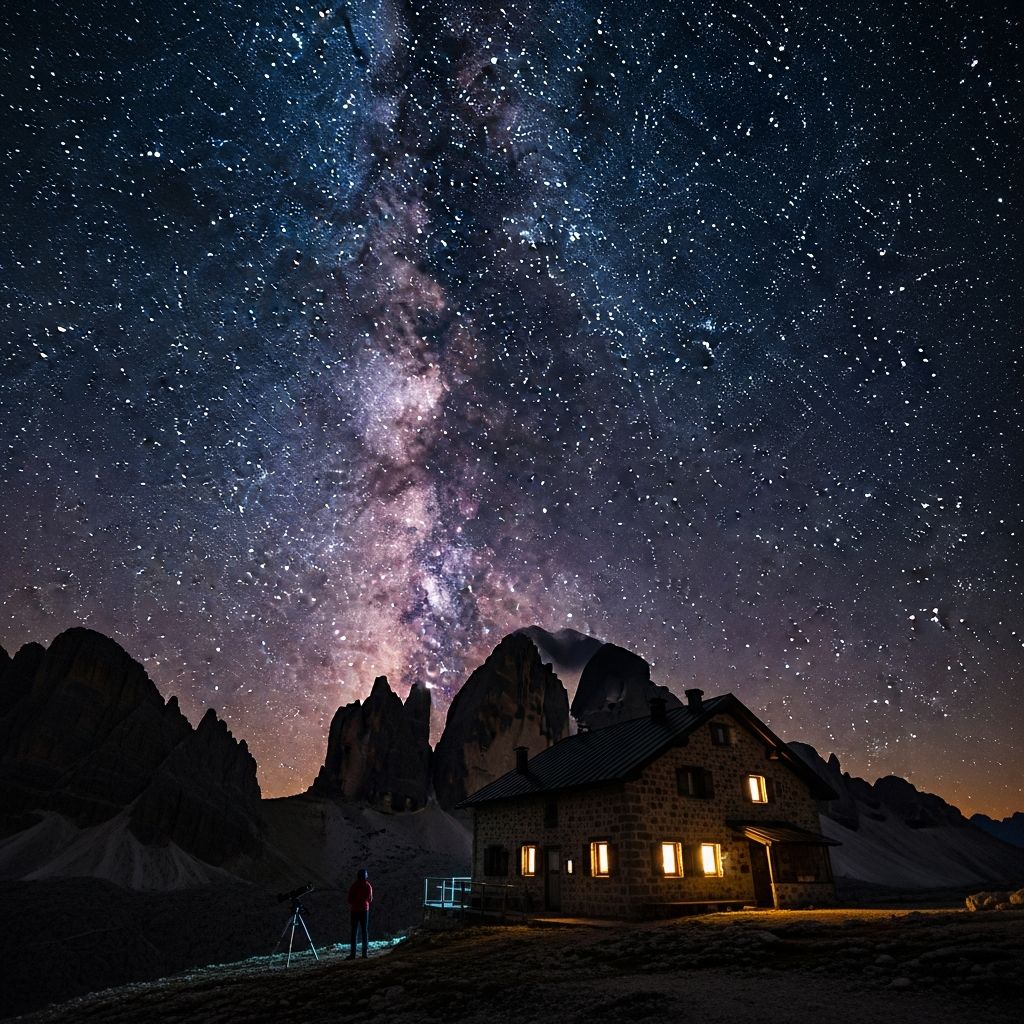
Italy’s rugged landscapes hide some of the world’s clearest night skies, where ancient mountains act as natural barriers against urban glow. These remote alpine pockets invite travelers to reconnect with the cosmos under blankets of unspoiled stars.
Why Italy Excels in Dark Sky Preservation
Surrounded by towering peaks, certain Italian valleys naturally shield themselves from light pollution emanating from nearby metropolises like Milan and Turin. Low population densities mean minimal artificial lighting, preserving visibility of the Milky Way and distant galaxies even to the unaided eye.
The Starlight Foundation, affiliated with UNESCO, recognizes such areas through its Stellar Park designation. This accolade highlights zones with exceptional sky quality due to dedicated conservation efforts, low light intrusion, and accessibility for astronomical observation.
- Natural topography: High mountains block horizon glow while leaving overhead skies clear.
- Sparse habitation: Few residents translate to scarce streetlights and public illumination.
- Conservation initiatives: Local policies enforce dark-friendly lighting to sustain pristine conditions.
Saint-Barthélemy: Italy’s Premier Starlight Destination
Nestled in Valle d’Aosta near the Swiss border, the Saint-Barthélemy Valley earned Italy’s first Starlight Stellar Park status. This fourth such park globally boasts skies ideal for both naked-eye wonders and telescopic deep-space views.
The valley’s encircling peaks create a protective amphitheater, filtering out pollution from distant cities. Researchers note visibility extends from 15 degrees above the horizon, revealing countless stars, the Milky Way’s glow, and even Andromeda with basic eyesight.
Key Attractions in Saint-Barthélemy
| Site | Description | Best For |
|---|---|---|
| Astronomical Observatory of Aosta Valley | Public facility in Lignan hamlet with guided tours | Daytime learning and nighttime sessions |
| New Planetarium | Recently opened interactive space exhibit | Educational shows on constellations |
| Saint-Barthélemy Hamlet | Dark-sky certified village with minimal lights | Spontaneous outdoor viewing |
Visitors can join expert-led tours at the observatory, open weekdays, or simply wander after dusk for personal discoveries.
Overcoming Winter Darkness: Innovative Solutions Nearby
While stars shine brightest in clear nights, some valleys face extreme seasonal shadows. In neighboring areas like Viganella, mountains block direct sunlight from November to February, plunging hamlets into prolonged twilight.
To counter this, locals installed a massive 8×5 meter mirror on a peak in 2006. Computer-controlled to track the sun, it beams reflected light into the main square for six hours daily during winter, warming the space and fostering community gatherings without adding light pollution.
This human-centered engineering marvel not only combats isolation but poetically mirrors nature’s cycles, blending technology with tradition.
Other Certified Dark Sky Gems Across Italy
Beyond Valle d’Aosta, Italy boasts numerous Astronomitaly-certified sites, emphasizing nationwide commitment to starry heritage.
- Castello di Petroia, Umbria: Medieval fortress with ‘Gold’ skies, perfect for historical stargazing amid rolling hills.
- Malga del Doss, Trentino: Mountain refuge offering elevated ‘Gold’ views in the Dolomites.
- Astrovillaggio Sternendorf, South Tyrol: Europe’s first Astrovillage, blending lodging with astronomy events.
- Osservatorio Polifunzionale del Chianti, Tuscany: High-tech setup amid vineyards for science-nature fusion.
- Borgo di Labro, Lazio: Tranquil village sites like La Valle Avanzana for serene observations.
These spots vary from ancient castles to modern observatories, catering to diverse preferences while upholding strict sky quality standards.
Planning Your Stargazing Adventure
Best Times and Seasons
Autumn and spring offer mild weather with minimal moonlight interference. New moon phases maximize darkness. Winters provide clearest air but demand warm gear; summers bring longer nights in the north.
Essential Gear and Tips
- Red flashlights to preserve night vision.
- Reclining chairs or blankets for comfort.
- Star-chart apps like Stellarium for navigation.
- Layered clothing for high-altitude chills.
- Book guided tours in advance for observatories.
Avoid full moons and check weather for cloud cover. Respect dark sky rules by dimming personal lights.
Getting There and Staying Over
Valle d’Aosta is accessible via Turin or Milan airports, followed by scenic drives. Opt for eco-lodges or agriturismi emphasizing low-impact stays. Public transport serves larger towns, but cars unlock remote valleys.
Science Behind Exceptional Visibility
Physicists attribute Saint-Barthélemy’s prowess to its unique geography. Mountains exceed 3,000 meters, creating a shield while permitting 80% sky exposure. Bortle Scale ratings here approach Class 1-2, rivaling remote deserts.
Local efforts include shielded lamps emitting downward light at warm tones, reducing scatter. Population under 100 in core hamlets ensures negligible local pollution.
Guided Experiences and Events
Many sites host star parties, workshops, and photographer outings. Lignan’s observatory runs bilingual sessions; Chianti’s facility pairs astronomy with wine tastings. Seasonal festivals celebrate celestial events like meteor showers.
Environmental Impact and Sustainability
Dark sky advocacy combats global light creep, vital for wildlife migration, human health, and cultural heritage. Italy’s certifications promote tourism that funds conservation, balancing visitors with preservation.
Frequently Asked Questions
What makes Saint-Barthélemy special for stargazing?
Its mountain ring blocks pollution, low lights preserve clarity, and UNESCO ties ensure protection.
Can beginners stargaze here?
Yes, naked-eye views dazzle; guided tours aid novices.
Are there accommodations nearby?
Agriturismi and observatories offer stays with viewing platforms.
Best time for Milky Way photos?
July-August under new moons for summer core visibility.
How to reach Valle d’Aosta?
Fly to Turin, drive 2 hours north.
Preserving Italy’s Celestial Treasures
Visiting these havens means pledging to minimal impact: no bright lights, stay on paths, support local economies. As urbanization advances, such sanctuaries remind us of night’s profound beauty.
References
- This Italian town is the perfect spot for stargazing — Lonely Planet. 2021-09-20. https://www.lonelyplanet.com/articles/italian-village-stargazing
- The Italian Town That Built Its Own Sun — Vice Magazine. 2018-12-17. https://www.vice.com/en/article/viganella-italy-fake-manmade-sun/
- This Italian Valley Has Just Been Awarded a Top Stargazing Award — AFAR. 2021-09-21. https://www.afar.com/magazine/this-italian-valley-has-just-been-awarded-a-top-stargazing-award
- This Italian valley is officially the perfect place to stargaze — Time Out. 2021-09-21. https://www.timeout.com/news/this-italian-valley-is-officially-the-perfect-place-to-stargaze-092120
- Where to look at the stars: the most beautiful skies of Italy — Astrotourism. 2023-05-15. https://www.astrotourism.com/news/where-look-the-stars-most-beautiful-skies-italy/
Similar Articles








Read full bio of medha deb