
Staying Connected In Colombia: Essential Guide For 2025
Master mobile data, Wi-Fi hotspots, eSIMs, and satellite tech to ensure seamless connectivity across Colombia's cities and remote regions.
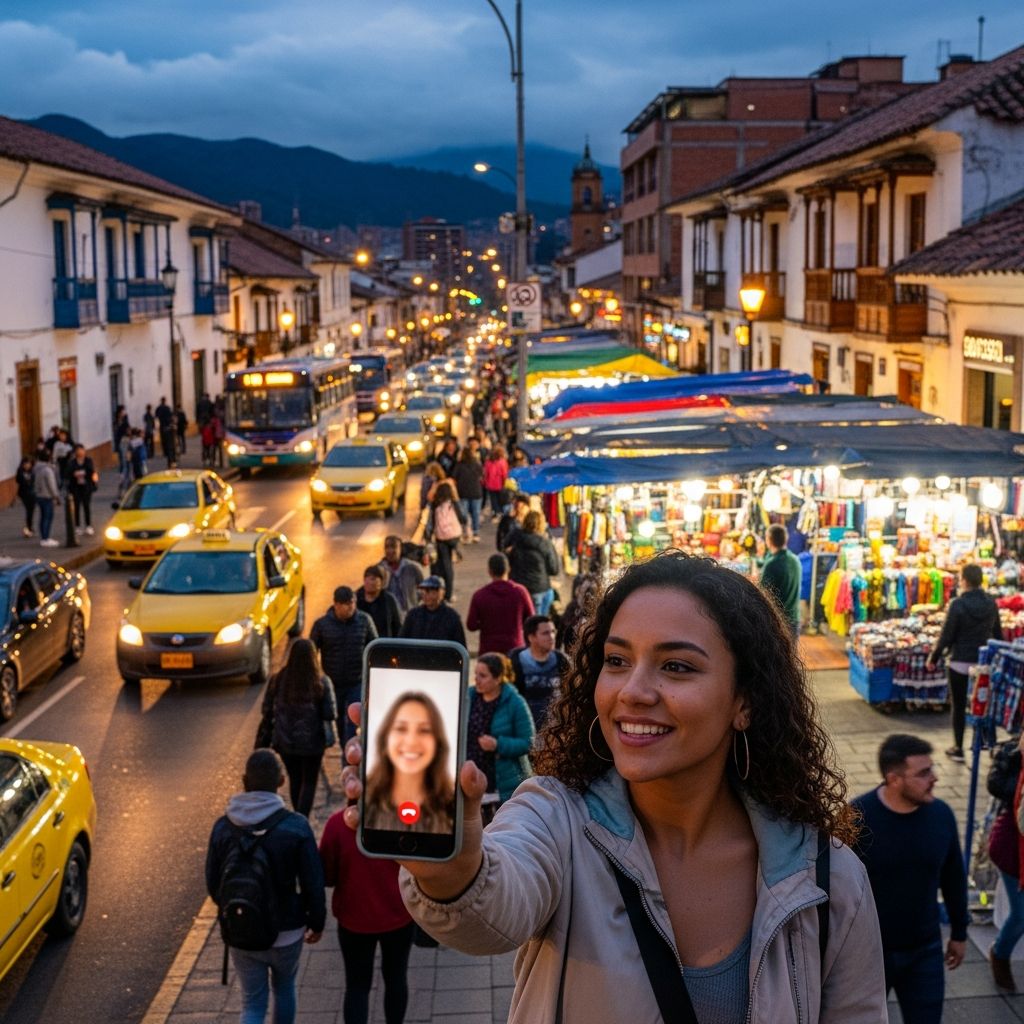
Staying Connected in Colombia
Colombia has rapidly advanced its digital infrastructure, with 63% of the population accessing the internet as of 2023, up significantly from prior years. Despite urban progress, rural areas lag, where only 28.8% have connections, highlighting a persistent divide. Travelers can bridge this gap using mobile networks, eSIMs, Wi-Fi, and innovative satellite services for uninterrupted access during visits to bustling cities like Bogotá or remote Amazon trails.
Overview of Colombia’s Internet Landscape
Colombia’s connectivity has evolved through government initiatives like Plan Vive Digital and recent strategies such as Conecta TIC 360, aiming for 85% national coverage by integrating devices, skills, and productivity. Mobile broadband dominates, with 99.7 million connections in early 2024 and high 4G access at 87%. Fixed broadband penetration stands at around 9.3%, above the Latin American average but trailing developed nations, with average speeds of 113 Mbps broadband and 12.5 Mbps mobile.
Fibre optics have expanded quickly alongside widespread 4G, while 5G pilots emerge in major cities. Urban hubs like Bogotá, Medellín, and Cali boast robust networks from providers expanding Points of Presence (PoPs) and fibre backbones. Rural challenges persist due to terrain and economics, but satellites like Starlink and OneWeb are transforming access.
Mobile Networks and Coverage Essentials
Three primary operators—Claro, Movistar, and Tigo—cover over 90% of the population, excelling in urban and tourist zones. 4G LTE blankets most cities and highways, with 5G available in select Bogotá and Medellín areas as of 2024. Expect reliable signals in coffee regions and Caribbean coasts, but Amazon or Pacific zones may drop to 3G or edge.
| Operator | 4G Coverage | Avg. Speed (Mbps) | Best For |
|---|---|---|---|
| Claro | 95% national | 120 down / 15 up | Cities, highways |
| Movistar | 92% | 110 / 12 | Rural interiors |
| Tigo (Une) | 90% | 105 / 14 | Budget plans, data |
Data from ITU and Internet Society Pulse confirms these networks’ strengths, with mobile as the most cost-effective path to 60% penetration by 2030.
Acquiring a Local SIM Card
International airports in Bogotá (El Dorado), Medellín (José María Córdova), and Cartagena stock SIMs at kiosks near arrivals. Stores abound in cities; look for operator-branded shops in malls like Unicentro or Centro Comercial Santa Fe. Rural purchases work via official resellers or supermarkets.
Expect ID requirements (passport copy suffices for tourists). Activation is immediate via app or SMS. Prepaid plans start cheap: COP 10,000-20,000 (~$2.50-5 USD) for SIM plus initial credit. Daily passes offer 1-3GB for COP 15,000; weekly unlimited social media/data combos cost COP 50,000.
- Beginner Plan: 2GB/day + calls, COP 25,000/week.
- Heavy User: Unlimited data/social, COP 80,000/month.
- Short Trip: 5GB total, COP 30,000/10 days.
Top up via app, website, or Diners like Éxito and Homecenter. Auto-recharge options prevent lapses.
Switching to eSIM for Effortless Travel
eSIMs suit digital nomads, bypassing physical swaps. Compatible unlocked phones (iPhone XS+, Google Pixel 3+, Samsung Galaxy S20+) receive QR codes digitally. Global providers like Airalo or Ubigi offer Colombia plans: 1GB/day for $4.50 or 20GB/month $35.
Local operators now support eSIMs—Claro via app, Movistar in stores. Scan QR, approve, and connect instantly. Dual-SIM keeps your home number active for 2FA. Ideal for multi-country itineraries, as one eSIM handles regional data.
Wi-Fi Hotspots: Urban Reliability vs. Rural Gaps
Hotels, hostels, and Airbnb pads provide free Wi-Fi, often solid at 20-50 Mbps. Malls, cafes (Aromatica, Juan Valdez), and libraries offer public access. Apps like WiFi Map pinpoint spots; passwords display on signs or via staff.
Expect congestion in peaks; use mobile data backups. Airports feature paid lounges or free zones. Coworking spaces like WeWork Bogotá charge COP 30,000/day for high-speed desks. Rural Wi-Fi is scarce—guesthouses may share 5-10 Mbps satellite links.
Satellite Internet for Off-Grid Escapes
Starlink, launched 2023, delivers 25-220 Mbps downloads (<99ms latency) to remote fincas and jungle lodges with a $599 kit + $110month. OneWeb’s Cali teleport supports Andean coverage via Speedcast. VSAT networks ensure maritime and disaster-resilient links, powered by solar.
Travelers rent portable kits from operators or use lodge-provided access. Perfect for Tayrona National Park or Putumayo treks where towers fail. Costs drop with shared community hotspots.
Navigating Connectivity Across Regions
Andean Heartland
Bogotá, Medellín, Cali shine with 4G/5G, fibre PoPs, and ubiquitous Wi-Fi. Liberty Networks’ expansions boost business zones.
Caribbean Coasts
Cartagena and Santa Marta enjoy strong signals; islands like San Andrés need Claro for reliability. Wi-Fi thrives in tourist haunts.
Amazon and Pacific Frontiers
Sparse towers demand satellites or data boosters. Leticia bases on Claro; Nuquí resorts deploy Starlink.
Coffee Triangle and Llanos
Salento, Manizales hold steady 4G; Orinoquía pushes satellite edges.
Cost Comparison: Data Options Breakdown
| Option | Cost (USD/month) | Data/Speed | Best Use Case |
|---|---|---|---|
| Local SIM (Tigo Unlimited) | 20 | Unlimited social/20GB high-speed | City hopping |
| eSIM (Airalo 20GB) | 35 | 20GB / 50Mbps | Multi-country |
| Hotel Wi-Fi | 0-10 | 10-50Mbps | Downtime |
| Starlink Rural | 110 + kit | 100+Mbps | Off-grid stays |
Local SIMs win for value; eSIMs for convenience. Roaming from US/EU averages $10/GB—avoid it.
Security Best Practices for Digital Safety
Public Wi-Fi risks man-in-the-middle attacks; always use VPNs like ExpressVPN or NordVPN (Colombia servers available). Enable 2FA, avoid banking on shared nets. Antivirus apps scan threats. Operators offer free DDoS protection on business plans.
- Verify hotspot names to dodge fakes.
- Use HTTPS sites only.
- Password-protect devices.
Apps and Tools to Maximize Your Signal
OpenSignal maps coverage; Speedtest.net benchmarks. Google Maps works offline. WhatsApp/Telegram dominate messaging with data-light modes. Translate apps bridge language for SIM buys.
Frequently Asked Questions
Can I use my home SIM in Colombia?
Check roaming; it’s pricey. Switch to local/eSIM for savings.
What’s the cheapest data deal?
Tigo weekly unlimited social: ~$12 USD.
Does Colombia have 5G everywhere?
No, mainly pilots in capitals; 4G suffices most places.
Will my phone work?
Ensure GSM unlocked; bands 2/4/28 for LTE.
Best operator for the Amazon?
Claro, supplemented by Starlink.
Are eSIMs reliable?
Yes, with global providers; instant swaps.
References
- Satellite Connectivity in Colombia — Speedcast. 2026. https://www.speedcast.com/blog-hub/2026/satellite-connectivity-in-colombia/
- Colombia – ITU — International Telecommunication Union. 2022. https://www.itu.int/en/ITU-D/Statistics/Documents/DDD/ddd_COL.pdf
- Country Report for Colombia — Internet Society Pulse. 2024. https://pulse.internetsociety.org/en/reports/CO
- Colombia Perspective: ICT Infrastructure — Copenhagen Consensus Center. N/A. https://copenhagenconsensus.com/publication/colombia-perspective-ict-infrastructure
- OECD Digital Connectivity Review of Colombia — OECD. N/A. https://www.oecd.org/en/publications/digital-connectivity-review-of-colombia_bff5d25a-en.html
- Colombia Digital Economy — International Trade Administration. 2024. https://www.trade.gov/country-commercial-guides/colombia-digital-economy
Similar Articles








Read full bio of medha deb