Staying Connected in Japan: Complete Internet Guide
Master mobile data, Wi-Fi, and connectivity options across Japan's islands
Staying Connected in Japan: Your Complete Internet Connectivity Guide
Japan’s modern infrastructure makes staying connected remarkably straightforward for international travelers. Whether you’re navigating bustling Tokyo streets, traveling along the Shinkansen bullet trains, or exploring remote mountain villages, understanding your connectivity options before arrival ensures uninterrupted access to maps, translation apps, and communication platforms. This guide breaks down every method to maintain reliable internet throughout your Japanese journey.
Understanding Your Primary Connectivity Options
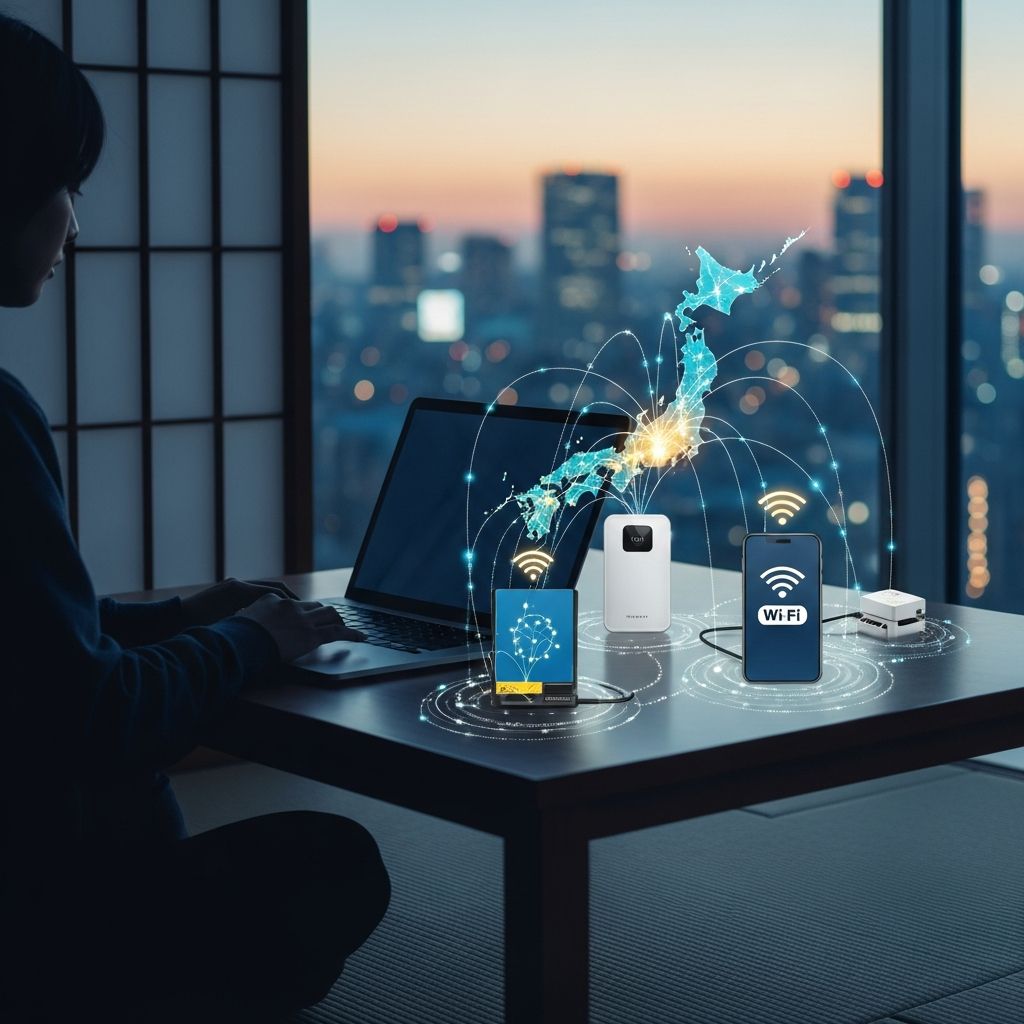
Travelers entering Japan have several proven methods to access the internet. Each option carries distinct advantages depending on your travel style, duration, and technical preferences. The most popular solutions include digital SIM cards (eSIMs), portable Wi-Fi routers known as pocket Wi-Fi, free public Wi-Fi networks, prepaid physical SIM cards, and subscription-based mobile plans for extended stays.
Your choice depends on several factors: whether your smartphone supports eSIM technology, how many devices require connectivity, your data requirements, and budget constraints. Most travelers combine multiple methods to ensure redundancy and flexibility throughout their stay.
Digital SIM Cards: Modern Convenience and Speed
eSIM technology represents the fastest entry into Japanese mobile networks for international visitors. Unlike traditional physical SIM cards requiring airport queues or convenience store visits, eSIM plans activate instantly through QR code scanning on compatible devices.
Setup and Activation Process
- Download your eSIM provider’s application or receive a QR code via email before departure
- Upon arrival, scan the QR code using your smartphone’s camera within your device’s network settings
- Complete any required identity verification (eKYC) steps online
- Select your data allowance and activate service immediately
- Maintain your original SIM in dual-SIM capable phones or activate eSIM as your primary connection
Coverage and Network Performance
eSIM plans connect you to Japan’s major cellular networks including NTT Docomo, SoftBank, and KDDI (au), providing comprehensive coverage across populated regions. Real-world performance varies by location and network congestion:
| Location Type | Download Speed | Upload Speed | Reliability |
|---|---|---|---|
| Urban 5G Areas | 100-300 Mbps | 10-40 Mbps | Excellent |
| Urban 4G Coverage | 40-80 Mbps | 5-20 Mbps | Very Good |
| Rural Zones | 10-30 Mbps | 3-10 Mbps | Good |
| Shinkansen Trains | 20-60 Mbps | Variable | Moderate |
eSIM providers typically offer flexible data plans ranging from 3GB for brief visits to unlimited options for extended stays. Data rollover policies and throttling limitations vary between providers, so review specific plan terms before purchasing.
Pocket Wi-Fi: Portable Connectivity for Multiple Devices
Pocket Wi-Fi devices, portable Wi-Fi routers available for rental at major airports and through online services, provide excellent solutions for travelers carrying multiple connected devices or preferring to share connectivity among travel companions.
Rental Process and Logistics
Airport rental counters at Narita, Haneda, Kansai International, and other major terminals typically offer same-day pickup. Online reservations allow pre-arrangement with guaranteed availability and occasionally discounted rates. Return procedures prove equally convenient, with most providers accepting returns at departure airport terminals.
Performance and Data Allowances
Pocket Wi-Fi devices connect via Japan’s cellular networks, delivering speeds comparable to mobile phone connections. Unlimited data plans eliminate data anxiety, though providers may implement network management during peak hours. Battery considerations matter during extended outings—most devices require daily charging or mid-day recharging during intensive use.
Daily rental costs range substantially based on data allowance and provider, making pocket Wi-Fi most economical for groups or travelers requiring connectivity for multiple devices throughout their journey.
Free Public Wi-Fi Networks Across Japan
Japan increasingly offers free Wi-Fi connectivity in public spaces, though coverage remains less universal than in some Western countries. Strategic planning maximizes free network utilization while minimizing reliance on paid services.
Common Free Wi-Fi Locations
- Major international airports including Narita, Haneda, and Kansai provide complimentary terminal connectivity
- Train stations throughout the country offer free networks, particularly JR facilities on major trunk lines
- Convenience stores (7-Eleven, FamilyMart, Lawson) typically provide free access to registered customers
- Coffee chains and quick-service restaurants increasingly offer free hotspots
- Shopping malls and commercial centers in metropolitan areas provide visitor networks
- Many hotels and accommodations include Wi-Fi as standard amenities
Accessing Free Networks Efficiently
SoftBank’s Free Wi-Fi Passport provides access to over 400,000 hotspots nationwide for two weeks without charge. After setting your device’s roaming destination to “SoftBank” and dialing *8180, you receive connection credentials via SMS. The Japan Connected Free Wi-Fi application aggregates access points across networks, displaying 130,000 available hotspots at airports, stations, and tourist attractions. Travel Japan Wi-Fi offers alternative gateway access to 60,000 to 200,000 hotspots depending on subscription tier.
Free networks occasionally suffer from slow speeds and unreliable connections, particularly during peak hours. Signal quality varies dramatically between locations—airport terminals often provide robust connections while remote convenience stores may struggle with bandwidth constraints.
Prepaid Physical SIM Cards: Traditional Reliability
Travelers with unlocked smartphones can purchase prepaid physical SIM cards at airport terminals, convenience stores, and electronics retailers. This traditional approach eliminates device compatibility concerns and provides straightforward activation procedures.
Advantages and Limitations
Physical SIM cards function on Japan’s cellular networks immediately upon insertion, requiring no app downloads or complex verification procedures. Data-only plans simplify activation without requiring voice service or Japanese phone numbers. Plans typically range from 3GB to unlimited monthly allowances with prices varying by provider and data limits.
SIM card activation occasionally requires identity verification through immigration documents or passport information. Some providers impose residency restrictions, limiting availability to visitors carrying appropriate visas or tourist status documentation. Lost or damaged cards require replacement, inconvenient after arrival if backup options prove unavailable.
Traveling via Shinkansen and Remote Areas
Japan’s bullet train network demonstrates exceptional coverage infrastructure, with continuous 4G and 5G connectivity across major trunk lines. The Tokaido/Sanyo corridor connecting Tokyo, Osaka, Hiroshima, and Fukuoka maintains particularly robust service through extensive tunnel repeater networks. Tohoku and Hokkaido lines experience occasional service degradation in mountainous stretches, though speeds typically remain adequate for messaging and web browsing.
Remote mountain valleys and rural regions may experience service gaps or reduced speeds. Advance downloading of offline maps, translation applications, and other essential tools provides crucial backup when connectivity proves intermittent. Pocket Wi-Fi devices and prepaid plans with substantial data allowances accommodate streaming and bandwidth-intensive activities during connectivity windows.
Strategic Data Usage and Hotspot Sharing
Most eSIM and pocket Wi-Fi plans support personal hotspot functionality, allowing smartphone-based tethering to other devices. Battery consumption accelerates significantly during hotspot operation—enabling low power mode reduces drain but may limit performance. Shinkansen travelers should restrict tethering to 4G networks rather than 5G to preserve device battery life during extended train journeys.
Fair usage policies on some networks implement speed throttling during peak congestion periods, though this rarely affects messaging, web browsing, or map applications. Video streaming may experience optimization through automatic quality reduction on certain networks during high-traffic periods.
Planning Your Connectivity Strategy
| Travel Duration | Recommended Primary Option | Backup Option | Estimated Cost |
|---|---|---|---|
| 1-3 Days | Free Wi-Fi + eSIM | Airport pocket Wi-Fi | $15-30 |
| 1 Week | eSIM with 10-30GB data | Free Wi-Fi networks | $25-50 |
| 2-3 Weeks | Unlimited eSIM or Pocket Wi-Fi | Free Wi-Fi backup | $50-100 |
| 1+ Months | Monthly SIM subscription | Fiber internet at residence | $40-80+ |
Frequently Asked Questions
Does my smartphone support eSIM?
Most modern devices released within the past five years support eSIM functionality. iPhones from XS models onward include eSIM capability. Android manufacturers including Samsung, Google Pixel, and others increasingly incorporate this technology. Check your specific device model specifications or contact your phone manufacturer if uncertain.
What happens if I lose connectivity during travel?
Offline Google Maps functionality allows navigation without active connections. Tourist information centers, hotel staff, and convenience store employees provide directions assistance. Most travelers handle temporary connectivity gaps without significant difficulty using offline resources and local assistance.
Can I use my home country mobile plan in Japan?
International roaming plans through your home provider typically prove expensive compared to local alternatives. Data rates often exceed $10-15 per gigabyte. Purchasing local eSIM or SIM solutions provides substantially better value for most travelers.
Which network provides the best coverage?
NTT Docomo, SoftBank, and KDDI (au) operate the nation’s three major networks with comparable coverage. Coverage maps show minimal differentiation across providers in populated regions, though rural performance varies slightly. Provider selection should emphasize data allowance and pricing rather than network choice.
Do I need internet throughout my entire stay?
Urban travelers visiting major cities can navigate using free Wi-Fi at hotels, stations, and attractions. However, maintaining mobile connectivity ensures access to translation apps, emergency services, and navigation at all times. The modest investment in basic connectivity provides significant convenience and peace of mind.
References
- Japan eSIM Guide 2025: Coverage, Setup & Train Wi-Fi — Simology. 2025. https://simology.io/blog/japan-esim-mobile-internet-guide-2025-coverage-ekyc-train-wi-fi
- Wi-Fi in Japan — Japan National Tourism Organization. https://www.japan.travel/en/plan/wifi-and-connectivity/
- Internet & Wi-Fi Access in Japan — Accessible Japan. https://www.accessible-japan.com/internet-access-when-visiting-japan/
- Internet Access in Japan: Wireless Hotspots, Wi-Fi Routers, SIM Cards — Japan Guide. https://www.japan-guide.com/e/e2279.html
- Internet in Japan: A Guide for Tourists and Expats — MailMate. https://mailmate.jp/blog/internet-japan
Similar Articles






Read full bio of Sneha Tete