Staying Online in South Korea
Master connectivity in South Korea with top-tier speeds, eSIMs, SIM options, and Wi-Fi strategies for seamless travel in 2026.
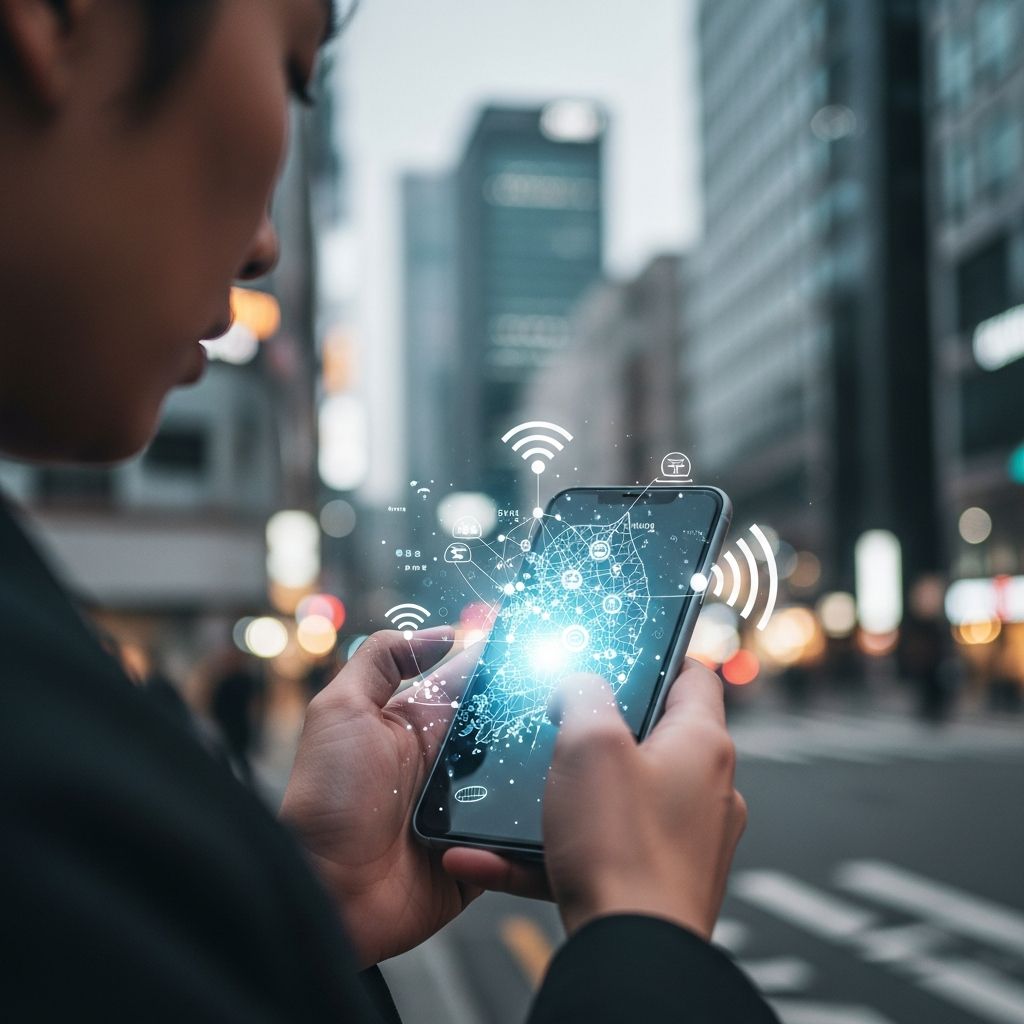
South Korea boasts one of the world’s most advanced digital ecosystems, with near-universal internet access and lightning-fast speeds that make staying connected effortless for travelers. In 2026, 93% of the population actively uses the internet, supported by 100% household penetration and top global rankings in mobile and broadband performance.
The Power of South Korea’s Digital Backbone
South Korea’s internet infrastructure is a marvel, driven by government initiatives that propelled early broadband adoption and continue to fuel 5G expansion. The country ranks 6th globally for mobile интернет speeds at around 139 Mbit/s and holds strong positions in fixed broadband, thanks to major providers like SK Telecom, KT, and LG U+. With 97.6% smartphone ownership, travelers tap into nationwide 4G LTE and extensive 5G coverage, even on public transport and in remote areas.
Fiber-optic penetration leads the world at 87.31%, outpacing Japan, while national roaming agreements ensure 5G reaches underserved spots. This setup means seamless streaming, navigation, and communication, whether in bustling Seoul or scenic Jeju.
Prepaid SIM Cards: Instant Local Access
For physical SIM users, prepaid options from Incheon or Gimpo Airports provide quick setup. SK Telecom, KT, and LG U+ counters offer tourist plans with 1-30 days of data, starting at affordable rates for 5-20GB. Activation is straightforward: show your passport, pick a plan, and insert the SIM.
- SK Telecom: Market leader in mobile, excels in 5G coverage for urban and rural use.
- KT: Dominant in broadband, reliable for high-data needs like video calls.
- LG U+: Competitive pricing, strong in southern regions.
Expect English menus on most phones; top-ups via convenience stores like CU or 7-Eleven keep data flowing. Plans often bundle calls and texts, ideal for short stays.
eSIM Revolution: Borderless Connectivity
eSIMs dominate 2026 travel, allowing instant activation via apps before landing. Providers like Roafly offer data-only plans (1-30GB) compatible with eSIM-enabled devices (iPhone XS+, Google Pixel 3+, Samsung Galaxy S20+). Scan a QR code post-flight, and you’re online—no queues.
| Plan Duration | Data Amount | Key Features | Best For |
|---|---|---|---|
| 5-7 days | 3-5GB | Unlimited social media, 5G | City hops |
| 15 days | 10GB | Hotspot sharing | Mid-length trips |
| 30 days | 20GB+ | High-speed tethering | Extended stays |
No physical swaps mean multi-country itineraries stay simple. Coverage mirrors local networks, with speeds up to 1Gbps in 5G zones.
Portable Wi-Fi Hotspots: Group Essentials
Renting a pocket Wi-Fi (egg) suits families or groups, connecting 5-10 devices. Airport kiosks or apps like KT Egge deliver units with 1-100GB daily quotas. Return at departure; batteries last 8-12 hours.
- Pros: Unlimited devices, strong signal indoors/outdoors.
- Cons: Rental fees (daily ~₩3,000-10,000), return hassle.
Compare via apps for real-time pricing; 5G models hit peak speeds effortlessly.
Public and Free Wi-Fi Networks
South Korea’s free Wi-Fi is ubiquitous: ”Korea Free Wi-Fi” at 280,000+ spots, including subways, buses, cafes, and hotels. Register once with a foreign number or email for 2-hour sessions, renewable.
Urban areas like Seoul offer 100 Mbit/s+ in apartments and metros; apps like WiFiMap pinpoint hotspots. Security tip: Use VPNs for sensitive tasks, as public networks vary in encryption.
Choosing Your Connection Strategy
Solo Short Trip (1-7 Days)
eSIM for speed and ease; fallback to airport SIM if incompatible.
Group or Long Stay (8+ Days)
Pocket Wi-Fi maximizes sharing; supplement with free public access.
Budget Focus
Free Wi-Fi + low-data eSIM; avoid high-end rentals.
Table of options:
| Method | Cost (per day) | Devices | Coverage |
|---|---|---|---|
| eSIM | ₩2,000-5,000 | 1 (tether) | National 5G |
| Prepaid SIM | ₩3,000-7,000 | 1 | National |
| Pocket Wi-Fi | ₩5,000-12,000 | 5-10 | National |
| Public Wi-Fi | Free | 1 | Urban hotspots |
Navigating Apps and Services
Download Naver Maps (superior to Google for transit), KakaoTalk (messaging must-have), and Papago (translation). T-money app handles transport payments online. All leverage high speeds seamlessly.
Addressing Common Challenges
Language barriers? Staff at airports speak English; apps auto-translate. Data caps? Monitor via provider apps. Rural gaps? 5G roaming covers 90%+ of regions.
VPNs like ExpressVPN bypass geo-blocks for Netflix or banking.
FAQs
Will my phone work in South Korea?
Most unlocked GSM devices do; check 5G bands (n78, n28). eSIM needs iOS 12.1+ or Android 9+.
Where to buy a SIM upon arrival?
Incheon Airport (B1F), Gimpo (international terminals); open 24/7.
Is 5G free with tourist plans?
Yes, most include 5G access where available.
Can I use US/Canada plans?
Roaming is pricey; local options save 80%+.
How reliable is rural internet?
National roaming ensures 4G/5G in 90%+ areas.
Future-Proofing Your Trip
By 2026, expect further 5G saturation and IXP expansions like KINX (2,823 Gbps capacity), cementing South Korea’s bandwidth hub status. Travelers benefit from policies prioritizing digital inclusion, with 47 million users averaging more online time yearly.
Plan ahead: Verify device compatibility, pre-buy eSIMs, and blend options for optimal coverage. This hyper-connected nation turns every journey into a smooth, always-on adventure.
References
- Internet in South Korea — Wikipedia. 2024-07-25. https://en.wikipedia.org/wiki/Internet_in_South_Korea
- How to Get Internet in South Korea (2026): SIM Cards, eSIM & Wi-Fi — Roafly. 2026. https://www.roafly.com/blog/how-to-get-internet-in-south-korea
- The Internet landscape of South Korea and KRNOG update — APNIC Blog. 2024-03-19. https://blog.apnic.net/2024/03/19/the-internet-landscape-of-south-korea-and-krnog-update/
- Internet usage in South Korea – Statistics & Facts — Statista. 2024. https://www.statista.com/topics/2230/internet-usage-in-south-korea/
- World’s Best Digital Infrastructure — InvestKOREA. 2022. https://www.investkorea.org/ik-en/cntnts/i-299/web.do
- South Korea – Information and Communication Technology — International Trade Administration. N/A. https://www.trade.gov/country-commercial-guides/south-korea-information-and-communication-technology
- South Korea’s Internet Infrastructure: Risks, Idiosyncrasies — UC Berkeley CLTC. 2025-05-13. https://cltc.berkeley.edu/2025/05/13/south-koreas-internet-infrastructure/
- South Korea’s Mobile and Broadband Internet Speeds — Speedtest Global Index. 2026-03. https://www.speedtest.net/global-index/south-korea
Similar Articles








Read full bio of medha deb