Tokyo Dining Guide: Etiquette Essentials
Master the art of eating out in Tokyo with insider tips on customs, reservations, and cultural nuances for an authentic culinary adventure.
Tokyo’s restaurant landscape offers unparalleled culinary diversity, but its unique customs demand awareness to fully appreciate the experience. From compact venues to precise social norms, understanding local practices elevates every meal.
Navigating Tokyo’s Compact Eateries
Tokyo’s dining spots often prioritize efficiency in limited spaces, typically featuring counters with fewer than a dozen seats or small tables for four. This setup influences operations, emphasizing quick service and high turnover to sustain profitability amid fierce competition.
- Expect intimate atmospheres where proximity to chefs and other diners is standard.
- Many venues specialize in one dish, like ramen or yakitori, reflecting the shokunin dedication to mastery.
- Peak hours—lunch from 11:30 a.m. to 1 p.m. and dinner 6 p.m. to 8:30 p.m.—fill up fast, so timing visits avoids crowds.
Observe surroundings upon entry: noisy counters signal casual vibes, while quiet rooms call for restraint. Adapt to the venue’s rhythm for seamless integration.
Strategic Reservations and Walk-Ins
Not all Tokyo restaurants require bookings; casual counters thrive on queues that draw crowds. Aim for off-peak times, like mid-afternoon, when many spots reopen after lunch closures.
| Venue Type | Reservation Advice | Best Strategy |
|---|---|---|
| Casual counters (ramen, soba) | Rarely accepted | Arrive early or mid-afternoon |
| Mid-range specialists | Often encouraged | Book for groups or evenings |
| High-end kaiseki/sushi | Essential | Reserve weeks ahead; mention restrictions |
Destination spots, especially upscale ones, welcome reservations to confirm ingredient availability and dietary needs. Locals book mid-range and above for planned outings, particularly weekends. Walk-ins succeed at flexible high-end places if space allows.
Menu Choices and Customization Limits
Restaurants focus on perfected signatures, limiting alterations. Ordering a dish then requesting major changes puzzles staff, as menus reflect chef expertise.
- Review options online via Tabelog for authenticity and reviews.
- Disclose allergies or preferences when booking; high-end venues accommodate best.
- Specialty spots (e.g., beef-only or fish-focused) rarely substitute.
Opt for omakase (chef’s choice) only if open to surprises, or choose a la carte for control. Trying everything honors preparation efforts; inform chefs of appetite limits upfront.
Chopsticks and Utensil Protocols
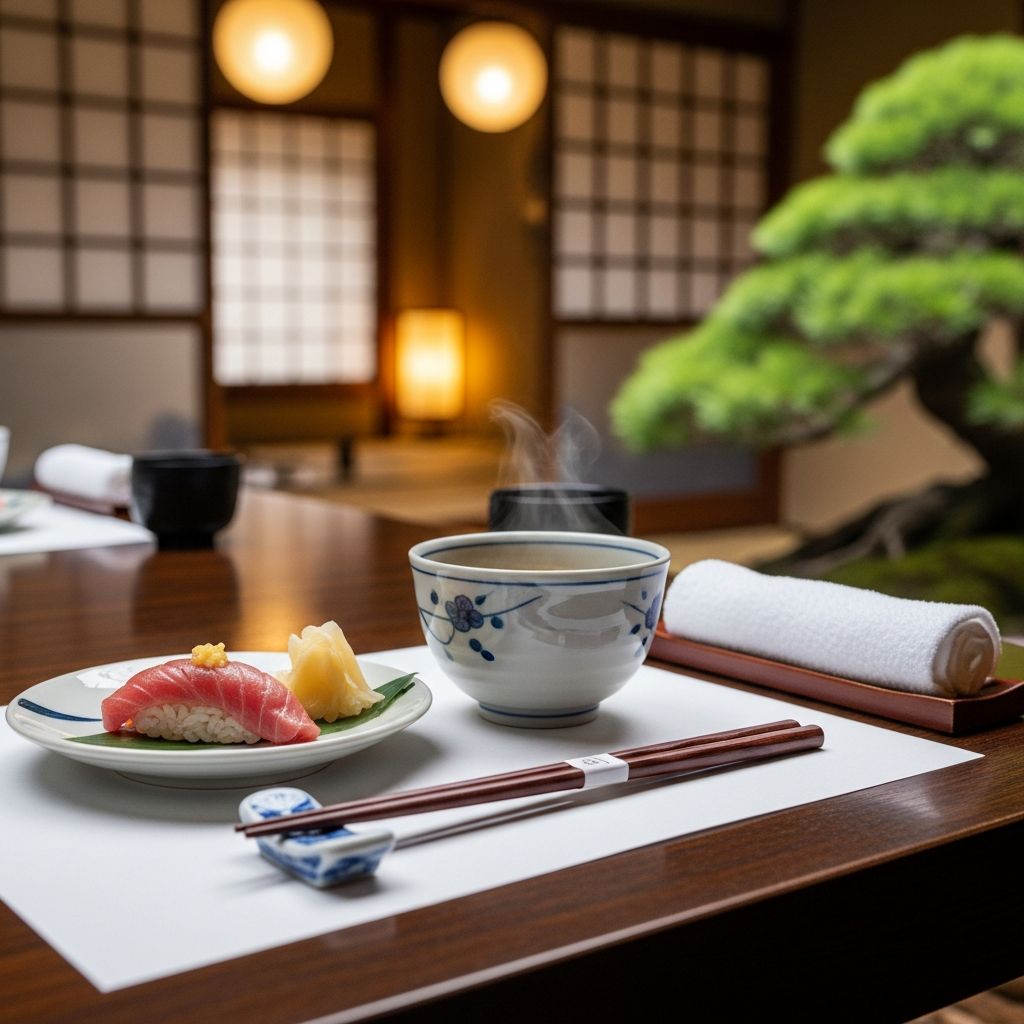
Chopstick mastery enhances authenticity, though forks appear in tourist areas. Key taboos include:
- Never stick upright in rice—evokes funeral rites.
- Avoid passing food chopstick-to-chopstick, another funeral association.
- Rest chopsticks on holders, not bowls.
Sushi at counters permits hand-eating; use provided towels. No forks needed for most, but requests aren’t offensive.
Arrival, Seating, and Greetings
Enter with a bow or nod; staff greet with irasshaimase. Await seating guidance—self-seating is rare.
Complimentary water or tea arrives post-seating. Say itadakimasu before eating to express gratitude, and gochisousama deshita upon finishing.
- Remove watches or accessories if near open flames (e.g., yakitori).
- Observe TPO (time/place/occasion): match volume to ambiance.
During the Meal: Pace and Politeness
Slurping noodles signals enjoyment and cools bites—embrace it at ramen shops. Quiet chewing prevails elsewhere.
No phone talks; silence devices. Sharing thrives at izakayas via small plates, but counters serve individuals.
Lunch prioritizes speed for bargains; linger post-meal at cafes, not tables. Noodle spots demand prompt exit.
No Tipping Tradition
Japan rejects tips—service embeds in hospitality. Offering insults; focus on gratitude phrases.
Upscale venues may add 10-15% fees, but no extra expected.
Payment and Departure Customs
Signal subtly for bills; pay at counters or tables per norm. Cash dominates casual spots; cards upscale.
Thank staff with arigato gozaimasu while bowing out. Clean your space if provided trays.
Dress Codes and Sensory Considerations
Smart casual suits most: avoid shorts, tanks, heavy scents at fine dining.
- Check websites for specifics.
- Minimal perfume preserves flavors.
Finding Hidden Gems Like a Local
Tabelog trumps global apps for ratings. Follow salarymen queues or alley crowds for quality.
Over 80,000 central spots; specialize via philosophy of craft.
Common Pitfalls for First-Timers
- Overstaying lunch tables.
- Requesting non-menu items casually.
- Ignoring ambiance cues.
- Wasting food at thoughtful preparations.
FAQs
Do I need reservations everywhere in Tokyo?
No, casual spots don’t take them; book high-end or popular mid-range.
Is tipping expected?
Never—it’s discourteous.
Can I ask for menu changes?
Limited; plan ahead for restrictions.
What if I can’t use chopsticks?
Forks available in tourist zones; practice basics.
How long should meals last?
Quick at counters, relaxed at izakayas; read the room.
Embracing Tokyo’s Food Philosophy
Tokyo dining blends precision, respect, and joy. By honoring customs, travelers gain deeper connections to Japan’s culinary heart. From counter stools to kaiseki counters, each bite unfolds with intention.
References
- Tokyo dining etiquette: your guide to eating out in Japan’s capital — Lonely Planet. 2023. https://www.lonelyplanet.com/articles/tokyo-dining-etiquette-restaurants-japan
- Eat Like a Local in Tokyo: 10 Tips for Authentic Japanese Dining — Food Tour Tokyo. 2023. https://www.foodtourtokyo.com/post/eat-like-a-local-in-tokyo-10-tips
- Navigating the Tokyo Restaurant Scene: Dining Etiquette & Booking — Roadbook. 2024. https://roadbook.com/tokyo/city-guide/navigating-the-tokyo-restaurant-scene-dining-etiquette-booking/
- Dining Etiquette in Japan — The Hungry Tourist. 2023. https://thehungrytourist.com/dining-etiquette-in-japan/
- Dining Etiquette Japan “Rules” Not to Worry About — The Tokyo Chapter. 2023. https://www.thetokyochapter.com/dining-etiquette-japan-rules-not-to-worry-about/
- Eating at a Japanese Restaurant — Japan Guide. 2024. https://www.japan-guide.com/e/e2040.html
- A Guide for Japanese Etiquette and Table Manners — Tableall. 2024. https://www.tableall.com/column/etiquette
Similar Articles







Read full bio of Sneha Tete