
Power Banks: TSA Rules For Carry-On And Airline Limits 2025
New TSA rules require portable chargers in carry-on only to prevent fire risks from lithium-ion batteries during flights.
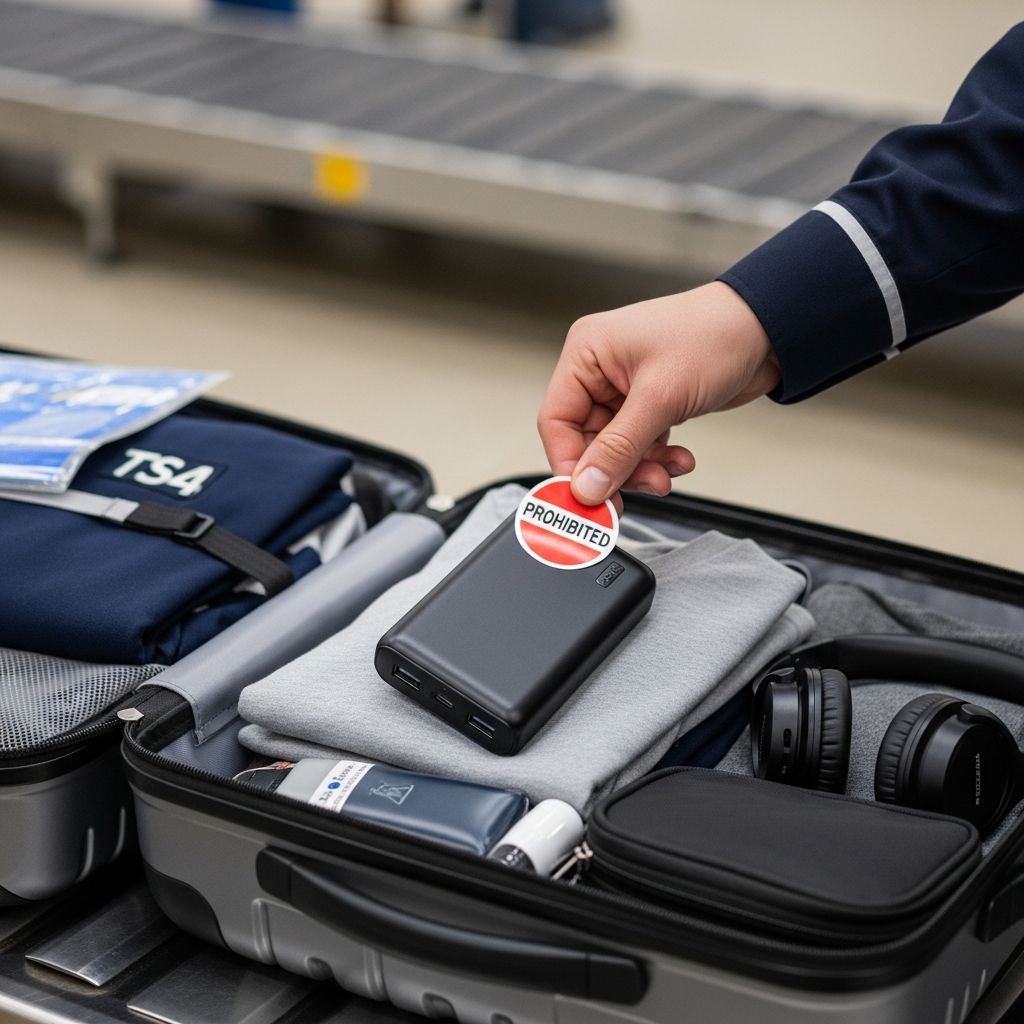
Portable chargers, commonly known as power banks, have become indispensable for modern travelers keeping devices powered on the go. However, recent Transportation Security Administration (TSA) advisories have introduced strict new rules: these items are now explicitly prohibited in checked luggage and must be carried in hand baggage only. This change stems from heightened concerns over fire risks posed by lithium-ion batteries, which power most portable chargers. Understanding these regulations is crucial for avoiding delays, confiscations, or even safety incidents during air travel.
Why Lithium-Ion Batteries Pose a Flight Risk
Lithium-ion batteries, the core technology in power banks, laptops, and smartphones, can overheat, spark, or ignite under certain conditions like damage, manufacturing defects, or extreme temperatures. In the confined, unmonitored space of an aircraft’s cargo hold, such events could escalate rapidly without immediate detection or suppression. The TSA emphasizes that carry-on placement allows crew members to monitor and respond swiftly to any thermal runaway scenarios.
- Overheating Potential: Damaged batteries may enter thermal runaway, generating intense heat and flames.
- Cargo Hold Vulnerabilities: Limited oxygen and accessibility make fires harder to extinguish compared to the cabin.
- Incident History: Past aviation events involving lithium batteries have prompted global regulatory updates.
These risks are not hypothetical; aviation authorities worldwide have documented cases where unchecked batteries contributed to in-flight emergencies.
Official TSA Guidelines on Battery-Powered Devices
The TSA’s core rule is straightforward: spare lithium-ion batteries, including power banks, must travel in carry-on luggage. Installed batteries in devices like cameras or laptops may go in checked bags if the device is switched off and protected, but spares are strictly carry-on. Power banks exceeding 100Wh (watt-hours) require airline approval, and those over 160Wh are generally banned.
| Battery Type | Carry-On Allowed | Checked Luggage | Max Capacity |
|---|---|---|---|
| Power Banks (Spare) | Yes | No | 100Wh standard; 160Wh with approval |
| Phone/Laptop Batteries (Installed) | Yes | Yes (device off) | Varies by device |
| Spare Lithium Metal | Yes (protected) | No | <2g lithium per battery |
Travelers should verify watt-hour ratings on power banks—divide voltage by capacity (e.g., 10,000mAh at 3.7V ≈ 37Wh). Multiple small units are preferable to one large one for compliance.
Airline-Specific Policies and Restrictions
While TSA sets screening standards, individual airlines enforce additional limits aligned with FAA recommendations. For instance, American Airlines bans large power banks like Jackery or EcoFlow models entirely, regardless of size, and limits spares to two per passenger in carry-on.
- American Airlines: No large portable power banks or lithium-powered generators in any baggage; drones without batteries can be checked.
- United Airlines: Longstanding policy mirroring TSA, with up to two spares under 160Wh.
- General FAA Limit: Personal use only; no batteries for sale or bulk commercial transport.
Passengers flying with electronic cigarettes, smart bags, or drones face similar mandates—batteries out and in carry-on. Non-removable battery bags may be rejected outright.
Safe Packing Strategies for Electronics
To breeze through security, adopt these proven packing habits:
- Protect Individually: Place each power bank in a plastic bag or protective case to prevent short-circuiting from contact.
- Keep Accessible: Position in an easy-to-reach carry-on pocket for screening.
- Label Capacities: Know your devices’ Wh ratings; dispose of or leave behind non-compliant ones.
- Minimize Quantity: Stick to essentials—one or two reliable chargers suffice for most trips.
- Backup Options: Rely on airport USB ports or in-flight power where available.
For international flights, cross-check with destination country rules, as some (e.g., China) impose stricter limits on incoming batteries.
Common Violations and Their Consequences
Despite reminders, checked power banks still appear at checkpoints. In 2025 alone, TSA screened thousands of such violations, leading to item surrenders or bag re-packs. Repeat offenders risk fines up to $15,000 under federal law, though most resolve with education. High-profile incidents, like battery fires on cargo flights, underscore why enforcement is ramping up ahead of peak summer travel.
“Fires from lithium batteries in cargo holds spread quickly and are tough to control, endangering everyone on board.” – Aviation Safety Report
Pro tip: Use the TSA’s ‘What Can I Bring?’ app for real-time checks.
Alternatives to Traditional Power Banks
Reducing reliance on spares opens new options:
- Solar Chargers: Lightweight panels for daytime recharges, though slower.
- USB-C Cables with PD: Fast-charging from airplane outlets.
- High-Capacity Phones: Devices like the latest iPhones or Android flagships hold charges longer.
- Travel Adapters: Universal plugs for hotel/in-flight power.
For extended trips, consider airline lounges with charging stations or portable fans powered by USB instead of dedicated batteries.
Broader Implications for Summer Travel Planning
As vacation season heats up, these rules intersect with surging passenger volumes. Airports report 10-15% more electronics screenings, slowing lines. Families with kids’ tablets or campers with drones must double-check compliance. Global carriers like Delta and Southwest echo TSA, but always confirm via airline apps. Proactive planning—packing light on batteries—ensures smoother journeys amid post-pandemic travel booms.
Frequently Asked Questions (FAQs)
Can I pack a power bank in my checked suitcase?
No, TSA prohibits all spare lithium-ion power banks in checked bags. Carry them onboard only.
What if my power bank is over 100Wh?
Contact your airline for approval up to 160Wh; larger ones are typically not allowed.
Are laptop batteries okay in checked luggage?
Yes, if installed in the laptop and the device is fully powered off and protected.
What happens if TSA finds a power bank in my checked bag?
It will be removed and possibly discarded; you won’t get it back, and delays may occur.
Do international flights have different rules?
TSA applies to U.S. departures, but check IATA guidelines and destination regulations for variances.
Can I bring multiple power banks?
Yes, but each must comply with Wh limits, be for personal use, and fit airline allowances (often 2 max).
References
- TSA Announces Ban on Popular Travel Item from Checked Luggage — CBS Austin. 2025-05-15. https://cbsaustin.com/news/nation-world/tsa-bans-7-popular-items-from-checked-luggage-battery-power-cincinnati-laptop-cell-external-rechargable-dangers-overheating-risk-fires-fire-cabin-transportation-security-administration-explosive-flammable-source-smartphone-travel
- Restricted Items − Travel Information — American Airlines. 2026-04-01. https://www.aa.com/i18n/travel-info/baggage/restricted-items.jsp
- TSA Reminds Air Travelers Not to Pack Portable Battery Chargers — Yelm Community. 2025-05-20. https://yelmcommunity.org/2025/05/tsa-reminds-air-travelers-not-to-pack-portable-battery-chargers-in-checked-baggage/
Similar Articles








Read full bio of Sneha Tete