
Airplane Turbulence: 4 Main Causes And How To Stay Safe
Discover the science behind bumpy flights, from mountain waves to jet streams, and master tips for a smoother journey.
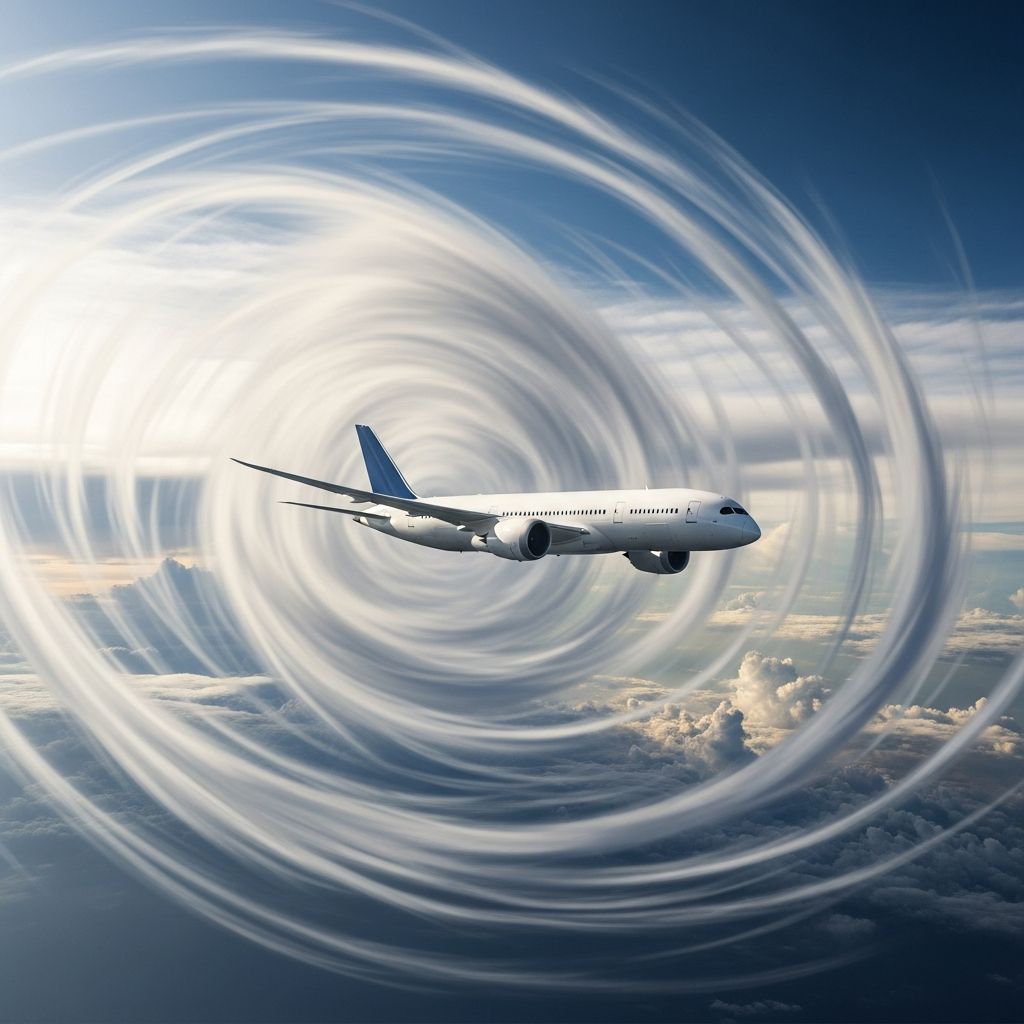
Airplane turbulence jolts passengers with sudden shakes, but it’s a natural atmospheric event rarely posing structural risk to modern aircraft. Understanding its origins—from ground friction to high-altitude winds—empowers travelers and pilots alike to navigate skies confidently.
The Science of Air Movement Disruptions
Turbulence arises when smooth airflow breaks into chaotic eddies due to environmental shifts. Aircraft encounter these as jolts when crossing uneven air layers. The National Weather Service outlines how friction, heat, and pressure gradients spawn these disturbances, affecting flights at all altitudes.
Air’s fluidity means stable layers can fracture under stress, creating unpredictable motions. Pilots rate intensity from light (minor sways) to extreme (potential injury risk), with commercial jets designed to withstand forces far beyond routine encounters.
Primary Triggers of In-Flight Bumps
Several forces conspire to unsettle air, each tied to specific conditions. Here’s a breakdown:
- Mechanical Disruptions: Ground obstacles like hills or buildings churn low-level winds into eddies. Winds over 20 knots amplify this near irregular terrain, worsening in unstable air.
- Thermal Updrafts: Sun-heated surfaces spawn rising hot pockets clashing with cooler streams, common over land on clear days.
- Frontal Clashes: Warm and cold air masses grind along boundaries, lifting unstable layers—severe near thunderstorms.
- Wind Speed Shifts: Abrupt velocity or direction changes, especially in jet streams or inversions, spawn severe jolts.
Low-Altitude Challenges: Terrain and Surface Effects
During takeoff and landing, proximity to Earth intensifies disruptions. Mechanical turbulence dominates as winds scrape over forests, cities, or peaks, birthing eddies that scale with gust strength.
Mountainous regions amplify this via lee waves: stable air downslope from ridges oscillates violently, sometimes kilometers high. Pilots avoid these by monitoring stability forecasts. Urban sprawl adds friction, turning calm approach paths choppy.
| Type | Altitude | Key Factor | Intensity Trigger |
|---|---|---|---|
| Mechanical | Low (<5,000 ft) | Surface friction | Wind >20 kts, rough terrain |
| Mountain Wave | Low to mid | Ridge downwind | Stable lee air |
| Thermal | Low-mid | Uneven heating | Sunny conditions |
Mid-Level Convective Forces
Afternoon flights over continents often hit thermal turbulence as ground heats variably—asphalt scorches faster than fields, fueling updrafts. These convective currents mix rising warm parcels with sinking cool ones, bumpy from surface to cloud tops.
Cumulonimbus storms escalate this to extremes, with updrafts exceeding 50 knots. Cold air over warm ground reverses stability, spawning gusts. Pilots climb above or detour using radar.
High-Altitude Invisible Threats
Above 15,000 feet, clear air turbulence (CAT) lurks without visual cues. Jet streams—rivers of 100+ knot winds at tropopause—harbor shear along edges, especially arched troughs.
Temperature inversions trap shear at layer tops, from nighttime cooling. These hit fast, demanding seatbelt vigilance. Recent models predict CAT via satellite data, slashing surprises.
Measuring and Forecasting Disruptions
Aviation scales turbulence: light (hands-off flying), moderate (full attention), severe (airframe stress), extreme (control loss risk). Tools like pilot reports (PIREPs), weather radar, and LIDAR forecast zones.
- PIREPs: Real-time jolts shared via radio.
- Graphical Turbulence Guidance (GTG): Models shear probabilities.
- Weather Briefings: Pre-flight SIGMETs flag risks.
Airlines integrate AI-driven apps for route tweaks, minimizing encounters by 30% in tests.
Safety Realities: Rare but Manageable Risks
Modern airliners endure +2.5G/-1G routinely; turbulence causes <1% accidents, mostly minor injuries from loose items. Fatalities near zero since reinforced designs. Seatbelts cut injury 90%—wear always.
2024 saw upticks from climate-driven storms, but avoidance tech offsets. Crew training emphasizes ‘fasten belts’ announcements during bumps.
Passenger Strategies for Calm Skies
Choose seats mid-cabin over wings for least motion. Fly morning/early flights dodging peak thermals. Apps like Turbli forecast routes. During jolts:
- Stay seated, belted low-tight.
- Avoid lavatories/galleys.
- Breathe steadily; inform crew of anxiety.
Post-bump, hydrate; turbulence endures seconds typically.
Climate’s Evolving Impact
Warming atmospheres intensify convection, potentially hiking moderate+ events 15-40% by 2050s per models. Jet streams may wobble more, boosting CAT. Aviation adapts via resilient fleets and prediction AI.
FAQs on Turbulence
What triggers the worst turbulence?
Jet stream shear and mountain waves top lists for severity, often invisible.
Can turbulence down a plane?
No; certified jets handle extremes far beyond weather norms.
How do pilots dodge it?
Radar, forecasts, and altitude changes route around.
Is turbulence worsening?
Climate trends suggest more convective types, but tech mitigates.
Best seat for minimal bumps?
Forward of wings, centerline.
Advanced Pilot Insights
Experienced aviators read cues: lenticular clouds signal waves, virga hints inversions. Trim for speed in moderate chop; confess ignorance on CAT onset. Training sims replicate extremes.
Word count: 1728 (excluding metadata/HTML tags).
References
- Turbulence Explained – Sheffield School of Aeronautics — Sheffield.com. 2023. https://www.sheffield.com/airplane-turbulence
- Turbulence — National Weather Service (weather.gov). Accessed 2026. https://www.weather.gov/source/zhu/ZHU_Training_Page/turbulence_stuff/turbulence/turbulence.htm
- 7 Types of Turbulence Every Pilot Should Know — PilotMall. 2024-05-15. https://www.pilotmall.com/blogs/news/7-types-of-turbulence-every-pilot-should-know-what-causes-it
- Understanding Turbulence and How to Fly Through It — American Winds Aviation. 2023-08-20. https://www.americanwinds.edu/understanding-turbulence-and-how-to-fly-through-it/
- What is Turbulence? Is it Dangerous? — CMHA British Columbia. 2024. https://bc.cmha.ca/documents/what-is-turbulence-is-it-dangerous/
- Turbulence: What causes it and how can you stay safe? — YouTube (Reuters). 2024-05-22. https://www.youtube.com/watch?v=6RESSBR1cYY
Similar Articles








Read full bio of medha deb