
Why Airplane Window Shades Stay Open on Takeoff and Landing
Discover the critical safety reasons behind raising airplane window shades during takeoff and landing, enhancing visibility and preparedness for all on board.
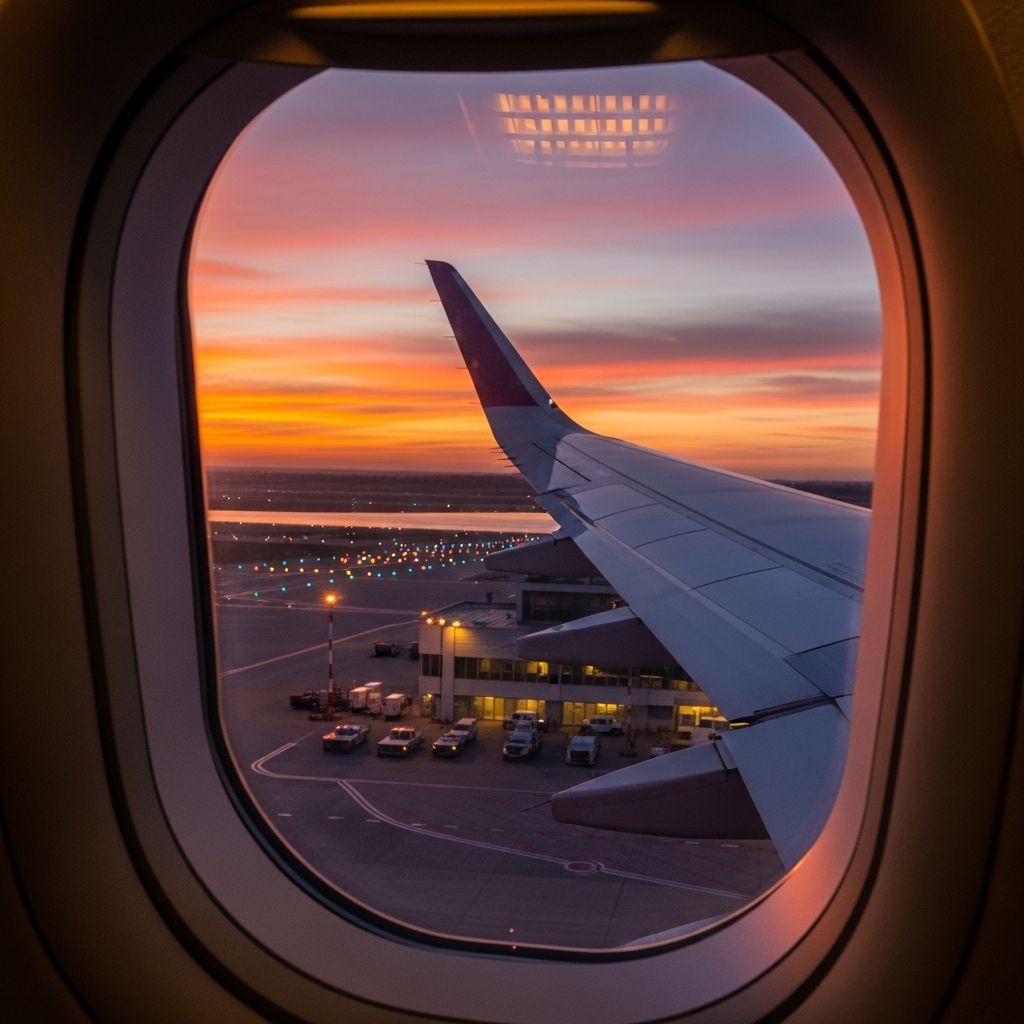
During the high-stakes moments of takeoff and landing, flight attendants often politely insist that passengers raise their window shades. This seemingly simple request serves multiple vital safety purposes, rooted in aviation protocols designed to protect everyone on board. These phases of flight statistically pose the highest risks, making every second count in potential emergencies.
The Primary Safety Imperative: Enhanced Visibility for Crew and Passengers
Takeoff and landing represent the most hazardous segments of any flight, where the majority of incidents occur. Open window shades provide critical external visibility, allowing cabin crew to swiftly assess conditions outside the aircraft. In an evacuation scenario, flight attendants must determine if fire, smoke, or debris obstructs certain exits, deciding which paths are viable for passenger escape.
For instance, on regional jets like the CRJ-900, the flight attendant in the forward galley lacks direct window access. They rely on the passenger in seat 1A keeping the shade open to check runway conditions before opening the door. This practice ensures safe door operation post-landing.
- Crew Assessment: Flight attendants scan for hazards like wing fires or fuel leaks through passenger windows.
- Passenger Awareness: Open shades heighten situational awareness, enabling travelers to identify dangers on one side and choose opposite exits if needed.
- Exit Row Priority: Shades at emergency exits remain open by regulation across most airlines to facilitate rapid external checks.
Eye Acclimation: Preparing Vision for Sudden Evacuations
Beyond visibility, open shades help passengers’ eyes adjust to ambient light conditions. Cabin lights dim during these phases, and if shades are closed, eyes adapt to the darker interior. An abrupt emergency exposing bright daylight or nighttime conditions could temporarily blind evacuees, slowing their exit.
This physiological preparation proves crucial: dilated pupils in low light struggle with sudden glare, potentially costing precious moments. Real-world examples include passengers spotting anomalies like leaking fuel on a 2017 flight, alerting crew before escalation—possible only due to open shades.
| Lighting Scenario | Benefit of Open Shades |
|---|---|
| Daytime Flight | Eyes adjust to sunlight, reducing glare shock during evacuation. |
| Nighttime Landing | Pupils constrict gradually to external darkness, aiding night vision. |
| Dawn/Dusk Transitions | Prevents disorientation from rapid light shifts. |
Global Standards and Airline Variations in Policy
No universal mandate from bodies like the FAA requires open shades, leaving policies to individual airlines. However, international organizations strongly endorse the practice. The International Air Transport Association (IATA), representing over 300 airlines, recommends it as best practice for takeoff and landing.
Similarly, the International Civil Aviation Organization (ICAO), a UN agency overseeing global aviation safety, aligns with this guidance. European, Asian, and Middle Eastern carriers like British Airways, Lufthansa, Singapore Airlines, and Emirates enforce it rigorously, with crew actively ensuring compliance.
U.S. airlines adopt a softer approach: Delta, American, Alaska, Southwest, and United encourage but do not require it. United briefly mandated it in 2022 before reverting to recommendations for consistency. Crew discretion prevails, prioritizing safety without rigid rules.
- IATA Recommendation: Open shades for better visibility during critical phases.
- ICAO Guidance: Supports enhanced external monitoring.
- FAA Stance: No federal regulation; airline-specific.
Ground Crew and Emergency Responder Advantages
Open shades benefit external responders too. During an emergency landing or crash, ground firefighters and rescuers peer into the cabin to detect interior fires or smoke. Closed shades obscure this view, delaying interventions.
Historical incidents underscore this: visible cabin conditions have guided rapid responses, minimizing harm. Passengers have also played heroic roles, like the 2017 fuel leak alert, highlighting how open views empower collective vigilance.
Practical Tips for Passengers During These Phases
To align with safety goals:
- Comply promptly if crew requests shades open—it’s tied to emergency readiness.
- Observe surroundings actively; report anomalies like sparks or leaks.
- Understand dimmed lights complement shade policy for eye adjustment.
- On international flights, expect stricter enforcement per global norms.
While tempting to nap or block sun, these brief periods (typically 10-15 minutes) prioritize collective safety over comfort.
Common Misconceptions and Regional Differences
Some believe it’s a strict law everywhere, but U.S. domestic flights rarely enforce it uniformly. Claims of CAA (UK) or Chinese regulations exist, though unverified universally. Rare instances, like hot-weather shade closures on CRJs for cabin cooling, are exceptions, not norms.
International routes on U.S. carriers often mirror global standards. Always defer to crew instructions, as they reflect training and airline protocols.
FAQs: Airplane Window Shades During Flight
Q: Is raising window shades mandatory?
A: Not federally in the U.S., but recommended globally and enforced by many international airlines.
Q: Why dim cabin lights with open shades?
A: To acclimate eyes to external light, paired with shades for optimal adjustment.
Q: Can passengers ignore the request?
A: Best not to; it’s a safety measure, and crew may insist.
Q: Does this apply to all aircraft types?
A: Primarily passenger jets; crew relies on windows for assessments universally.
Q: What if it’s nighttime?
A: Still required—helps spot ground lights, fires, and adjust to darkness.
Broader Implications for Air Travel Safety Culture
This policy exemplifies proactive aviation safety: small actions like open shades amplify preparedness. It fosters passenger involvement, turning observers into spotters. As air travel grows, such practices—backed by IATA and ICAO—ensure resilience against rare but critical risks.
Crews train rigorously for these scenarios, with shades integral to protocols. Passengers’ cooperation upholds this system, contributing to aviation’s exemplary safety record: fewer than one fatal accident per millions of flights annually.
References
- Why Do We Open Window Shades During Takeoff and Landing? — Afar Magazine. 2023-05-15. https://www.afar.com/magazine/why-do-window-shades-have-to-be-open-for-takeoff-and-landing
- Why Window Blinds Need to be Open For Take-off & Landing — Flightdeck Friend. 2023-08-22. https://www.flightdeckfriend.com/ask-a-pilot/opening-plane-window-blinds-for-take-off/
- Fact or Fiction: Window Blinds up for Landing? — Infinite Flight Community. 2022-11-10. https://community.infiniteflight.com/t/fact-or-fiction-window-blinds-up-for-landing/377724
- Why Are Window Blinds Open During Take-off and Landing? — BAA Training. 2024-02-14. https://baatraining.com/blog/why-do-window-blinds-have-to-be-open-during-take-off-and-landing/
- Fun fact about the window shades! ✈️ Did you know why the crew … — KLM (YouTube). 2023-07-20. https://www.youtube.com/shorts/4Ze8-BGfHE8
Similar Articles








Read full bio of medha deb