World’s Greatest Landmarks: 10 Timeless Wonders To Visit
Discover iconic monuments and landmarks that define global history, culture, and breathtaking architecture across continents.
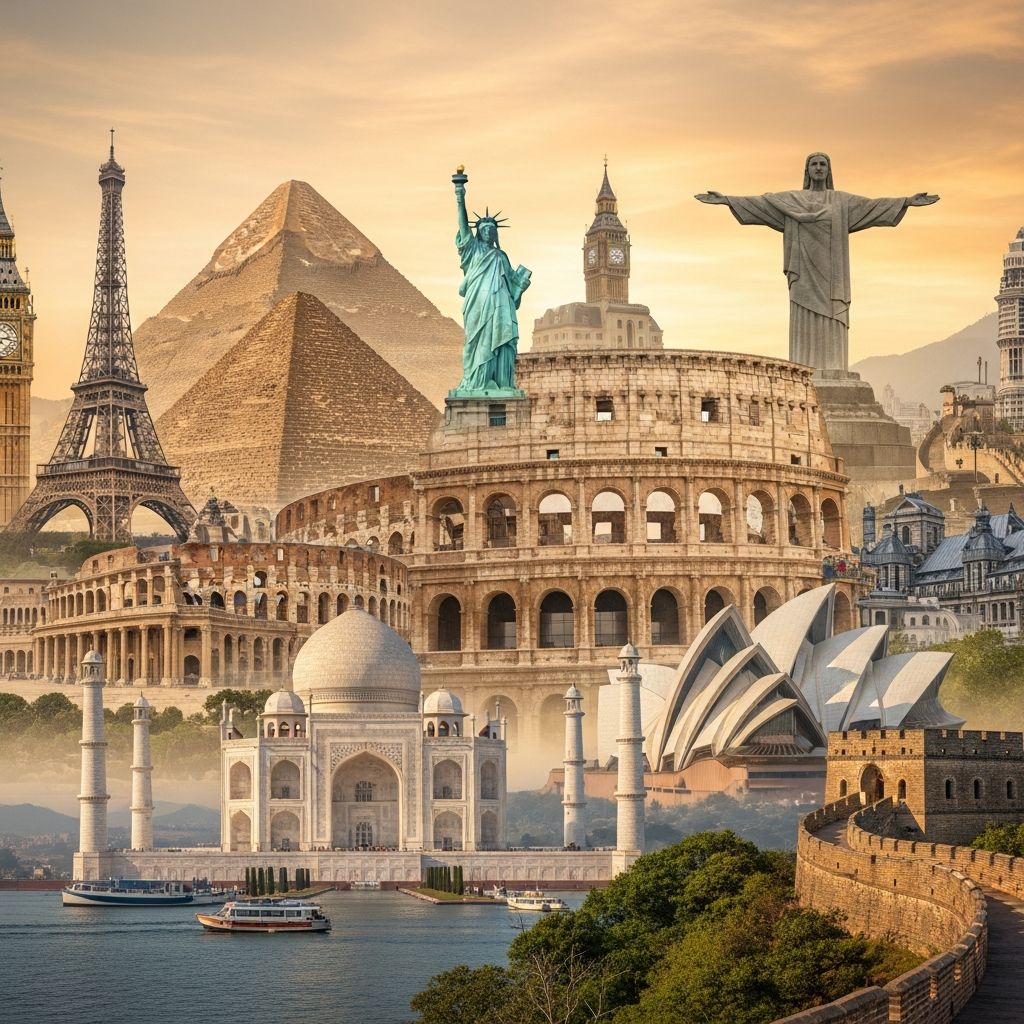
Landmarks and monuments stand as enduring testaments to human ingenuity, cultural heritage, and historical milestones. These structures draw millions of visitors annually, offering not just visual spectacles but deep dives into the stories that shaped civilizations. Whether you’re planning a bucket-list trip or simply daydreaming about far-flung destinations, understanding these icons provides a gateway to global exploration. This comprehensive guide delves into some of the planet’s most celebrated sites, highlighting their origins, significance, and practical visitation details.
Ancient Marvels That Defy Time
The allure of ancient landmarks lies in their sheer longevity and the mysteries they hold. Built millennia ago with rudimentary tools, these feats continue to inspire awe and prompt questions about long-lost engineering secrets.
The Great Pyramid of Giza: Pharaohs’ Eternal Legacy
Nestled on the Giza Plateau outside Cairo, Egypt, the Great Pyramid stands as the last surviving wonder of the ancient world. Constructed around 2580–2560 BCE during Pharaoh Khufu’s reign, it served as a tomb symbolizing the pharaoh’s journey to the afterlife. Rising 481 feet, its precise alignment with cardinal points and the use of over 2.3 million limestone blocks remain engineering enigmas.
Today, visitors can explore the pyramid’s interior passages, including the ascending corridor leading to the King’s Chamber. Best visited early morning to beat crowds and heat, entry requires tickets from official vendors. Combine with the Sphinx and nearby pyramids for a full-day immersion. UNESCO recognition underscores its global importance.
Petra: The Rose-Red City Carved from Rock
In Jordan’s desert, Petra emerges as a Nabataean masterpiece from the 4th century BCE to 2nd century CE. Famous for Al-Khazneh (The Treasury), accessed via the Siq gorge, this site blends Hellenistic and Arabian influences. Its water conduits and rock-cut facades reveal a thriving trade hub.
Hike the 800-step trail to the Monastery for panoramic views, or opt for donkey rides. Nighttime candlelit tours add magic. Respect local customs and stay hydrated in the arid climate.
Medieval and Renaissance Masterpieces
Europe’s medieval and Renaissance eras birthed landmarks blending faith, art, and power, showcasing Gothic spires and intricate mosaics that influenced architecture worldwide.
Colosseum: Arena of Empires Past
Rome’s Colosseum, completed in 80 CE, hosted gladiatorial contests for 50,000 spectators. Emperor Vespasian’s amphitheater symbolizes Roman engineering prowess with its hypogeum underground chambers.
- Key Features: Elliptical design, 80 arched entrances, marble statues.
- Visiting Tips: Book skip-the-line tickets online; explore at dusk for fewer crowds.
- Fun Fact: It withstood earthquakes and stone robbers, now a UNESCO site.
Taj Mahal: Symphony in Marble
India’s Taj Mahal, built 1632–1653 by Emperor Shah Jahan for Mumtaz Mahal, exemplifies Mughal architecture. Its white marble domes and minarets reflect in reflecting pools, especially at sunrise.
Women must cover heads; no tripods allowed. Fridays are closed for prayers. Pair with Agra Fort for context.
Modern Architectural Icons
The 19th and 20th centuries saw landmarks rise as symbols of national pride and technological leaps, from iron lattices to concrete behemoths.
Eiffel Tower: Paris’s Iron Lady
Gustave Eiffel’s 1889 tower, initially for the World’s Fair, soars 1,083 feet. Its lattice design revolutionized structural engineering.
| Level | Height | Views & Activities |
|---|---|---|
| 2nd Floor | 377 ft | Glass floor, restaurants |
| Summit | 1,083 ft | Champagne bar, 360° panorama |
Ascend via stairs or elevators; sparkle shows nightly.
Statue of Liberty: Beacon of Freedom
Gifted by France in 1886, Lady Liberty on Bedloe’s Island embodies enlightenment. Frédéric Bartholdi’s copper statue, with internal iron framework by Eiffel, crowns a star-shaped fort.
Ferry from Battery Park; crown access requires advance booking. Ellis Island nearby adds immigration history.
Natural and Man-Made Hybrids
Some landmarks fuse nature’s grandeur with human touch, like massive walls traversing mountains or carved presidential faces.
Great Wall of China: Dragon’s Backbone
Stretching over 13,000 miles from the Bohai Sea, this defensive fortification began in the 7th century BCE, unified under Qin Shi Huang. Mutianyu section offers cable cars and toboggan descents.
Visit in autumn for foliage; wear sturdy shoes for uneven steps.
Mount Rushmore: Faces in Granite
In South Dakota’s Black Hills, Gutzon Borglum’s 1927–1941 sculpture depicts Presidents Washington, Jefferson, Roosevelt, and Lincoln. Each face spans 60 feet.
Nightlighting ceremonies; hiking trails reveal more.
Emerging Global Gems
Beyond classics, newer landmarks captivate with innovation and cultural depth.
Christ the Redeemer: Rio’s Guardian
Heitor da Silva Costa’s 1931 Art Deco statue atop Corcovado Mountain overlooks Rio de Janeiro. At 98 feet with 114-foot arms, it symbolizes peace.
Cog train ascent; panoramic city views.
Sydney Opera House: Sails on the Harbor
Jørn Utzon’s 1973 design mimics yacht sails. Its precast concrete shells host operas and concerts.
Guided tours reveal backstage; harbor cruises complement.
Planning Your Landmark Adventures
To maximize experiences:
- Research seasonal crowds and weather.
- Secure tickets via official sites like UNESCO.
- Embrace sustainable tourism: no littering, support locals.
Frequently Asked Questions (FAQs)
What is the oldest landmark discussed?
The Great Pyramid of Giza, dating back over 4,500 years.
Which landmark receives the most visitors annually?
The Eiffel Tower sees about 7 million guests yearly.
Are there free entry options for these sites?
Many exteriors are free; interiors often charge, with discounts for students/seniors.
How to avoid peak tourist seasons?
Travel in shoulder months like April-May or September-October.
What essentials to pack for landmark visits?
Comfortable shoes, water, sunscreen, portable charger.
References
- Great Pyramid of Giza — UNESCO World Heritage Centre. 2023-07-01. https://whc.unesco.org/en/list/86/
- Petra — UNESCO World Heritage Centre. 2023-09-15. https://whc.unesco.org/en/list/326/
- Colosseum — Italian Ministry of Culture. 2024-01-10. https://colosseo.it/en/
- Taj Mahal — Archaeological Survey of India. 2024-02-20. https://asi.nic.in/taj-mahal/
- Statue of Liberty — U.S. National Park Service. 2024-03-05. https://www.nps.gov/stli/index.htm
- Great Wall of China — UNESCO World Heritage Centre. 2023-11-12. https://whc.unesco.org/en/list/438/
(Word count: 1678)
Similar Articles




Read full bio of Sneha Tete